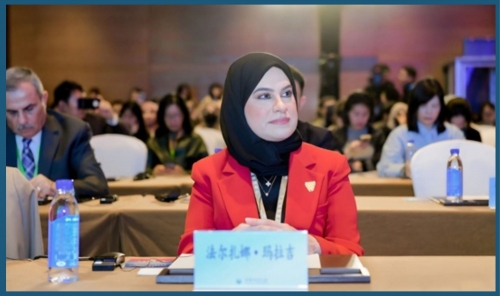

Dr. Farzana Abdullah Al Maraghi, Assistant Secretary-General of the Higher Education Council, recently represented Bahrain and the Gulf region on a prominent international stage, delivering a keynote address at the China–Gulf Language and Culture Forum in Beijing. Her speech, centered around Chinese language education and its future within the GCC countries, underscored the growing importance of linguistic and cultural exchange in a rapidly evolving digital world. This participation highlights a strategic move towards strengthening ties with China and fostering a new era of collaboration.
The Growing Importance of Chinese Language Education in the GCC
The forum, held as part of the larger World Chinese Language Conference 2025, provided a crucial platform for discussing the future of language learning and cultural understanding. Dr. Al Maraghi’s presence emphasized the deepening relationship between China and the Gulf Cooperation Council (GCC) states. She eloquently articulated how language isn’t merely a tool for communication, but a powerful conduit for fostering mutual understanding and facilitating civilizational exchange.
Expanding Chinese language education across the GCC, she argued, is a vital strategic step. This expansion will not only bolster academic partnerships and research collaboration but also lay the foundation for stronger, more enduring long-term relations with China. The conference’s theme, “Innovation Leads, AI Empowers: Learning Chinese Without Borders,” perfectly encapsulates this forward-thinking approach.
A Bridge to Enhanced Collaboration
The need for enhanced collaboration is particularly relevant in today’s global landscape. As China’s economic and political influence continues to grow, the ability to communicate effectively in Mandarin Chinese becomes increasingly valuable. This isn’t just about economic opportunities; it’s about building bridges of understanding and fostering a more interconnected world.
Furthermore, the integration of Artificial Intelligence (AI) into language learning offers exciting possibilities. AI-powered tools can personalize learning experiences, provide instant feedback, and make Chinese language education more accessible to a wider audience.
Bahrain’s Pioneering Role in Regional Language Exchange
Dr. Al Maraghi specifically highlighted Bahrain’s leading role in promoting Chinese language learning within the region. She pointed to the success of the Confucius Institute at the University of Bahrain as a shining example of effective cultural and linguistic exchange.
This institute has become a regional model, demonstrating how dedicated programs can cultivate a genuine appreciation for Chinese language and culture. It offers a comprehensive curriculum, cultural events, and opportunities for students and faculty to engage with native speakers. This proactive approach to language acquisition is something other GCC nations can learn from.
The Confucius Institute: A Model for Success
The Confucius Institute’s success isn’t simply about teaching grammar and vocabulary. It’s about creating a holistic learning environment that fosters intercultural dialogue and mutual respect. The institute actively promotes Chinese culture through events like calligraphy workshops, traditional music performances, and film screenings.
Additionally, the institute facilitates research collaborations between Bahraini and Chinese scholars, further strengthening the academic ties between the two countries. This comprehensive approach is key to its success and makes it a valuable asset to the region.
The World Chinese Language Conference 2025: A Global Gathering
The World Chinese Language Conference 2025, organized by China’s Ministry of Education in cooperation with Beijing Language and Culture University, attracted a diverse range of participants. Government leaders, education authorities, university presidents, and academic institutions from around the globe convened to discuss the latest trends and challenges in language learning.
The event served as a crucial platform for sharing best practices, forging new partnerships, and exploring innovative approaches to teaching and learning Chinese. The focus on AI and digital tools underscored the importance of embracing technology to enhance the learning experience and overcome geographical barriers. This focus on digital fluency is a key component of modern cultural exchange.
In conclusion, Dr. Al Maraghi’s participation in the China–Gulf Language and Culture Forum was a significant moment for Bahrain and the GCC region. Her insightful address highlighted the strategic importance of expanding Chinese language education, underscored Bahrain’s pioneering role, and emphasized the potential of AI to revolutionize language learning. As China’s influence continues to grow, investing in Chinese language education will be crucial for fostering stronger relationships, promoting mutual understanding, and unlocking new opportunities for collaboration. We encourage further exploration of the resources available through the Confucius Institute at the University of Bahrain and continued investment in language programs across the GCC.