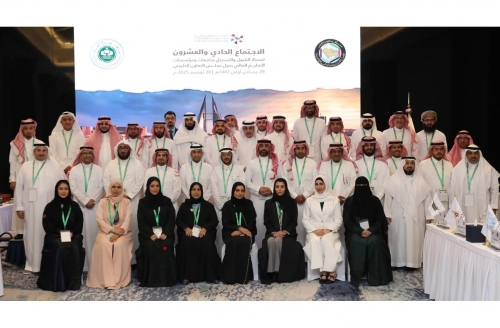

The 21st meeting of deans of admission and registration from across the Gulf Cooperation Council (GCC) convened in Manama today, signaling a renewed commitment to strengthening higher education collaboration within the region. Hosted by the Arabian Gulf University (AGU) at the Wyndham Grand Hotel, the event drew participation from key figures including H.E. Dr. Mohammed bin Mubarak Juma, Minister of Education, and focused on enhancing GCC university collaboration and elevating the standards of academic institutions. This gathering underscores the importance of unified strategies in a rapidly evolving global educational landscape.
Strengthening Regional Academic Ties Through GCC University Collaboration
The meeting represents a significant step towards deeper integration within the Gulf region’s higher education sector. AGU President Dr. Saad bin Saud Al-Fuhaid emphasized that the event embodies the spirit of Gulf integration, highlighting the shared goals and aspirations of universities across member states. This collaborative approach is increasingly vital for addressing the challenges and opportunities presented by globalization and the demand for a highly skilled workforce.
The Role of the Ministry of Education
The presence of H.E. Dr. Mohammed bin Mubarak Juma, Minister of Education, underscored the Bahraini government’s strong support for regional academic partnerships. His attendance signaled a commitment to fostering an environment conducive to innovation and excellence in higher education. The Ministry’s involvement is crucial for aligning university initiatives with national development goals and ensuring the quality and relevance of academic programs.
Key Discussion Points: Admission, Marketing & Rankings
Discussions during the 21st meeting centered around several critical areas aimed at improving the overall effectiveness of GCC universities. A primary focus was on developing more streamlined and efficient admission and registration mechanisms. This included exploring best practices for attracting and processing applications, as well as ensuring equitable access to higher education for students from all GCC countries.
Another key area of discussion revolved around enhancing university program marketing. Deans explored innovative strategies for showcasing the strengths of their institutions and attracting both regional and international students. This involved leveraging digital marketing tools, strengthening branding efforts, and highlighting unique program offerings.
Furthermore, the meeting addressed the crucial topic of evaluation standards. Participants reviewed current methods for assessing student learning and institutional performance, with a view to identifying areas for improvement and aligning with international benchmarks. This is particularly important for improving higher education standards across the GCC.
Enhancing Student Mobility and Exchange Programs
A significant portion of the meeting was dedicated to discussing unified guidelines for student exchange programs. The deans reviewed AGU’s successful experience in admitting students from other Gulf countries and explored ways to facilitate greater student mobility within the region. Increased student exchange opportunities are expected to foster cross-cultural understanding, promote academic collaboration, and enhance the overall learning experience.
Improving University Rankings and Joint Action
A central objective of the meeting was to formulate recommendations for improving joint Gulf action in higher education and increasing the international rankings of GCC universities. Participants recognized the importance of collective efforts in raising the profile of regional institutions on the global stage.
This included discussions on collaborative research initiatives, joint degree programs, and the development of shared resources. By working together, GCC universities can leverage their collective strengths and achieve greater recognition for their academic achievements. The focus on international university rankings reflects a desire to attract top talent and enhance the region’s reputation as a center of academic excellence.
Additionally, the deans explored strategies for attracting international faculty and researchers, recognizing that a diverse and highly qualified academic workforce is essential for driving innovation and maintaining high standards of education.
Looking Ahead: A Future of Collaborative Growth
The 21st meeting of GCC university deans of admission and registration concluded with a strong sense of optimism and a renewed commitment to collaboration. The discussions held in Manama have laid the groundwork for a more integrated and competitive higher education sector in the Gulf region.
The emphasis on streamlined admission processes, enhanced marketing strategies, and improved evaluation standards will undoubtedly contribute to the overall quality of education offered by GCC universities. Continued academic cooperation is vital for addressing the evolving needs of the region and preparing students for success in a globalized world.
Moving forward, it is crucial that the recommendations formulated during the meeting are translated into concrete actions. Regular follow-up meetings and ongoing communication will be essential for ensuring that the momentum generated in Manama is sustained and that the vision of a truly integrated Gulf higher education system is realized. We encourage further dialogue and collaboration amongst institutions to build a brighter future for students and researchers across the GCC.