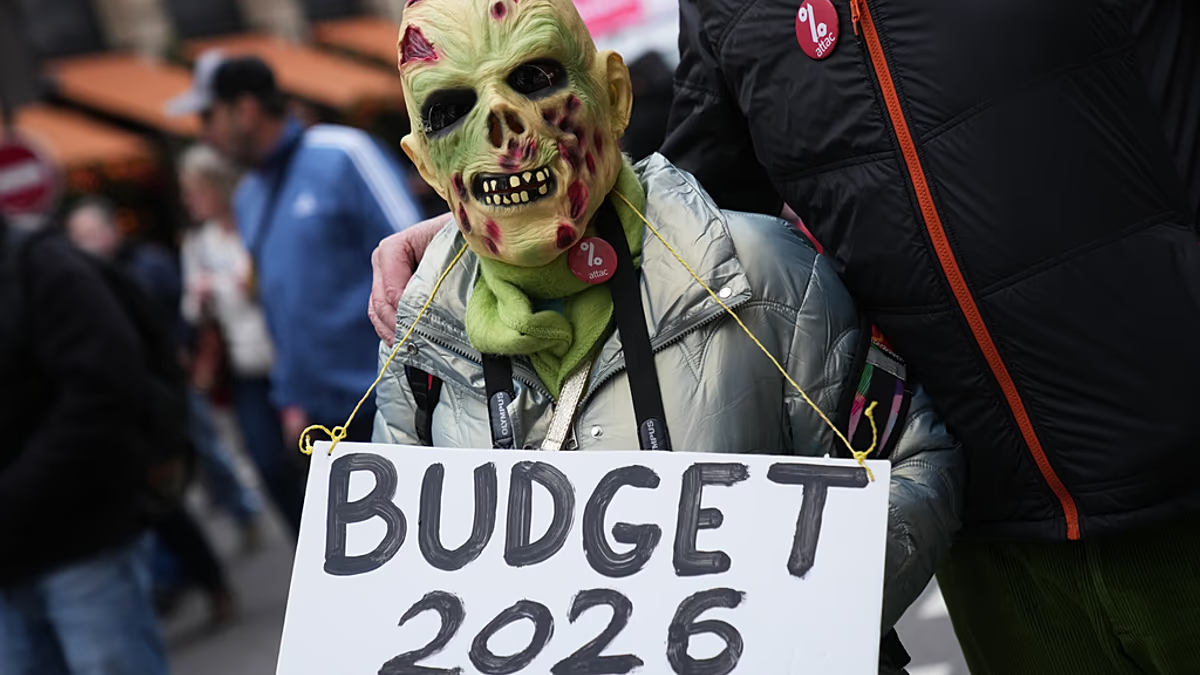

Three major French unions – CGT, FSU, and Solidaires – held a national day of strikes and demonstrations on Tuesday, December 2, 2025, protesting government austerity policies. The action came as the National Assembly debated the 2026 Social Security budget, but saw significantly lower turnout compared to earlier protests this fall. While aiming to disrupt key sectors, the strikes had a limited impact on transportation and education throughout the country.
The protests unfolded across France, with a primary march in Paris, though participation numbers were notably down from previous demonstrations. According to the Interior Ministry, approximately 31,900 people participated nationwide. Union leaders had hoped for a stronger show of force to pressure the government regarding planned budget cuts.
What’s Fueling the Protests Against Austerity Policies?
The driving force behind the strikes is widespread discontent with the government’s economic direction and its impact on working-class citizens and public services. Unions are demanding wage increases to counter the rising cost of living, and expressing concern over what they see as a lack of social and fiscal justice. They claim the proposed Social Security budget will lead to significant regressions in worker and pensioner benefits.
Concerns center on potential cuts to essential services, particularly within the healthcare system. Trade union representatives voiced frustration that the burden of financial adjustments appears to fall disproportionately on those already facing economic hardship. This sentiment was echoed by protestors interviewed on the streets of Paris.
Limited Disruption Reported
Nationwide, the strike’s impact on essential services was minimal. Rail operator SNCF reported “almost normal” traffic, with localized delays in the Centre-Val de Loire and Occitanie regions. The Education Ministry indicated a teacher strike rate of only 5.27%, suggesting most schools operated as usual.
Participation within the broader civil service also remained low, reaching 3.43% in state administration and 1.84% in local government, according to reports. This contrasts sharply with the larger-scale mobilizations seen in September and October.
Paris Demonstration Sees Lower Turnout
The Paris march began around 2 pm but experienced a rapid decline in participants. By 3:30 pm, a majority of protestors had already dispersed. Despite initial expectations, a second planned demonstration at 4 pm drew only a small crowd.
While the CGT estimated 17,000 demonstrators in the capital, this figure is significantly lower than the 55,000 who protested on September 18th and the 24,000 who joined the rallies on October 2nd. These earlier protests benefited from broader inter-union support. Euronews provides additional coverage of the French strike action.
These recent figures point to challenges in maintaining momentum for the labor movement. Experts suggest waning public support and a perceived lack of leverage against the government may be contributing factors. Related concerns include social security reform and the effectiveness of earlier protests.
The government has maintained its position that the proposed budget is necessary to address France’s financial situation and ensure the long-term sustainability of its social programs. Negotiations between unions and government officials are expected to continue, but a significant breakthrough appears unlikely given the current climate. Understanding France’s economic policy is crucial for interpreting these events.
Looking ahead, the outcome of the Social Security budget debate will be critical. Further protests are possible if unions believe the final version falls short of their demands. Observers will be watching to see if the labor movement can regain its previous momentum and broaden its base of support to exert more pressure on the government.