
The European Parliament is grappling with the implications of recently signed and proposed trade deals, sparking debate over economic benefits versus concerns about standards and fairness. A contentious EU-Mercosur agreement, finalized after over two decades of negotiation, is currently under legal scrutiny, while a new EU-India trade deal was signed this week. These developments signal a push for increased global trade, but also highlight the complexities of balancing economic growth with social and environmental considerations.
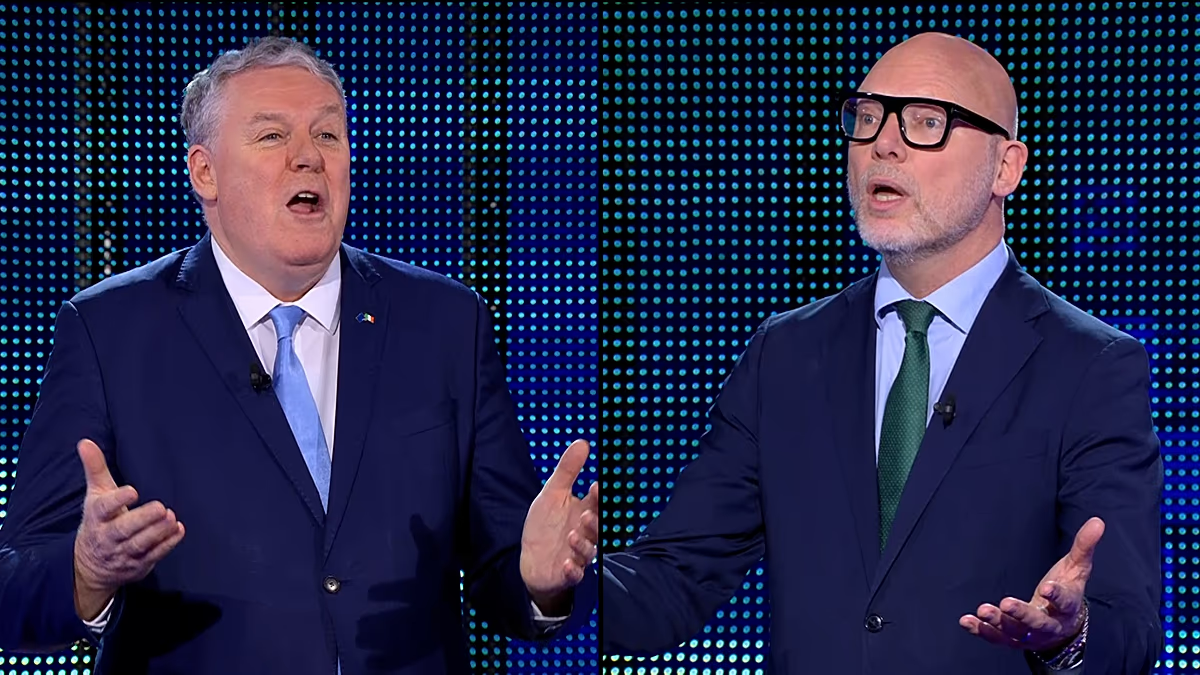
The debate unfolded on Euronews’ weekly show, “The Ring,” featuring Irish MEP Ciaran Mullooly (Renew Europe) and Swedish MEP Jörgen Warborn (European People’s Party). The discussion centered on the recently signed EU-Mercosur deal and the newly inked EU-India agreement, with both MEPs presenting contrasting viewpoints on their potential impact. The show, anchored by Méabh Mc Mahon, is available to watch on Euronews TV and online.
Understanding the EU-Mercosur Trade Deal
The EU-Mercosur agreement, encompassing the European Union, Argentina, Brazil, Paraguay, and Uruguay, aims to create one of the world’s largest free trade areas. Supporters, like MEP Warborn, emphasize the deal’s importance in a volatile global landscape, arguing it demonstrates the EU’s commitment to open markets and strengthens its geopolitical position. The agreement is expected to eliminate or reduce tariffs on a wide range of goods, boosting trade flows between the two regions.
However, the deal has faced significant criticism, prompting the European Parliament to refer the text to the Court of Justice of the European Union (CJEU) for clarification. Concerns revolve around environmental safeguards, particularly regarding deforestation in the Amazon rainforest, and the potential impact on European farmers. Critics, including MEP Mullooly, fear that lower import standards from Mercosur countries could undermine domestic agricultural production and erode consumer trust.
Key Concerns Regarding Environmental Standards
A major point of contention is whether Mercosur countries are adhering to the environmental commitments outlined in the agreement. Environmental groups have raised alarms about increased deforestation driven by agricultural expansion, potentially violating the EU’s own environmental policies. The CJEU’s review will focus on ensuring the deal aligns with the EU’s climate goals and environmental obligations.
The agreement includes a chapter on sustainable development, but critics argue its enforcement mechanisms are weak and lack sufficient teeth to prevent environmental damage. They point to a history of lax enforcement of environmental regulations in some Mercosur nations as a cause for concern.
The New EU-India Trade Agreement
Meanwhile, the European Union has finalized a trade agreement with India, a move hailed as a significant step towards diversifying trade relationships. This deal, years in the making, focuses on reducing tariffs and streamlining trade procedures, with a particular emphasis on geographical indications (GIs) – protecting the names of regional products like cheeses and wines. The European Commission details the agreement’s provisions on its website.
The EU-India agreement is expected to boost bilateral trade and investment, creating new opportunities for businesses in both regions. It also aims to strengthen cooperation in areas such as digital trade and sustainable development. The deal is seen as a counterbalance to China’s growing economic influence in Asia.
While the EU-India deal has received a more positive reception than the EU-Mercosur agreement, some concerns remain regarding labor standards and intellectual property rights. Negotiators worked to address these issues, but ongoing monitoring will be crucial to ensure the agreement delivers on its promises. The agreement is part of a broader EU strategy to forge stronger economic partnerships with key countries around the world.
The signing of these agreements reflects a broader trend towards increased international trade, but also underscores the challenges of navigating complex geopolitical and economic landscapes. The EU is actively pursuing new trade relationships to enhance its economic resilience and global influence, but these deals must be carefully scrutinized to ensure they align with its values and long-term interests.
Looking ahead, the outcome of the CJEU’s review of the EU-Mercosur trade deal will be critical. Its decision could lead to revisions of the agreement or even its suspension. The implementation of the EU-India deal will also be closely watched to assess its impact on trade flows and economic growth. Stakeholders are encouraged to continue engaging in the debate and providing feedback to shape the future of EU trade policy.