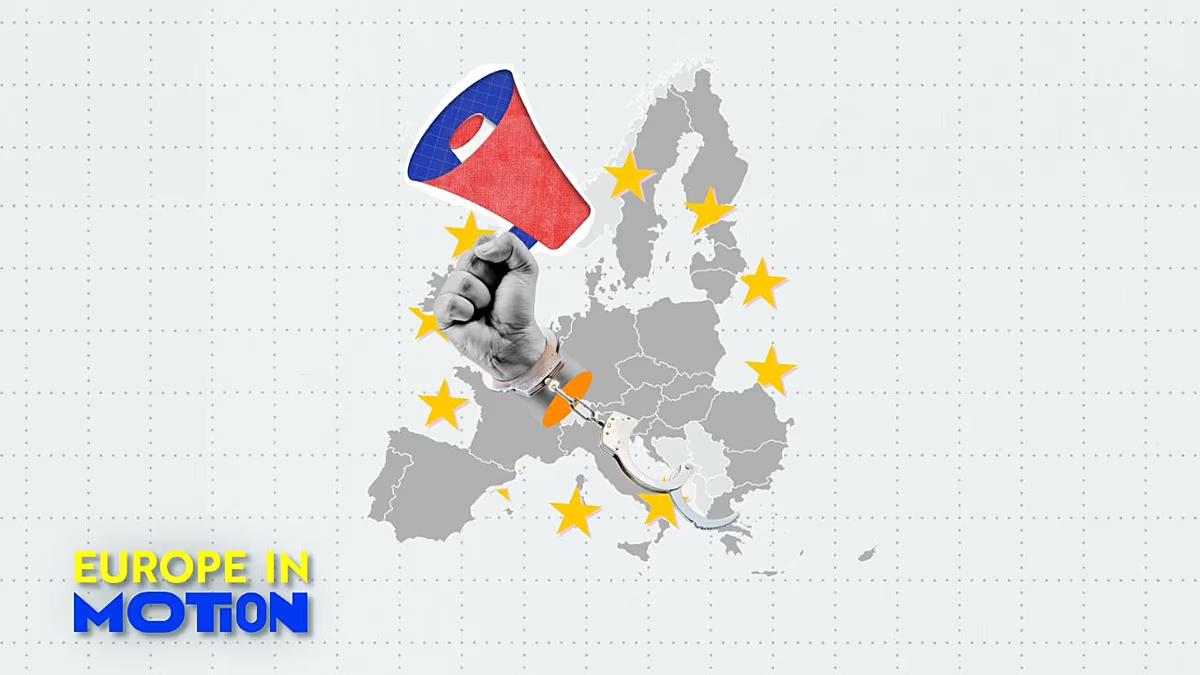

A concerning trend is emerging across Europe as civic space shrinks in several key nations. A new report by CIVICUS, a global alliance of civil society organizations, reveals a worsening environment for non-governmental organizations (NGOs) and activists in France, Germany, and Italy. These three European Union member states have all been downgraded in the organization’s annual assessment of fundamental freedoms.
The CIVICUS Monitor report, released this week, tracks the state of freedom of association, peaceful assembly, and expression in 198 countries and territories. The downgrades – from “narrowed” to “obstructed” – signal increasing restrictions on the ability of citizens to organize, protest, and voice dissent within these major European democracies. This shift reflects a broader pattern of declining rights across the continent.
Deteriorating Civic Space in Key European Nations
The report categorizes countries based on five levels: open, narrowed, obstructed, repressed, and closed. “Obstructed” indicates that fundamental freedoms are significantly limited, and civil society organizations face considerable challenges. According to Tara Petrović, Europe and Central Asia researcher for the CIVICUS Monitor, “Far fewer people in Europe can exercise fundamental freedoms without significant barriers.”
France: Restrictions on Protest and Expression
France’s downgrade is attributed to a growing number of restrictions on peaceful protests and freedom of expression. The CIVICUS report highlights the misuse of laws to dissolve NGOs and intimidate activists over recent years. These actions have created a chilling effect on civil society engagement, limiting the ability of organizations to advocate for their causes.
Germany: Alarming Rate of Decline
Germany’s decline in civic freedom has been particularly rapid, the report indicates. The deterioration stems from increased repression of demonstrations focused on climate justice, migrant rights, and opposition to austerity measures. Instances cited include heavy-handed policing tactics, such as the raid on an event attended by a UN Special Rapporteur, and surveillance of students participating in online activism. This demonstrates a concerning trend of authorities suppressing dissent through both political pressure and direct intervention.
Italy: New Laws Restrict Peaceful Assembly
Italy’s situation has worsened following the passage of new legislation in 2024. These laws introduce numerous new criminal offenses and impose harsher penalties for peaceful protests. Critics argue that the measures are overly broad and designed to stifle legitimate forms of dissent, impacting the ability of citizens to exercise their right to assembly. The changes are expected to further constrain the work of human rights defenders and advocacy groups.
Additionally, the CIVICUS Monitor report notes concerning developments in other European nations. Georgia and Serbia have moved to the “repressed” category, indicating a severely restricted environment for civil society. Switzerland, conversely, experienced a slight improvement, shifting to “narrowed,” though concerns remain about limitations on protest rights. CIVICUS has been monitoring global civic freedoms for over two decades.
The report’s findings align with observations from other organizations tracking democratic backsliding and the erosion of human rights in Europe. These trends raise concerns about the long-term health of democratic institutions and the ability of citizens to participate meaningfully in public life. The increasing use of restrictive laws and aggressive policing tactics threatens the fundamental principles of freedom of association and expression.
The CIVICUS Monitor emphasizes the need for European leaders, particularly within the EU, to actively defend fundamental rights and protect civic space. The report suggests increased scrutiny of national laws and policies that restrict civil society, as well as stronger support for human rights defenders facing intimidation and persecution. Monitoring these developments and advocating for greater protections will be crucial in ensuring that Europe remains a champion of democratic values.
Looking ahead, it will be important to observe whether these negative trends continue and whether the EU takes concrete steps to address the shrinking space for civil society in its member states. Citizens and organizations concerned about these developments can support advocacy efforts and engage with policymakers to demand greater respect for fundamental freedoms.