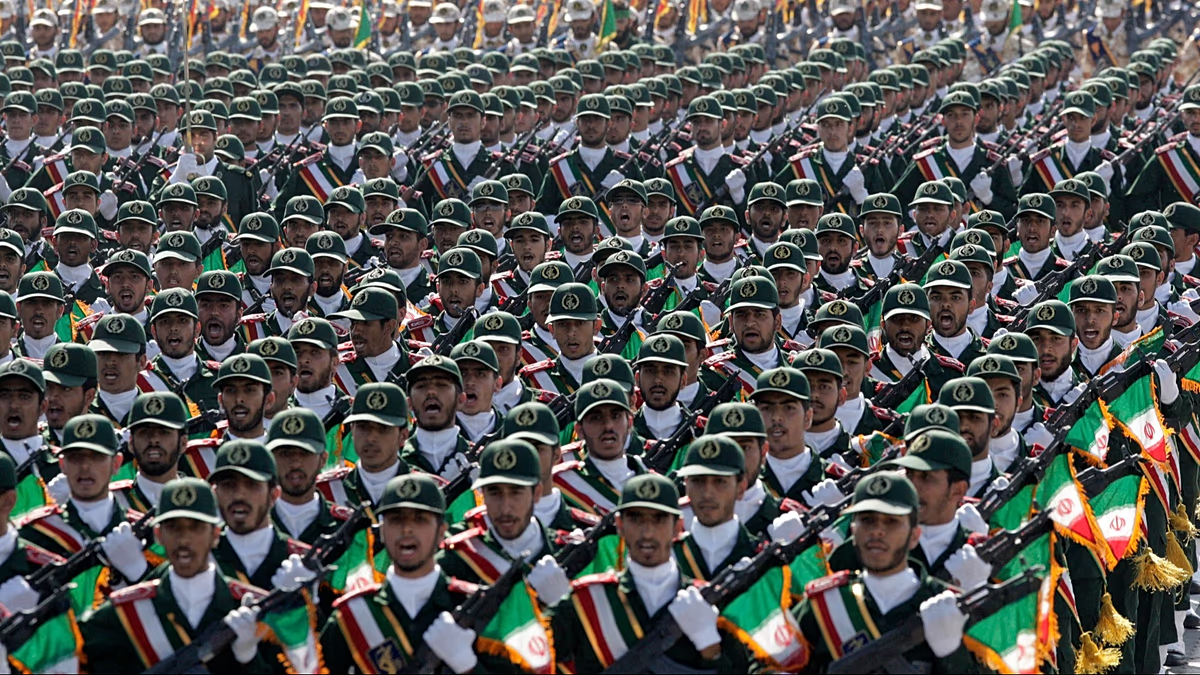

France and Spain have announced their support for designating Iran’s Islamic Revolutionary Guard Corps (IRGC) as a terrorist organization, a move that could pave the way for the European Union to formally blacklist the powerful Iranian military force. The shift in position from two key EU member states comes amid growing international condemnation of Iran’s violent crackdown on protests and its destabilizing regional activities. The decision is expected to be discussed at a meeting of foreign affairs ministers in Brussels this week.
The potential designation represents a significant escalation in Western pressure on Tehran. For months, the idea of blacklisting the IRGC has been debated within the EU, with some nations expressing reservations about the potential consequences for diplomatic efforts. However, mounting evidence of the IRGC’s actions has prompted a reassessment of those concerns.
EU Considers Designating the IRGC as a Terrorist Organization
The move to designate the IRGC follows a wave of protests in Iran sparked by the death of Mahsa Amini in September 2022. Iranian security forces, widely believed to be under the control of the IRGC, responded with a brutal crackdown, resulting in widespread arrests and numerous deaths. The Human Rights Activists News Agency reports at least 5,777 Iranians have been killed during the unrest, though information gathering has been hampered by internet blackouts.
Growing International Pressure
The United States, Canada, and Australia have already designated the IRGC as a terrorist organization. Germany and the Netherlands have repeatedly urged the EU to follow suit. Italy, initially hesitant, reportedly shifted its stance earlier this week after receiving further information on the scale of the repression. According to a senior diplomat speaking anonymously, “The brutality of what we see has made ministers and capitals reconsider their positions.”
The IRGC is accused of a range of activities beyond domestic repression, including supplying weapons to Russia in its war against Ukraine, launching ballistic missiles at Israel, and providing support to armed groups like Hezbollah, Hamas, and the Houthis in Yemen. These actions have fueled concerns about Iran’s destabilizing influence in the Middle East and beyond. The IRGC operates an estimated 125,000 to 190,000 troops across its army, navy, and air units, functioning as a state within a state under the authority of Supreme Leader Ali Khamenei.
Implications of a Terrorist Designation
If formally designated as a terrorist organization by the EU, the IRGC would be subject to an asset freeze, a prohibition on providing funds, and a travel ban for its members. Many IRGC members are already subject to EU sanctions, but a terrorist designation would broaden the scope and severity of those restrictions. Additionally, it would send a strong symbolic message of condemnation to the Iranian government and demonstrate support for the Iranian diaspora who have long called for such action.
However, some analysts caution that a terrorist designation could further complicate diplomatic efforts to revive the 2015 nuclear deal, known as the Joint Comprehensive Plan of Action (JCPOA). Others argue that the potential benefits of holding the IRGC accountable outweigh the risks. The EU’s current terrorist list currently includes 22 groups, including Hamas, Hezbollah’s Military Wing, and the Kurdistan Workers’ Party (PKK).
The French and Spanish support is expected to encourage other skeptical member states to reconsider their positions. The outcome of the foreign affairs ministers’ meeting in Brussels will be closely watched as the EU weighs the political and strategic implications of formally blacklisting the Islamic Revolutionary Guard Corps. Further developments regarding Iran’s internal situation and regional activities will likely influence the EU’s final decision on this critical issue.
Stay informed about this developing story and the EU’s response to Iran’s actions by following reputable news sources and official statements from European Union officials.