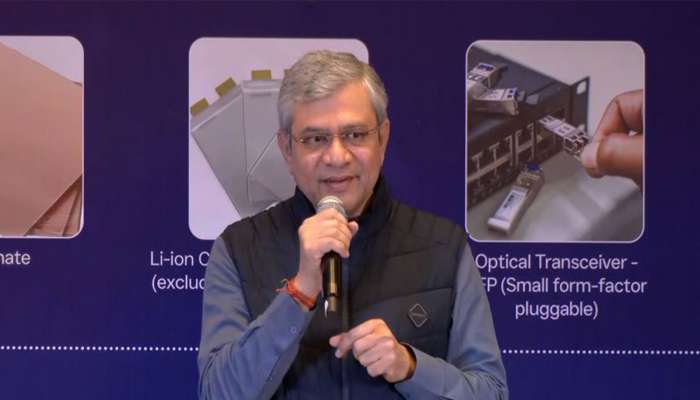

India is poised to become a significant player in the global semiconductor manufacturing landscape. Union Minister for Electronics and IT, Ashwini Vaishnaw, announced on Friday a landmark achievement: four companies are set to begin commercial production of these critical chips in 2026. This marks a pivotal moment in India’s journey towards self-reliance in technology and a major boost to the nation’s economic security.
India’s Semiconductor Ambitions Take Shape
The announcement signals a concrete step forward for India’s ambitious plans to establish a robust semiconductor ecosystem. Micron, CG Power, Kaynes Technology, and Tata Electronics are the companies leading the charge, with commercial production anticipated to commence within the next year. This development isn’t happening in isolation; strong interest from industry giants in Taiwan, Japan, and South Korea further validates India’s potential as a key manufacturing hub.
Timeline for Production Ramp-Up
The transition to commercial operations will be phased. Companies like CG Power and Kaynes Technology, which initiated pilot production last year, are expected to lead the way. Micron’s facility has recently joined them in pilot production and will quickly follow suit. Tata’s plant, strategically located in Assam, is on track to begin pilot production by mid-2026, with full-scale commercial manufacturing slated for the end of the year. This staggered approach allows for careful calibration and optimization of the production process.
A Surge in Investment and Government Support
The government’s commitment to the semiconductor industry is evident in the substantial investments being made. To date, ten semiconductor manufacturing projects have been approved across six states – Gujarat, Assam, Uttar Pradesh, Punjab, Odisha, and Andhra Pradesh – representing a cumulative investment exceeding Rs 1.60 lakh crore. The first proposal for establishing a semiconductor unit was approved in Sanand, Gujarat, in June 2023, setting the stage for this rapid expansion. This level of investment demonstrates a long-term vision for technological independence.
Addressing Concerns with the DLI 2.0 Scheme
Minister Vaishnaw also addressed concerns surrounding the redesigned Design Linked Incentive (DLI 2.0) scheme, emphasizing responsible deployment of public funds. He stressed the importance of ensuring that taxpayer money fuels sustainable growth and doesn’t simply support short-lived ventures.
The restructured DLI scheme will provide full support for initial design phases, but subsequent funding will be directly linked to venture capital investment and demonstrable market validation. This approach, mirroring successful models globally, ensures that projects have a viable path to commercial success. “It is not like you take the money on the name of design and shut shop and go away,” Vaishnaw explained, highlighting the accountability built into the system. Industry stakeholders have reportedly expressed strong support for this market-driven approach.
The Strategic Importance of Semiconductors
The push for domestic chip manufacturing isn’t merely about economic growth; it’s about national security and strategic independence. Semiconductors are the foundational building blocks of modern technology, powering critical infrastructure in sectors like healthcare, transportation, communication, defense, and space exploration.
As the world becomes increasingly digitized and automated, access to a reliable supply of semiconductors is paramount. Relying heavily on foreign sources for these essential components creates vulnerabilities that India is actively working to mitigate. The ability to design and manufacture chips domestically strengthens India’s position on the global stage and safeguards its future technological advancements.
Strengthening Design Capabilities
India’s progress isn’t limited to manufacturing. The nation’s design capabilities are also experiencing significant growth. Companies are now working on advanced two-nanometre chip designs, a substantial leap from the five-to-seven nanometre designs previously undertaken. This demonstrates a growing sophistication in India’s technological expertise and its ability to compete in the high-end semiconductor market. This advancement in integrated circuits design is a crucial component of the overall strategy.
Future Outlook and Mobile Phone Incentives
Looking ahead, the future of India’s semiconductor industry appears bright. The immense and continued interest from major semiconductor-producing nations underscores the country’s growing appeal as a manufacturing destination.
When questioned about a potential new production-linked incentive (PLI) scheme for mobile phone manufacturing, Minister Vaishnaw indicated that details would be revealed “at the appropriate time,” suggesting further government support for the electronics sector is on the horizon.
In conclusion, India’s journey towards self-reliance in semiconductor manufacturing is gaining significant momentum. With four companies poised to begin commercial production in 2026, substantial government investment, and a focus on both manufacturing and design capabilities, India is well-positioned to become a key player in the global semiconductor landscape. This development promises not only economic benefits but also enhanced national security and strategic independence. Stay tuned for further updates on this rapidly evolving sector and explore opportunities to engage with India’s growing tech ecosystem.