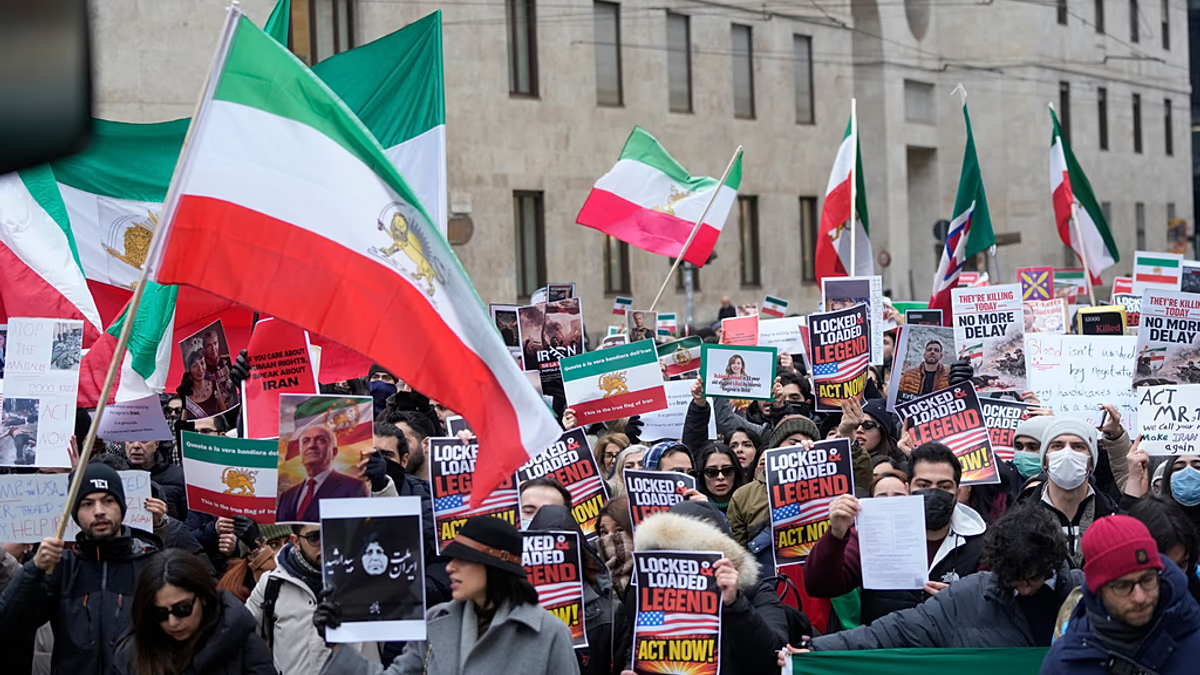

Calls for stronger action against Iran are mounting, particularly regarding the government’s response to ongoing protests. Former Iran hostage Olivier Vandecasteele is urging the European Union to sever diplomatic ties with the Islamic Republic, arguing that current sanctions and political isolation have proven insufficient to address systematic attacks against unarmed civilians. He believes a more decisive response is needed to hold the Iranian regime accountable for what he describes as potential crimes against humanity.
Vandecasteele, a Belgian national and humanitarian worker, spoke to Euronews following the recent increase in pressure from European Parliament President Roberta Metsola, who banned Iranian diplomats from the institution. EU Foreign Affairs chief Kaja Kallas has also indicated a willingness to pursue further sanctions against Tehran. However, Vandecasteele contends that these measures, while welcome, don’t go far enough.
The Need for Stronger EU Action on Iran
Vandecasteele’s demands extend beyond sanctions, encompassing a complete halt to all cooperation with Iran, the expulsion of regime representatives from European countries, and bolstering international accountability mechanisms. He specifically points to the United Nations fact-finding mission on Iran as a crucial component of this effort. His perspective is informed by a harrowing 456-day detention in Iran, where he faced accusations of espionage and was initially sentenced to 28 years in prison, later increased to 40.
The United Nations has since determined that Vandecasteele’s detention was arbitrary, and that he was subjected to enforced disappearance, torture, and other forms of ill-treatment. This experience, he says, highlights a disturbing pattern of behavior by the Iranian government and a lack of adequate support for European citizens detained within its borders.
Challenges with Current Sanctions
While advocating for tougher sanctions, Vandecasteele cautions against measures that disproportionately harm the Iranian population. He explains that the regime often leverages sanctions to portray suffering as a result of foreign interference, thereby consolidating its control. The focus, he argues, should be on targeting those directly responsible for human rights abuses and suppressing dissent.
He also believes the Islamic Revolutionary Guard Corps (IRGC) should be formally designated as a terrorist organization, a move repeatedly called for and voted upon by the European Parliament but yet to be implemented. Vandecasteele expressed frustration that his case wasn’t classified as terrorism, hindering his access to support and psychological aid upon his release.
Vandecasteele emphasizes the interconnected nature of the Iranian government, stating that there is no genuine separation of powers. He asserts that foreign affairs, intelligence, the IRGC, the justice system, and even state media all operate in concert to protect the regime’s interests. He criticizes the EU’s tendency to engage with Iran’s foreign ministry as if it were independent from the repressive forces within the country.
The ongoing unrest in Iran, which began in December 2028, has been met with a violent crackdown by authorities. Iranian officials claim over 2,000 people have been killed, but non-governmental organizations believe the actual number is significantly higher. Vandecasteele suggests the situation has evolved beyond mere protests, characterizing it as a revolution fueled by widespread discontent and a desire for change.
However, he acknowledges a key challenge: the lack of consensus among Iranians regarding a future governance model. He believes that any genuine change must be led by the Iranian people themselves, warning that external intervention could be exploited by the regime to justify further repression. Vandecasteele founded “Protect Humanitarians” in 2024, an NGO dedicated to improving the safety and protection of aid workers globally.
Looking ahead, the EU faces increasing pressure to reassess its strategy towards Iran. The situation remains volatile, and the international community will be closely watching for any escalation in violence or further evidence of human rights abuses. Continued advocacy from individuals like Vandecasteele, combined with robust investigations by international bodies, will be crucial in ensuring accountability and supporting the Iranian people’s aspirations for a more just and democratic future.