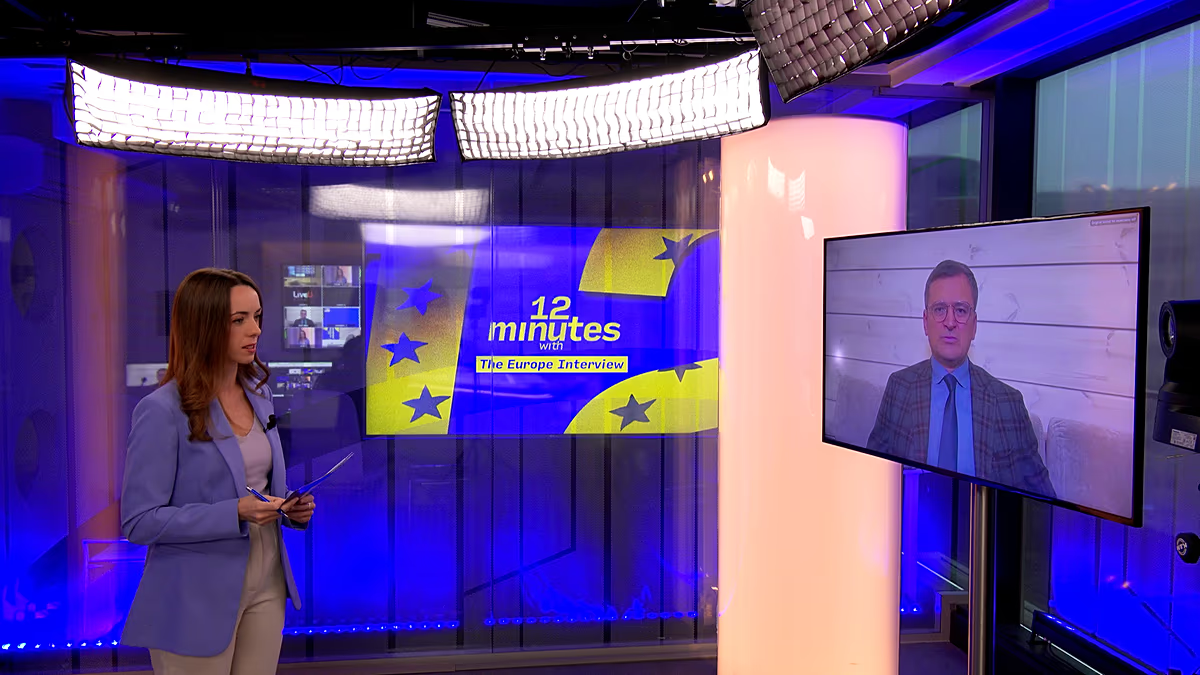

Ukraine’s former Foreign Minister Dmytro Kuleba has sharply criticized the speed of diplomatic progress regarding the war in Ukraine, asserting that European allies are slow to deliver meaningful solutions. Kuleba’s remarks, made during an interview with Euronews, highlight growing frustration with the pace of negotiations and a perceived lack of decisive action from key international partners. This criticism comes amid a renewed push for a Ukraine peace deal, with the United States taking a leading role in drafting potential frameworks.
The former minister stated that almost four years into the conflict, European leadership continues to debate fundamental strategies, ranging from peacekeeping deployments to bolstering Ukrainian defense capabilities. He warned that this indecision threatens Europe’s future stability and prosperity. Kuleba’s observations precede ongoing diplomatic efforts involving the US, Russia, and Ukraine, converging in Geneva to examine and revise proposed peace terms.
The Frustration with Ukraine Peace Negotiations
While France and the UK recently reaffirmed their commitment to long-term security guarantees for Ukraine, part of the “Coalition of the Willing”, concrete details regarding troop contributions remain elusive. This alliance, comprising 33 nations, has yet to outline specific commitments, leading Kuleba to suggest it may be more focused on public messaging than substantive support. He expressed appreciation for existing efforts but stressed the need for tangible answers to critical questions.
A 28-point peace framework initially drawn up through back-channel discussions between US Special Envoy Steve Witkoff and Russian official Kirill Dmitriev has become a focal point of contention. According to reports, the plan has already faced setbacks due to what Kuleba described as the “aggressive and erratic handling” by Washington and the damage caused by a leaked recording of Witkoff advising Russian officials on how to appeal to former President Trump.
US Role Under Scrutiny
Questioned about the trustworthiness of US negotiators, Kuleba offered a pragmatic assessment: “Not really, but we do not have another America.” He acknowledged that despite reservations, Ukraine is compelled to engage with the US due to its irreplaceable role in international affairs. However, he believes the fundamental issues within the proposed peace plan require significant alteration, suggesting the current approach will likely be recycled with minor adjustments.
The leaked conversations reveal a level of engagement that many in Ukraine find unsettling, raising concerns about the US potentially prioritizing its own interests over Kyiv’s. This has led to heightened skepticism regarding the motivations behind the US-led peace initiative. Secondary keywords include geopolitical tensions and European security.
Kuleba indicated that the initial 28-point plan has “already fallen apart,” but anticipates further attempts at negotiations. He emphasized the importance of fundamentally changing the nature of the proposals, rather than simply rearranging existing points. The core challenge, he stated, remains “what do we have to do to change the substance of the proposal?”
As diplomatic efforts continue, the focus will likely shift to identifying areas of compromise and securing more concrete commitments from key allies. The future of the Ukraine conflict hinges on overcoming these obstacles and forging a path toward a sustainable peace. Analysts will be closely watching whether the US is able to recalibrate its approach and address the concerns voiced by Ukraine and its European partners.
Watch the full interview for further insights.