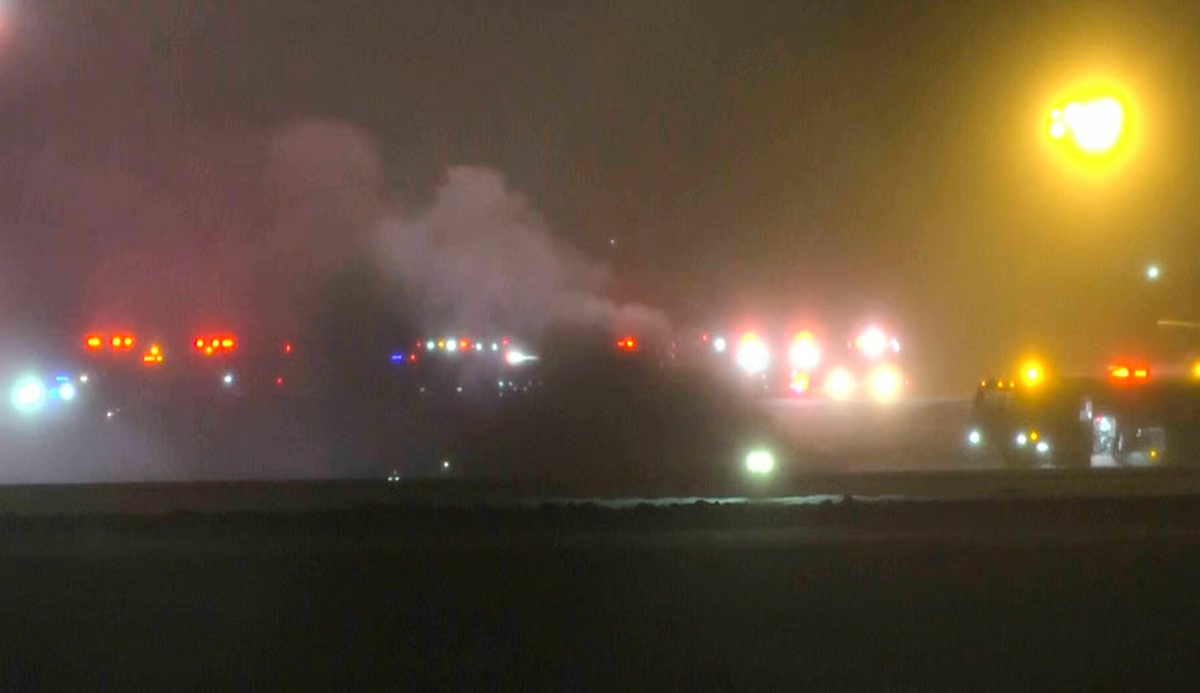

A snowstorm crash in Michigan claimed the lives of all seven people aboard a private jet on Saturday, February 3, 2024. The aircraft, a Bombardier Challenger 600, went down near Charlevoix Municipal Airport after experiencing difficulties during a landing attempt amidst heavy snowfall. Authorities are currently investigating the cause of the accident, focusing on weather conditions and potential mechanical issues.
The crash occurred around 5:30 PM EST, according to the Charlevoix County Sheriff’s Office. Initial reports indicate the plane flipped during the attempted landing, resulting in a post-impact fire. The Federal Aviation Administration (FAA) and the National Transportation Safety Board (NTSB) have dispatched teams to the site to conduct a thorough investigation.
Understanding the Charlevoix Snowstorm Crash and its Aftermath
The Bombardier Challenger 600 was approaching Charlevoix Municipal Airport from Wisconsin when the incident occurred. The airport, serving the resort communities of Charlevoix and Boyne City, is a popular destination for private aviation, particularly during the winter months. However, the region was under a winter storm warning at the time, with significant snowfall and reduced visibility reported.
Weather Conditions as a Contributing Factor
The National Weather Service had issued warnings for heavy lake-effect snow across northern Michigan, including Charlevoix County. Accumulations of several inches per hour were reported, creating hazardous conditions for travel, including aviation. The runway at Charlevoix Municipal Airport is known to be susceptible to snow accumulation, requiring frequent plowing and treatment.
Details of the Flight and Passengers
The aircraft was operated by North Star Air, a charter company based in Michigan. The passengers have not been officially identified by authorities, but preliminary information suggests they were a mix of business travelers and individuals visiting the area for recreational purposes. The flight plan indicated a relatively short flight duration, suggesting a regional trip.
The Charlevoix County Sheriff’s Office received multiple 911 calls reporting the crash. First responders arrived on the scene to find the aircraft overturned and engulfed in flames. Despite their efforts, no survivors were found. The scene was secured overnight to allow investigators to begin their work.
The NTSB investigation will likely focus on several key areas, including the aircraft’s maintenance records, the pilot’s experience and training, and a detailed analysis of the weather conditions at the time of the accident. Data recorders, often referred to as “black boxes,” will be crucial in reconstructing the events leading up to the crash.
This type of general aviation incident, while thankfully rare, highlights the inherent risks associated with flying, especially in challenging weather. The FAA regularly issues guidance to pilots regarding operations in snow and ice, emphasizing the importance of pre-flight planning, de-icing procedures, and maintaining situational awareness.
Local residents reported hearing a loud boom and seeing a bright flash shortly before the fire was visible. The impact site is located near a wooded area, limiting the potential for damage to surrounding properties. However, the incident has understandably shaken the community.
The Charlevoix Municipal Airport remained closed on Sunday, February 4th, as investigators continued their work. The closure impacted scheduled flights and created logistical challenges for travelers. Airport officials have not yet announced a timeline for reopening, stating that safety is their top priority.
This plane crash is the latest in a series of aviation incidents that have garnered national attention. While the causes vary, these events underscore the need for continuous improvement in aviation safety protocols and technology. The FAA is currently under scrutiny for its oversight of Boeing aircraft, following a series of incidents involving the 737 MAX.
The investigation into the Charlevoix snowstorm is expected to be complex and could take several months to complete. The NTSB will issue a preliminary report within the next few weeks, providing a factual overview of the accident. A final report, which will include the probable cause and any safety recommendations, is typically released within one to two years.
Meanwhile, the families of the victims are beginning to receive notifications. Grief counseling services are being offered to those affected by the tragedy. The community of Charlevoix is organizing a memorial service to honor the lives lost.
The FAA is cooperating fully with the NTSB investigation and will implement any safety recommendations that arise from the findings. The agency is also reviewing its procedures for issuing weather advisories and ensuring that pilots have access to the most up-to-date information.
The incident raises questions about the adequacy of de-icing facilities at smaller municipal airports, particularly those in regions prone to heavy snowfall. While Charlevoix Municipal Airport does have de-icing equipment, the capacity may be limited during periods of extreme weather.
Looking ahead, the NTSB’s investigation will be critical in determining the precise sequence of events that led to the snowstorm crash. The report will likely address factors such as pilot decision-making, aircraft performance in adverse conditions, and the effectiveness of airport safety procedures. The findings will be used to inform future safety regulations and training programs, with the ultimate goal of preventing similar tragedies from occurring.