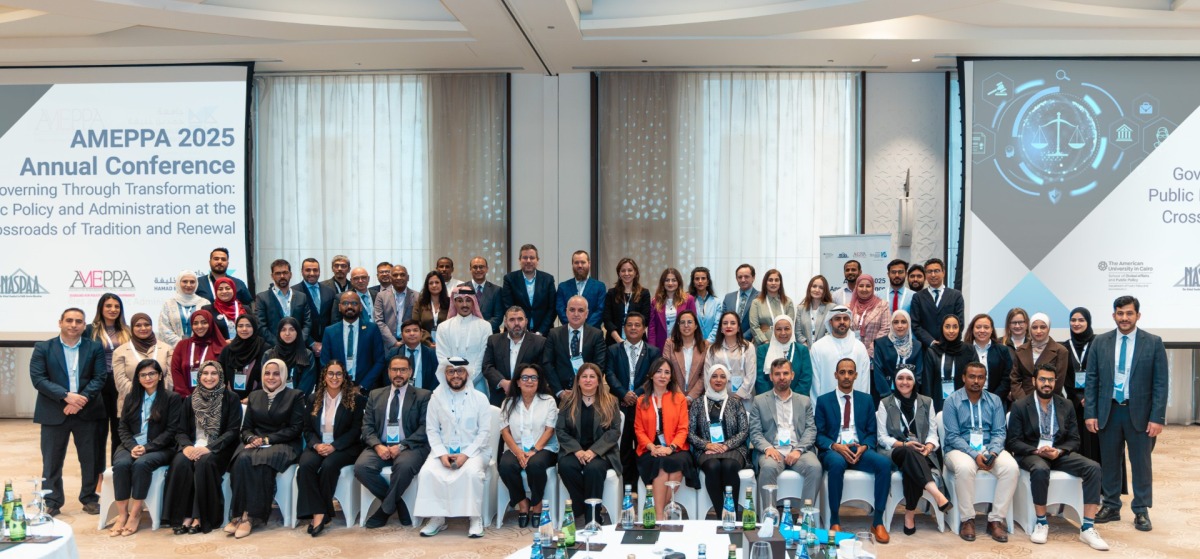

Doha, Qatar – Hamad Bin Khalifa University (HBKU) recently hosted the Annual Association for Middle Eastern Public Policy and Administration (AMEPPA) conference, bringing together regional and international experts to discuss the evolving landscape of public policy in the Middle East and North Africa (MENA). The two-day event, held at HBKU’s College of Public Policy (CPP), focused on navigating the intersection of tradition and renewal in governance. Participants explored critical issues facing the region, including the integration of artificial intelligence and the modernization of government services.
The conference, which concluded on December 13th, drew scholars, policymakers, and graduate students from across the MENA region and beyond. Discussions centered on adapting policy frameworks to address contemporary challenges while remaining grounded in local values and governance structures. This year’s AMEPPA conference aimed to foster collaboration and knowledge sharing to improve governance outcomes.
The Future of Public Policy in a Transforming MENA Region
A key theme throughout the conference was the need for public policy schools to evolve and equip graduates with the skills necessary to address complex, rapidly changing issues. A Deans’ Roundtable, featuring prominent academic leaders, examined the core competencies required for future public servants. The discussion highlighted the importance of adaptability, critical thinking, and a deep understanding of both regional contexts and global trends.
Focus on Digital Transformation and AI
The integration of technology into government operations was a significant area of focus. Sessions explored the potential of digital government to enhance service delivery and improve efficiency. Additionally, experts debated the ethical and regulatory implications of artificial intelligence (AI) in the public sector, recognizing the need for responsible innovation.
According to Dr. Logan Cochrane, Acting Dean of HBKU’s CPP, the conference served as a “call to action” for stakeholders to engage in meaningful dialogue and collaboration. He emphasized the university’s commitment to addressing region-specific challenges and fostering a nuanced understanding of policy coordination.
Geopolitical Considerations and Social Contracts
The conference also addressed the broader geopolitical context shaping governance in the Middle East. Discussions touched upon the evolving dynamics of regional identity and the impact of global events on national policy priorities. Experts noted the importance of considering these factors when developing effective policy solutions.
Furthermore, the need to re-evaluate and potentially renew the social contract between governments and citizens was a recurring topic. This includes addressing issues of equity, inclusion, and citizen participation in the policy-making process. The concept of social contract renewal is gaining traction as governments seek to build trust and legitimacy.
Dr. Evren Tok, Associate Dean of Community Engagement at CPP and AMEPPA 2025 conference chair, underscored the value of multidisciplinary participation in tackling real-world challenges. She stated that leveraging partnerships is crucial for shaping informed policy-making. Dr. Esmat Zaidan, also a conference chair and Associate Dean at CPP, added that policy systems must adapt to “disruptive forces” while remaining “rooted in local values.”
The conference highlighted the increasing importance of Middle East policy in a globalized world. The region faces unique challenges related to resource management, political stability, and economic diversification, all of which require innovative policy approaches.
Looking ahead, the outcomes of AMEPPA 2025 are expected to inform ongoing research and policy development initiatives within the MENA region. The conference organizers have not yet announced a date or location for AMEPPA 2026, but further collaboration and knowledge exchange are anticipated. The long-term impact of the discussions will depend on the extent to which policymakers translate insights into concrete action, a process that remains subject to political and economic factors.