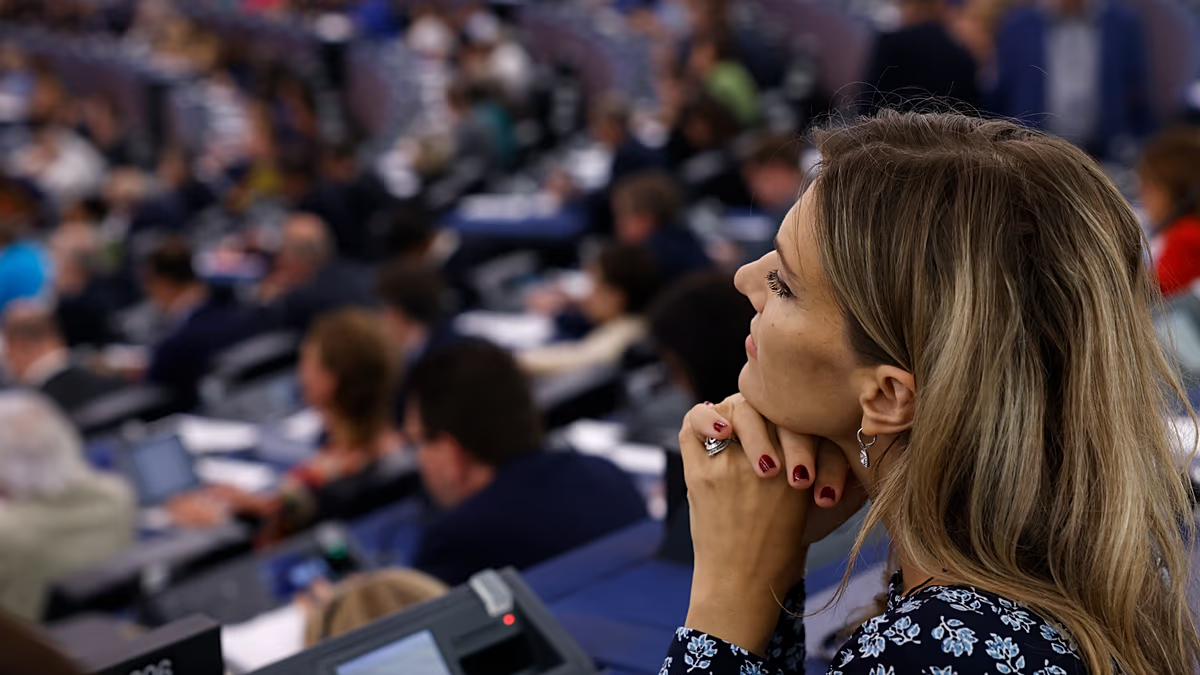

The European Parliament corruption scandal, initially erupting in December 2022, continues to unfold with no trial date set and increasing scrutiny of the investigative methods employed by Belgian authorities. The case, which involved allegations of influence peddling by Qatar, Morocco, and Mauritania, centered around then-MEP Eva Kaili and has now expanded to include prominent figures like former EU foreign policy chief Federica Mogherini. Kaili, maintaining her innocence, claims she was framed and is demanding justice, alleging a politically motivated prosecution and collusion between investigators and the media.
The initial scandal broke with dramatic police raids and the discovery of large sums of cash, including a now-infamous image of a suitcase filled with €500 banknotes. Kaili, who was Vice President of the European Parliament at the time, was arrested along with her partner, Francesco Giorgi, and her father, accused of involvement in an alleged scheme to accept bribes in exchange for lobbying efforts. More than €1.5 million was seized during the operation.
The Ongoing European Parliament Corruption Scandal and its Fallout
Kaili has consistently denied any personal connection to the funds found in her possession, pointing to former MEP Pier Antonio Panzeri as a key figure in the alleged network. Qatar and Morocco have repeatedly denied the accusations of attempting to influence European Parliament decisions through illicit payments. However, the investigation has been plagued by setbacks, including the resignations of the lead investigative judge, Michel Claise, over potential conflicts of interest, and the Belgian federal prosecutor, Raphael Malagnini.
The methods used by Belgian authorities have come under intense criticism. Kaili’s lawyers have alleged that her four months in preventative detention amounted to torture and that the lifting of her parliamentary immunity was unlawful. They also claim sensitive information was deliberately leaked to the press to pre-judge the case.
Allegations of a Pre-Orchestrated Narrative
Kaili alleges a coordinated effort between the Belgian prosecutor’s office, police, and journalists to construct a negative narrative before the investigation had even begun. “We have messages between the prosecutor, the police and journalists preparing articles before the investigation even started, deciding how they would title it and trying to twist everything to fit a headline,” she stated in a recent interview with Euronews. She argues that this goes beyond typical media leaks and represents a deliberate attempt to secure a guilty verdict in the public eye.
The focus on Kaili’s personal life and perceived ambition, she claims, was a distraction from the core issues of the investigation. She maintains she was diligently working to establish relations with Gulf countries under a mandate from the European Parliament, supported by internal documentation.
The recent detention of Federica Mogherini, Stefano Sannino, and a College of Europe staff member in a separate, but potentially related, case investigated by the European Public Prosecutors’ Office (EPPO) has further fueled Kaili’s claims of selective prosecution. Mogherini has stated her willingness to cooperate with the investigation. More details on the Mogherini case can be found at Euronews.
Kaili also raised concerns about a perceived pattern of targeting individuals from Southern European countries within EU institutions. She suggested that there may be a bias in how investigations are conducted and narratives are shaped, potentially leading to unfair scrutiny and accusations.
The scandal has raised broader questions about transparency and accountability within the European Parliament, and the need for stronger safeguards against foreign interference. The European Parliament has been reviewing its internal rules and procedures in response to the allegations, aiming to enhance oversight and prevent future instances of potential corruption. These reforms were adopted in January 2024.
As the investigation continues and a trial date remains elusive, the European Parliament corruption scandal serves as a stark reminder of the vulnerabilities within democratic institutions and the importance of upholding the presumption of innocence. The coming months will be crucial in determining whether Kaili’s allegations of a flawed investigation and political framing will be substantiated, and what lasting impact this case will have on the credibility of the European Union.
The focus now shifts to the EPPO’s investigation into the Mogherini case and the potential connections to the original allegations. Observers will be watching closely to see if a trial is eventually scheduled and whether the evidence presented can withstand the scrutiny of the legal process.