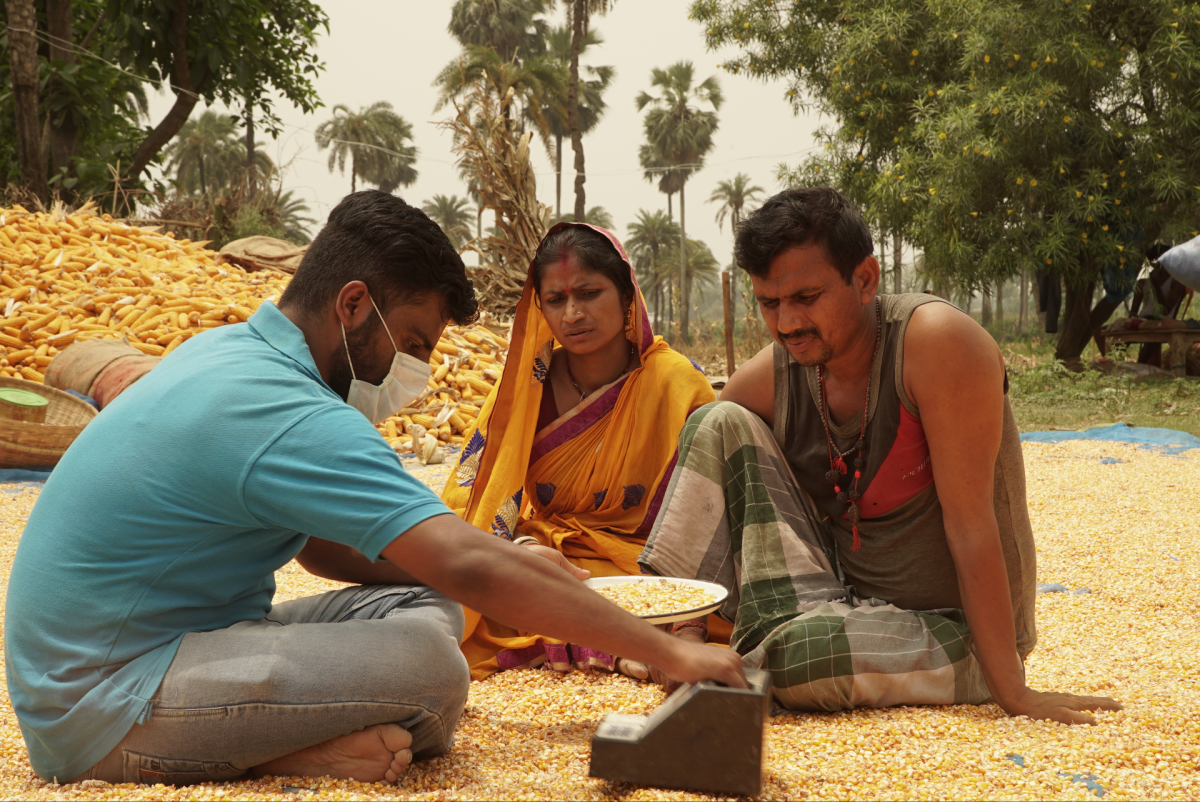

Arya.ag, an Indian agritech company specializing in providing storage facilities and agricultural loans to farmers, has secured $81 million in a Series D funding round led by GEF Capital Partners. The company, which operates a network of leased warehouses across India, continues to demonstrate profitability despite ongoing volatility in global commodity markets and declining crop prices, a notable achievement within the agtech sector. Approximately 70% of the funding is primary capital, with the remainder coming from secondary share sales.
Navigating a Declining Agricultural Market with Innovative Financing
Globally, agricultural commodity prices are under pressure due to factors like extreme weather events, rising input costs, trade disruptions, and evolving biofuel policies, as warned by the World Bank. This environment poses significant risks to businesses reliant on stable prices and efficient inventory management. However, Arya.ag has positioned itself to withstand these challenges by focusing on a secured lending model and avoiding direct speculation in commodities.
Founded in 2013 by Prasanna Rao, Anand Chandra, and Chattanathan Devarajan, all former ICICI Bank executives, Arya.ag addresses a critical need in the Indian agricultural ecosystem: bridging the gap between harvest and sale. The Noida-based startup empowers farmers by giving them control over when and to whom they sell their produce, reducing the pressure to accept low prices immediately after harvest.
Scale and Reach of Arya.ag’s Operations
Arya.ag differentiates itself through its operational scale and broad reach. The company currently aggregates and stores around $3 billion worth of grain annually, representing roughly 3% of India’s total agricultural output. They also facilitate approximately $1.5 billion in loans each year, maintaining a low non-performing asset (NPA) ratio of under 0.5% even with recent price drops.
A key component of Arya.ag’s risk mitigation strategy is limiting loans to a percentage of the stored grain’s value. The company actively monitors market prices and implements margin calls when necessary, allowing farmers to either repay a portion of the loan or provide additional grain as collateral—preventing substantial losses in a downturn. According to Rao, this approach protects against dramatic price declines.
“You’re not immune to risks,” Rao stated, “But because your lending is completely secured against commodities, it will never happen that the prices will fall by 90%. You already have a margin of 30%, and with your mark to market, you’ve been able to control your NPAs and defaults.”
Financially, Arya.ag has demonstrated consistent growth. The company reported net revenue of ₹4.5 billion (approximately $50 million) for the fiscal year ending March 2025. Preliminary figures indicate a 30% increase in revenue for the first half of the current financial year, reaching ₹3 billion ($33.3 million). Profit after tax also increased, reaching ₹340 million (about $3.78 million) last year and rising by a further 39% so far this year.
Expanding Access to Agricultural Finance
Arya.ag’s network extends to approximately 850,000 to 900,000 farmers across 60% of India’s districts, leveraging around 12,000 leased agricultural warehouses. The startup generates revenue from three primary sources: storage fees paid by farmers, commissions from originating farm credit for partner banks, and fees from connecting farmers with buyers, including agri-corporations, processors, and millers.
Storage currently accounts for the largest share of revenue, contributing 50–55% of the total. Finance-related services generate 25–30%, with the remaining revenue derived from facilitating crop sales. The company disburses over ₹110 billion (about $1.2 billion) in loans annually, with ₹25 billion to ₹30 billion (roughly $278 million–$333 million) originating from its own non-banking finance arm.
Arya.ag’s interest rates on agricultural loans range from 12.5% to 12.8%, which is lower than the 24% to 36% typically charged by local commission agents, but slightly higher than traditional bank lending rates of 11% to 12%. Rao explained that banks often lack the infrastructure and willingness to lend in the remote, small-scale agricultural markets that Arya.ag serves.
The company’s technology platform enables rapid loan approvals – often within five minutes – and facilitates almost entirely digital disbursement. Arya.ag utilizes artificial intelligence to assess grain quality for lending decisions, satellite data to monitor crop health, and sensor-enabled storage bags to extend the storage life of grain, even in areas without modern warehousing facilities.
Looking ahead, Arya.ag intends to deploy the new capital to further scale its technology infrastructure, including expanding smart farm centers and enhancing digital tools for farmers. Investments will also be directed towards strengthening its blockchain-based system for tracking stored grain throughout the lending and trade processes. The company aims to be prepared for an initial public offering (IPO) within the next 18 to 20 months.
Beyond India, Arya.ag plans a selective international expansion, initially focusing on a software-led model with existing deployments in parts of Southeast Asia and Africa. The company currently employs over 1,200 full-time staff. Avendus served as the financial advisor for this funding round. The company’s continued success will depend on its ability to maintain low NPA rates in a volatile market and effectively scale its technology solutions to reach more farmers.