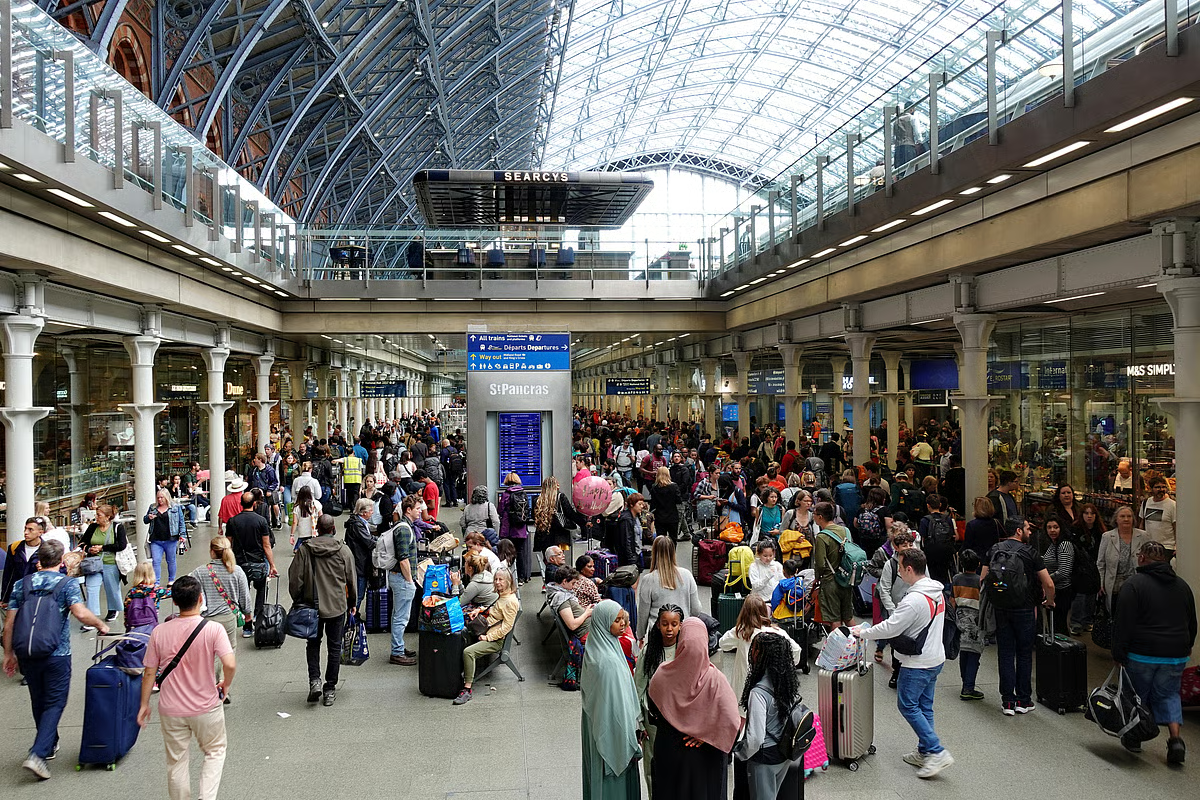

Thousands of travelers faced significant disruption on Tuesday as Eurostar services through the Channel Tunnel were severely delayed and cancelled. The issues began with a power supply problem and were exacerbated by a subsequent failure of a Le Shuttle train, leaving passengers stranded on both sides of the Channel. The situation has prompted widespread travel advisories and warnings against non-essential journeys.
The disruption primarily affects travel between London and Paris, as well as other destinations accessible via the high-speed rail link. Eurostar, the main operator on the route, has cancelled numerous trains, and those still running are subject to substantial delays. Passengers are strongly advised to check their booking status and consider postponing their travel plans if possible. Travel experts are anticipating continued complications throughout the day.
Understanding the Eurostar Disruption and Its Causes
The initial problem stemmed from an issue with the overhead power supply system within the Channel Tunnel itself. Eurostar reported problems starting in the early hours of Tuesday morning, causing immediate delays to services. This type of infrastructure failure, while not common, is complex to resolve given the unique environment of the undersea rail link.
However, the situation worsened considerably when a Le Shuttle train, operated by Getlink and used to transport vehicles, also experienced a fault and became immobilized in the tunnel. This blocked one of the rail lines, severely limiting the capacity for both Eurostar and Le Shuttle to operate. The combined effect of these incidents created a major bottleneck.
Impact on Passengers and Transportation Networks
The cascading effect of the delays and cancellations has sparked considerable frustration among passengers. Many planned business trips and leisure travel have been thrown into disarray, and the short-notice nature of cancellations has added to the difficulties. Eurostar has been urging passengers without tickets not to travel to stations, in an effort to prevent overcrowding and further hinder recovery efforts.
Beyond Eurostar, the Le Shuttle suspension disrupts freight transport and travel for motorists. The Channel Tunnel is a vital link for trade between the UK and mainland Europe, and its partial closure impacts supply chains. According to reports, Getlink is prioritising clearing the tunnel to restore freight capacity as quickly as possible.
Technical Challenges and Repair Efforts
Repairing the overhead power supply in the Channel Tunnel presents unique logistical hurdles. Access is limited, and the environment is challenging. Eurostar engineers are working to identify the precise cause of the power failure and to implement a solution. The company has stated that safety is their paramount concern, and services will not be resumed until the system is fully operational.
The stranded Le Shuttle train also requires specialized recovery procedures. Removing a train from the confined space of the tunnel is a slow and intricate process, demanding careful coordination to avoid further damage and ensure the safety of personnel involved. Repairing the failed train itself will add to the overall disruption timeframe.
Longer-Term Implications for Channel Travel
This incident raises questions about the resilience of the Channel Tunnel infrastructure. While regular maintenance is performed, the tunnel is a complex system operating in a harsh environment, vulnerable to unexpected failures. A review of the incident and the preventative measures in place may be undertaken by relevant authorities.
The disruption also highlights the limited alternative options for travelling between the UK and continental Europe. Ferry services offer a possible, though slower, alternative, but capacity is constrained. Air travel might experience increased demand, which could lead to higher prices. Consequently, the reliability of the Eurostar service is critical for maintaining connectivity.
Some industry analysts suggest that the event could accelerate discussions around investment in upgrading the power supply and other key components of the Channel Tunnel, especially as future traffic volumes are expected to increase. The reliability of Eurostar is closely tied to the condition of the infrastructure, and sustained disruptions could damage consumer confidence. The current incident will likely spur increased scrutiny of both Eurostar and Getlink’s maintenance protocols.
The impact extends beyond direct passengers. Businesses relying on time-sensitive deliveries via the Eurostar freight service are facing potential delays, adding complexity to logistics operations. Furthermore, the lack of clarity on the restoration timeline adds uncertainty for travelers. Alternative routes, like ferries and air travel, may also experience strain due to the sudden surge in demand.
The incident also serves as a reminder of how interconnected European transport networks are. A disruption in one section, such as the Channel Tunnel, can have far-reaching consequences across multiple countries. Efficient communication and collaboration between operators and governments are crucial for mitigating these effects. The availability of train travel options is an important consideration for many commuters.
Eurostar and Getlink are currently working to restore services. As of late Tuesday, officials have indicated that they expect to have a clearer understanding of the full extent of the damage and the estimated repair time within the next 24 hours. Passengers are advised to continue monitoring the Eurostar website and social media channels for the latest updates. The situation remains fluid, and further delays or cancellations are possible. The focus will be on fully assessing the damage to both the power supply and the Le Shuttle train, and then implementing a phased return to normal operations.