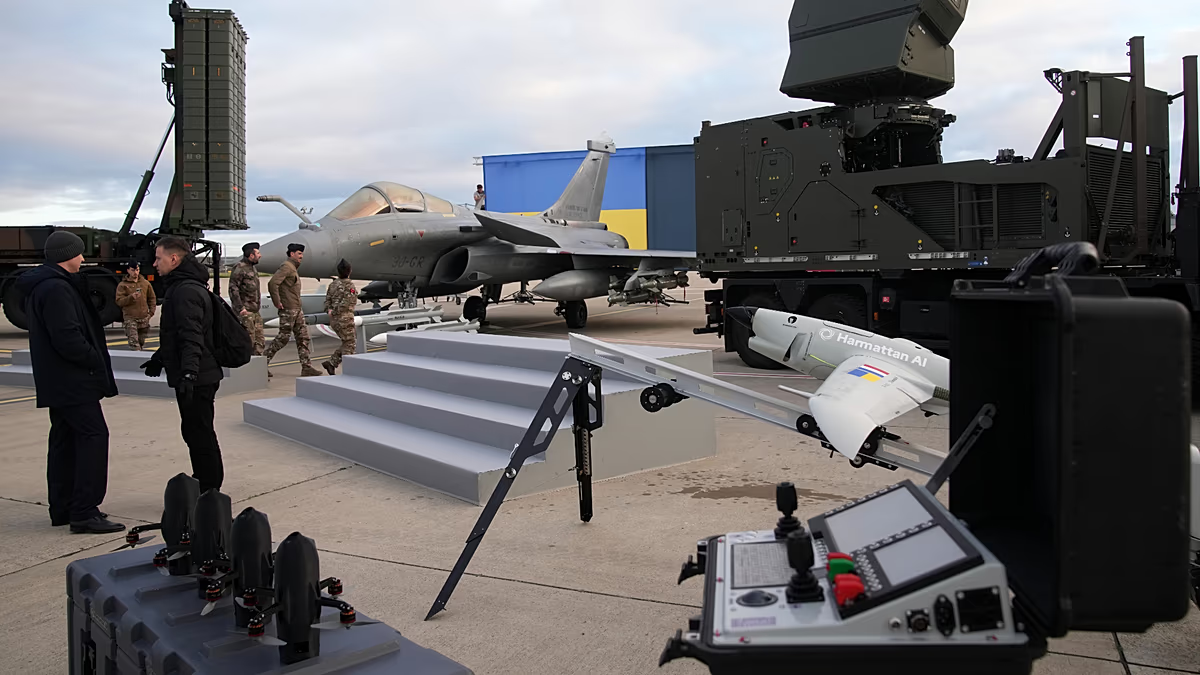

European defence companies experienced significant growth in 2024, with turnover increasing by 13.8% year-on-year as nations bolster their military capabilities. A new report from the Aerospace, Security and Defence Industries Association of Europe (ASD) highlights a surge in both revenue and direct employment within the sector, driven largely by increased defence spending across the continent. This trend reflects Europe’s response to perceived threats, most notably from Russia.
Overall turnover for the 4,000 companies represented by ASD reached €325.7 billion in 2024, a 10.1% rise. Direct employment in the sector rose to a record high of 1,103,000, a 6.9% increase. These figures underscore the economic impact of heightened security concerns and the ongoing rearmament efforts.
Defence sector leads surge in European military production
The primary driver of this expansion has been the defence segment, which saw a 13.8% annual increase, generating €183.4 billion in turnover. This growth rate significantly outpaced the 6% rise seen in civil aviation, indicating a clear prioritization of military needs. According to the report, the defence sector accounts for 633,000 of the total direct jobs, up 8.6% year-on-year.
This increase in demand follows a substantial rise in European defence spending since Russia’s full-scale invasion of Ukraine in 2022. In 2023, EU member states collectively spent approximately €343 billion on defence, a considerable leap from the €251 billion spent in 2021. Experts believe Moscow could threaten another European country before the end of the decade, further fueling the demand for stronger military preparedness.
The European Commission is actively working to facilitate more investment into the defence industry. This includes promoting fiscal flexibility for defence spending within EU member states, as well as streamlining bureaucratic processes for defence companies to accelerate production and expansion. Such efforts aim to bolster European Defence Agency capabilities.
The proposed EU budget for the next seven years reflects this shift in priorities, allocating approximately €131 billion for defence, a dramatic increase compared to the roughly €10 billion earmarked in the 2021-2027 budget. However, debates continue regarding the optimal strategy for these investments.
Differing opinions persist among member states on whether to prioritize domestically produced equipment – which can face longer lead times – or to procure readily available systems from international suppliers. There’s also discussion on which specific capabilities require urgent investment to address evolving security challenges.
EU leaders are expected to formally endorse a defence readiness roadmap presented by the Commission in October. This roadmap outlines key projects, including the development of a drone wall as part of a broader Eastern Flank Watch initiative, at an upcoming summit. Simultaneously, the Commission is reviewing applications for funding from the €150 billion SAFE defence loan scheme, with disbursements anticipated to begin in the first quarter of 2026.
“Rising defence budgets and deeper industrial cooperation are strong signals,” stated Camille Grand, ASD Secretary General. “However, investments must be sustained over a prolonged period to avoid repeating past mistakes.” Grand also emphasized the need to reduce reliance on non-European suppliers, advocating for strengthened European supply chain sovereignty.
Looking ahead, continued investment in the European defence sector appears likely, although the precise shape of that investment and the balance between domestic production and foreign procurement remain points of contention. Monitoring the implementation of the SAFE scheme and the progress on the defence readiness roadmap will be crucial indicators of Europe’s commitment to strengthening its collective security and industrial base.