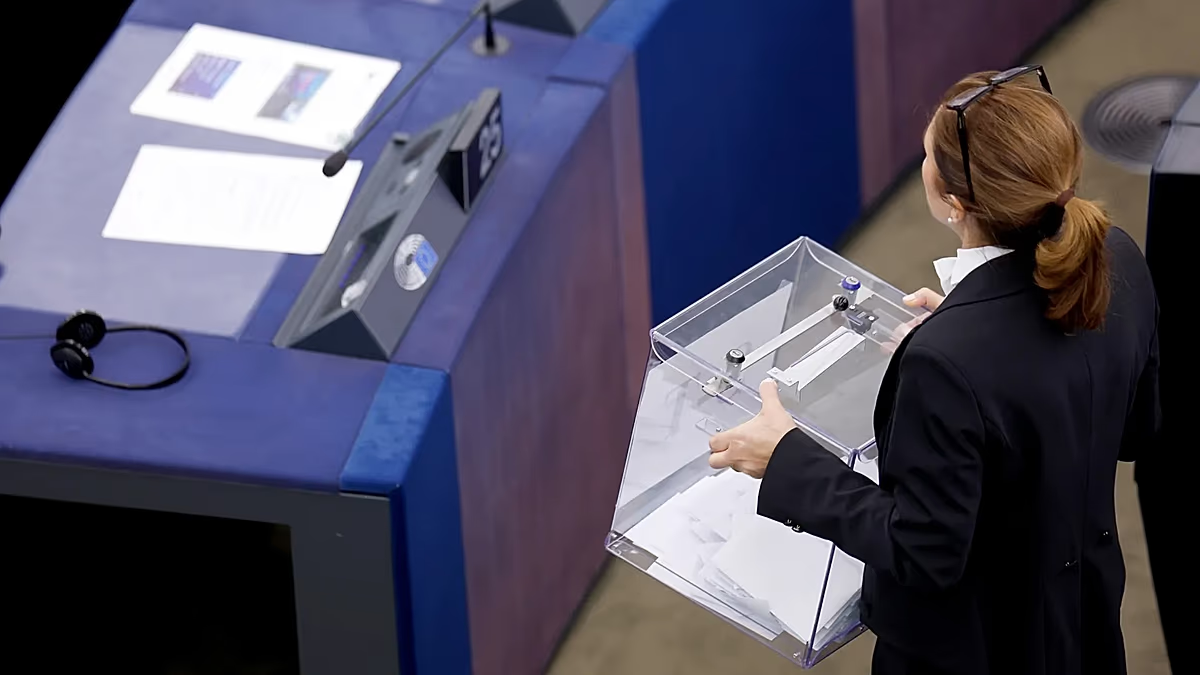

The European Commission has unveiled its new Democracy Shield, a comprehensive roadmap designed to protect European democracies and electoral processes from foreign interference and information manipulation. This initiative comes as the EU faces increasing threats from external actors, particularly Russia, which has been accused of conducting online destabilisation campaigns across the bloc.
The Democracy Shield aims to enhance democratic resilience across the EU by creating a European Centre for Democratic Resilience, which will identify destabilisation operations, pool expertise from member states, and coordinate fact-checking networks. According to European Commissioner for democracy and rule of law Michael McGrath, the centre’s nature will evolve over time to address the constantly changing threat landscape.
The Threat of Foreign Interference
Recent elections have demonstrated the damaging impact of online campaigns on democratic processes. In December, Romania’s presidential elections were cancelled due to reports of Russian involvement in influencing voters through a propaganda campaign. Similarly, Moldova’s parliamentary elections saw a surge in disinformation on social media platforms, with artificial intelligence-driven bots flooding comment sections with anti-EU posts.
These incidents highlight the need for a robust defence against foreign interference. The Democracy Shield is a step in this direction, but its effectiveness will depend on the allocation of sufficient funds and the cooperation of EU member states. The European Commission’s press release on the Democracy Shield provides further details on the initiative.
Challenges and Limitations
Despite the Commission’s strong rhetoric, the Democracy Shield has been criticised for its lack of concrete measures and unclear funding. Omri Preiss, managing director of Alliance4Democracy nonprofit, noted that the EU’s efforts are dwarfed by Russia’s estimated €2-3 billion annual expenditure on influence operations. French MEP Nathalie Loiseau also expressed concerns that the Commission should have gone further in its proposals.
The Commission has proposed setting up a voluntary network of influencers to promote awareness about EU rules and best practices. However, the success of this initiative will depend on the participation of influencers and the effectiveness of the network in countering disinformation.
Implementing Existing Rules
In addition to the Democracy Shield, the EU has already adopted several rules aimed at protecting electoral processes. The Digital Services Act requires greater transparency in recommendation algorithms, while the AI Act mandates the labelling of AI-generated deep fakes. The European Media Freedom Act ensures transparency and media freedom across the bloc.
However, the implementation of these rules remains a challenge. The centrist group Renew in the European Parliament has called on the Commission to ensure that the European Media Freedom Act is fully implemented across the EU. According to the group, enforcing existing rules is the first step in building a shield for democracy.
As the EU prepares for a crucial year of elections in key member states, including France, Italy, and Spain, the Democracy Shield will be put to the test. The success of this initiative will depend on the Commission’s ability to implement existing rules and provide sufficient funding for its proposals.