
The European Union is facing a critical juncture as it nears a potential agreement with the Mercosur trade bloc, sparking significant debate and opposition, particularly from France. The Mercosur agreement, years in the making, is expected to be signed by year-end, but faces last-minute hurdles due to concerns over its impact on European farmers. This development comes as the EU seeks to strengthen its trade relationships globally amidst increasing competition.
The European Commission announced Monday its expectation to finalize the deal before the end of the year, putting pressure on France to lift its objections this week. French President Emmanuel Macron is already contending with widespread farmer protests, adding to the political sensitivity surrounding the Mercosur agreement. Negotiations between the Mercosur nations – Argentina, Brazil, Paraguay, and Uruguay – and the EU have spanned over two decades.
France Leads Opposition to the Mercosur Agreement
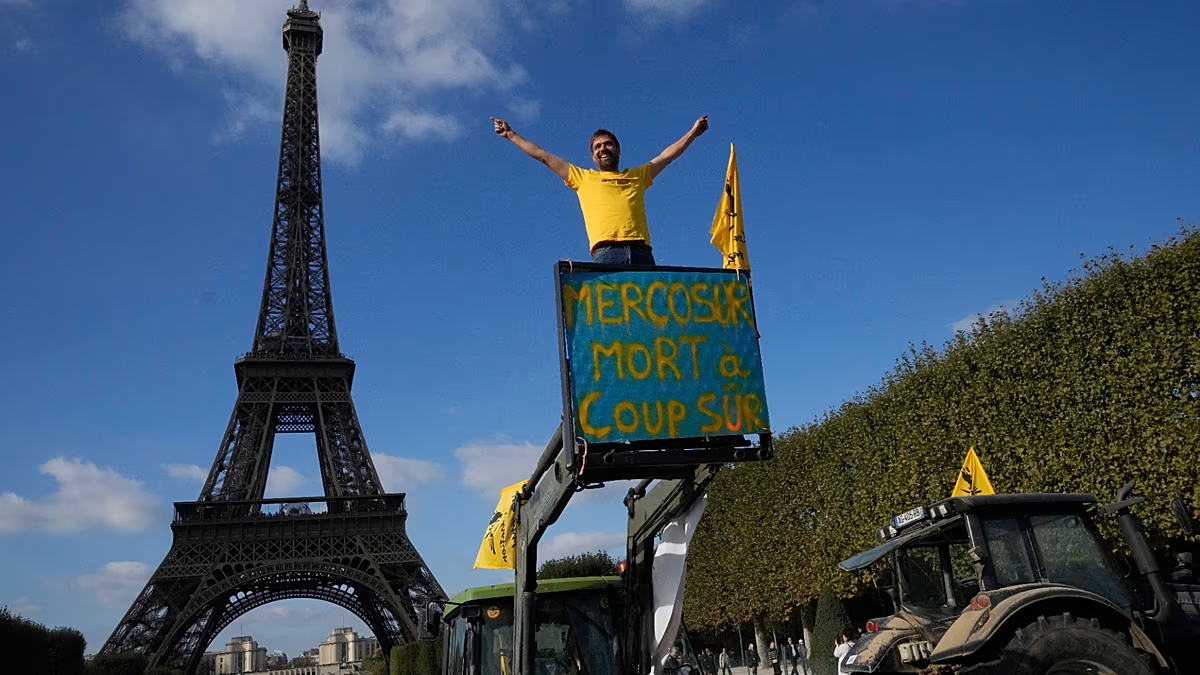
France is leading the charge against the deal, citing fears that it will expose its agricultural sector to unfair competition from Latin American imports. According to a statement released by the office of Prime Minister Sébastien Lecornu, France is requesting a delay to the December deadlines, arguing that the necessary conditions for a vote are not yet in place. Specifically, France is demanding stronger safeguards to protect EU markets from import surges.
These safeguards include “reciprocity clauses” that would align Mercosur’s environmental and agricultural standards with those of the EU, as well as stricter sanitary and phytosanitary controls. French farmers are concerned about differing production standards and the potential for cheaper imports to undercut their businesses. The situation is further complicated by ongoing domestic issues in France, including an outbreak of lumpy skin disease affecting cattle, which has fueled farmer discontent.
Commission’s Response and Proposed Safeguards
The European Commission has responded to these concerns by proposing tighter market monitoring and a safeguard clause. Commission deputy chief spokesperson Olof Gill stated that the Commission views signing the deal as “crucially important economically, diplomatically, and geopolitically.” EU lawmakers are scheduled to vote Tuesday on the proposed safeguard, with some members seeking to add an amendment regarding reciprocity.
While member states have already supported the safeguard, guarantees of reciprocity remain elusive. A parliamentary official told Euronews that Germany, while also having concerns about reciprocity, is unlikely to jeopardize the agreement due to its own strong economic interests in the deal. If lawmakers refrain from imposing EU production standards on Mercosur imports, the safeguard could be expedited.
Geopolitical Implications and EU Divisions
Supporters of the Mercosur agreement, including Germany and Spain, emphasize its strategic importance as the EU navigates a changing global landscape. They argue that the deal is vital to counter the EU’s declining influence in the US market and China’s growing presence in Latin America. However, securing a qualified majority for ratification remains uncertain.
Beyond France, Poland, Hungary, and Austria have also voiced opposition to the pact, while Belgium intends to abstain from the vote. The positions of the Netherlands, Ireland, and Italy are currently unclear. This internal division within the EU highlights the complexities of forging a unified trade policy. The EU’s trade policy is a key component of its broader economic strategy, as outlined on the European Commission’s trade website.
The coming days will be crucial as the EU attempts to reconcile the competing interests and finalize the Mercosur agreement. The outcome will not only shape the future of EU-Latin American trade relations but also signal the EU’s ability to navigate internal divisions and assert its position on the global stage. Stakeholders should closely monitor the European Parliament vote and subsequent negotiations between the Parliament and EU governments for further developments.