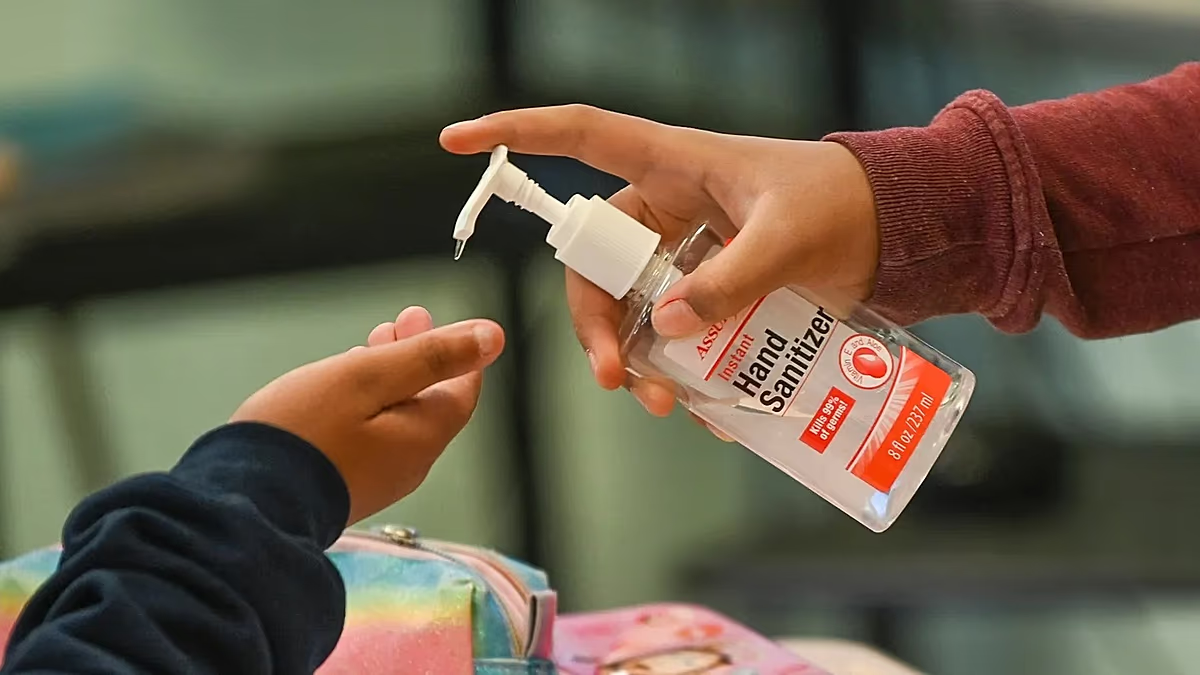

The European Union is currently reviewing the classification of ethanol, a widely used disinfectant, potentially labeling it as a dangerous substance. This evaluation, impacting healthcare, industry, and consumers, is on hold due to ongoing disagreements among scientific experts at the European Chemicals Agency (ECHA). The debate centers on potential health risks linked to ethanol exposure, specifically concerns about carcinogenicity and reproductive toxicity, with a final decision expected in late 2026.
Discussions between European lawmakers and the European Commission took place on December 3rd, 2025, highlighting the significant repercussions the classification could have on essential healthcare practices across the EU. The potential changes come under the EU’s biocidal products law, a framework governing the approval of active substances in disinfectants and pest control.
Ethanol Classification: A Deep Dive into the EU Review
The review focuses specifically on ethanol’s use within biocidal products, not its application as a fuel. According to Klaus Berend, Director of Food Safety at the Commission’s department for health and food safety, the Commission will approve ethanol if proven risks associated with its disinfectant use are not substantial. This suggests a risk-benefit analysis is central to the decision-making process.
European lawmakers Christine Singer and Andreas Glück have urged for proper consideration of the broad consequences, requesting a discussion at a high political level within the European Parliament. Singer emphasizes the need to evaluate social, economic, and structural impacts alongside health concerns, stressing the importance of a proportionate and practical regulatory approach.
ECHA initially aimed to publish its opinion before Christmas 2025 but postponed it following inconclusive discussions among EU member state experts. These experts suggested that ethanol may present carcinogenic and reprotoxic properties, which triggered the deeper review.
Scientific Debate and Risk Assessment
The scientific committee at ECHA is currently engaged in a detailed assessment of ethanol’s hazardous properties. This process includes identifying and evaluating potential alternative disinfectants. However, a consensus has not been reached, leading to the delay.
ECHA clarified that even if ethanol is categorized as carcinogenic or reprotoxic, it may still be approved for use. The agency will consider the risks associated with specific applications, like hand sanitizers, and weigh them against the viability of alternative solutions, according to an official statement. Exposure levels, such as skin contact during hand sanitization, are a crucial part of the assessment.
Industry and Supply Chain Implications
The potential reclassification of ethanol has broader implications than just healthcare. It could disrupt supply chains and affect numerous industries relying on ethanol-based disinfectants. This includes hospitals, food processing facilities, and even household cleaning product manufacturers.
The need for alternative disinfectants could drive up costs and potentially reduce the effectiveness of certain hygiene protocols. Policymakers are aware of these challenges and are aiming for a balanced approach.
ECHA plans to reconvene its scientific experts to discuss ethanol’s classification in February 2026. An updated analysis of available alternatives will follow in May. Following this, the European Commission will issue a final decision, taking into consideration the scientific assessments and broader stakeholder concerns. ECHA’s website provides more information about the biocidal products regulation process.
Looking ahead, interested parties should monitor publications from ECHA and the European Commission for updates on this important regulatory review. The outcome will likely shape disinfectant standards and practices across the European Union for years to come.