
European news is dominated today by developments in the Russia-Ukraine war, as Russian President Vladimir Putin indicated a willingness to consider the US-Ukraine peace plan, albeit with the significant condition of territorial concessions from Ukraine. This comes as Hungarian Prime Minister Viktor Orbán prepares for a controversial visit to Moscow to meet with Putin, raising eyebrows within European Union institutions. The unfolding situation highlights the complex geopolitical landscape and ongoing efforts to find a resolution to the conflict.
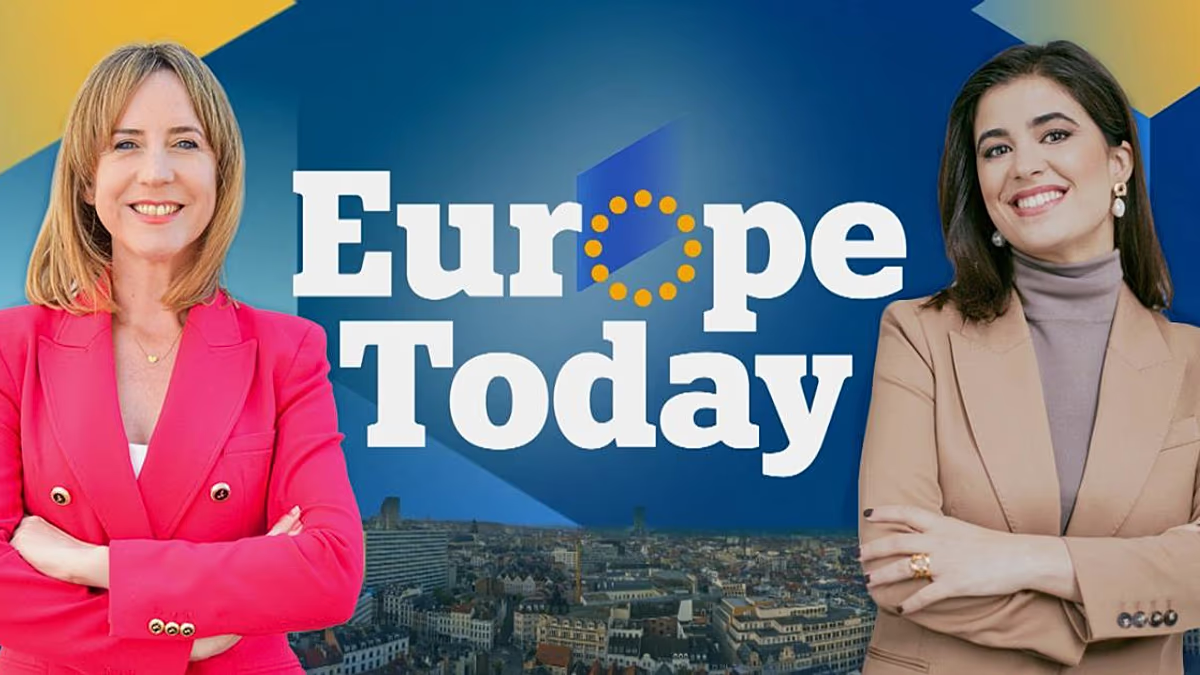
Euronews’ daily news program, “Europe Today,” is covering these events with insights from EU news editor Maria Tadeo and EU Ambassador to Ukraine, Katarina Mathernova. The program also features Catherine De Bolle, Executive Director of Europol, discussing broader European security challenges. Meanwhile, Black Friday sales are in full swing across the continent, offering a contrasting domestic focus.
Putin Signals Potential for Ukraine Peace Talks, With Conditions
Vladimir Putin stated that the outline of a US-Ukraine peace plan could potentially serve as a basis for negotiations, according to reports from Russian state media. However, he reiterated Russia’s demand that Ukraine relinquish control of territories currently occupied by Russian forces. This position remains a major obstacle to any meaningful peace process, as Ukraine has consistently ruled out ceding territory.
The US-Ukraine peace plan, details of which have been reported by various news outlets, reportedly involves security guarantees for Ukraine and a commitment to its future sovereignty. The Kremlin’s conditional acceptance suggests a willingness to engage in talks, but on terms largely unfavorable to Kyiv. Analysts suggest this is a strategic move by Putin to portray Russia as open to negotiation while simultaneously reinforcing its territorial gains.
Orbán’s Moscow Visit Sparks EU Concern
Hungarian Prime Minister Viktor Orbán’s planned visit to Moscow has drawn criticism from several EU member states and institutions. Orbán is the first EU leader to meet with Putin since the International Criminal Court issued an arrest warrant for the Russian president in March 2023. The European Commission has expressed concern over the visit, emphasizing the importance of maintaining a united front against Russian aggression.
Hungary has maintained relatively close ties with Russia despite the war, relying on Russian energy supplies and often diverging from the EU’s common foreign policy stance. Orbán has defended the visit as necessary to protect Hungary’s interests, but critics argue it undermines the EU’s efforts to isolate Russia. The visit is expected to be a key topic of discussion among EU leaders in the coming days.
Europol Addresses Rising Security Threats in Europe
Alongside the geopolitical tensions, Catherine De Bolle, head of Europol, is addressing escalating security challenges facing the European Union. These include a surge in drug trafficking, the ongoing threat of terrorism, and the increasing prevalence of cybercrime. Europol plays a crucial role in coordinating law enforcement efforts across member states to combat these transnational threats.
De Bolle previously served as chief commissioner of the Belgian federal police, bringing extensive experience to her current role. She emphasized the need for increased international cooperation and investment in law enforcement capabilities to effectively address these evolving challenges. The rise of cybercrime, in particular, is a growing concern, with ransomware attacks and data breaches becoming increasingly sophisticated and frequent.
Additionally, Europol is actively involved in efforts to counter human trafficking and support Ukraine in investigating war crimes. The agency’s work is vital to maintaining security and stability within the European Union and beyond.
Meanwhile, the Black Friday shopping event continues to draw large crowds across Europe, with retailers offering significant discounts on a wide range of products. This annual sales event provides a boost to the retail sector but also raises concerns about consumer debt and the environmental impact of increased consumption.
As the situation in Ukraine remains fluid and Orbán’s visit to Moscow unfolds, “Europe Today” will continue to provide comprehensive coverage and analysis. Stay tuned for further updates on these developing stories and the broader European news agenda. You can catch the program every morning at 8:00 CET on Euronews.