
European Commission President Ursula von der Leyen has offered a cautious welcome to the latest proposed Ukraine peace deal, describing it as a “starting point” following recent diplomatic efforts. The development came as EU foreign affairs ministers convened to increase pressure on the Kremlin for a more substantial commitment to resolving the ongoing conflict. Alongside this, separate incidents – including a shooting near the White House and Pope Leo XIV’s Middle East visit – highlighted a world grappling with multiple crises, prompting increased discussion around European security and defense.
The proposed agreement’s details remain largely undisclosed, but initial reactions suggest it seeks to establish a framework for negotiations. However, significant obstacles remain, and the long-term viability of the deal is far from certain. According to officials, the EU is focused on ensuring any agreement respects Ukraine’s sovereignty and territorial integrity.
Ukraine Peace Deal and Broader European Security
The possibility of peace in Ukraine is intrinsically linked to the broader question of European security. Years of relative stability have been disrupted, leading several EU member states to reconsider their defense policies and explore the reintroduction of military conscription. This shift reflects growing concerns about potential Russian aggression and the need to bolster collective defense capabilities.
Meanwhile, the shooting near the White House, injuring two US National Guard members, underscores the global implications of instability. Although seemingly unrelated to the conflict in Ukraine, it highlights the challenges faced by security forces worldwide in a volatile geopolitical landscape. Law enforcement is currently investigating the incident and has not yet released details about a potential motive.
In a demonstration of “soft power,” Pope Leo XIV embarked on a six-day tour of the Middle East, his first international trip since becoming Pope. The visit aims to promote dialogue and understanding in a region beset by conflict, attempting to build bridges between religious and political leaders. Initial reports suggest the Pope intends to address concerns about humanitarian crises and advocate for peaceful resolutions.
Rising Military Conscription in Europe
The increasing frequency and severity of global conflicts are driving a trend towards reinstating military conscription in several European nations. Jakob Janas’s analysis suggests countries like Sweden and Lithuania have already taken steps in this direction, and others are actively debating the merits of such a move. The rationale centers on enhancing national preparedness and sharing the burden of defense more broadly amongst the population.
Additionally, the renewed focus on military readiness comes at a time of increased defense spending across the EU. Member states are responding to calls for greater investment in their armed forces, seeking to modernize their equipment and improve their overall capabilities. This investment is partially fueled by concerns about geopolitical risks and a desire to reduce reliance on external partners for defense.
The European Union continues to navigate a complex web of international challenges, balancing diplomatic efforts to de-escalate conflicts with the need to strengthen its own security posture. The outcome of peace negotiations regarding Ukraine will undoubtedly have far-reaching consequences for the EU and its relationship with Russia, according to analysts.
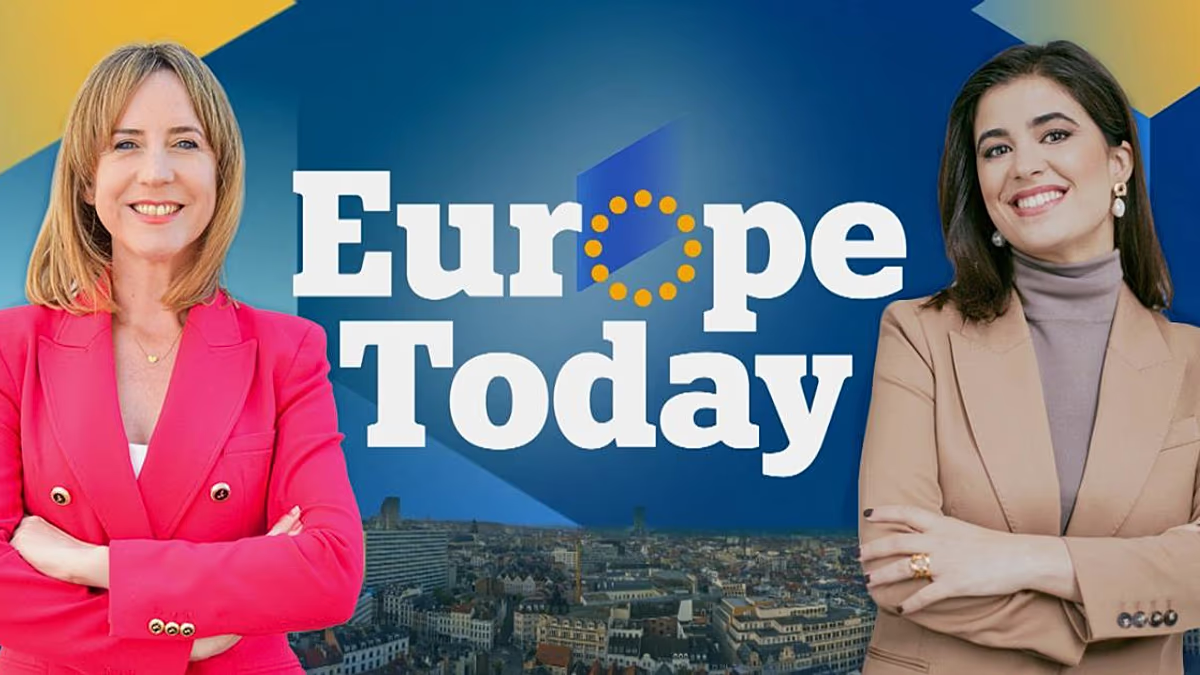
Euronews is covering these developments extensively. Every morning at 8:00 CET, viewers can tune in to “Europe Today” with Méabh Mc Mahon and Maria Tadeo, broadcasting live from Brussels. The program provides critical analysis of the day’s major events shaping the EU and the world, available in English with subtitles in 11 other languages, exclusively on Euronews.
As the situation in Ukraine continues to evolve and other global hotspots remain volatile, staying informed is crucial. Follow Euronews for continuing coverage of these important stories and their impact on Europe and beyond.