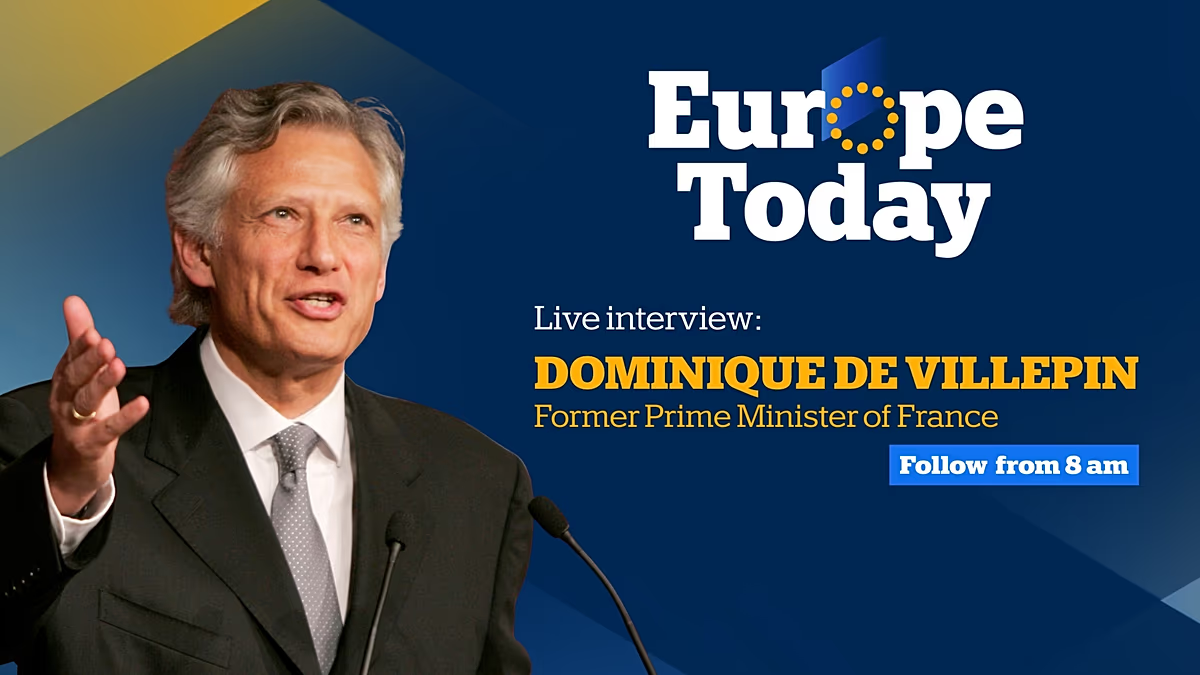

Global attention remains focused on Iran as protests continue following a nationwide blackout last week. European Union leaders are increasingly vocal in demanding the release of individuals detained during the demonstrations, which were sparked by deteriorating economic conditions. The Iranian government’s response has included widespread internet shutdowns, mass arrests, and reports of the use of lethal force against protestors, creating a volatile situation with potential international ramifications.
Euronews’ coverage, featuring EU editor Maria Tadeo, provides ongoing updates on the unfolding crisis. Additionally, analysis from former French Prime Minister Dominique de Villepin offers historical and political context, while reporter Aida Sanchez examines the interconnectedness of global events – including those in Ukraine, Venezuela, and Greenland – and their potential to reshape the geopolitical landscape. The situation in Iran is being closely monitored by international organizations and governments.
The Escalating Situation in Iran
The protests in Iran began in late December 2023, initially focused on economic grievances related to high inflation, unemployment, and government mismanagement. These demonstrations quickly broadened into wider calls for political reform and an end to what protestors perceive as oppressive social restrictions. Authorities responded with a severe crackdown, restricting access to information through internet censorship, a tactic frequently employed by governments facing widespread dissent.
The recent nationwide blackout, which began last Thursday, further inflamed tensions. The Iranian government attributed the outage to technical issues, but many believe it was a deliberate attempt to suppress the protests and prevent coordination among demonstrators. According to reports from human rights organizations, the blackout coincided with a surge in security forces deployed to quell the unrest. This has led to accusations of escalating violence and human rights abuses.
International Response and Concerns
The response from the international community has been largely critical of the Iranian government’s actions. EU leaders have issued strong statements condemning the violence and calling for the release of detained protestors. Similar calls have come from the United States and other nations, emphasizing the importance of freedom of expression and the right to peaceful assembly.
These international calls for restraint are, however, met with a complex political reality. Iran possesses significant regional influence and strategic importance, requiring a delicate diplomatic approach. The EU, for instance, is navigating the situation while also attempting to salvage the 2015 Iran nuclear deal, formally known as the Joint Comprehensive Plan of Action (JCPOA). The EU Delegation to Iran continues to operate, highlighting the ongoing engagement despite the current crisis.
Meanwhile, the situation is being watched for potential wider implications for regional stability. The conflict in Ukraine and ongoing tensions in the Middle East create a particularly sensitive geopolitical context. Some analysts suggest that the Iranian government may view the protests as being externally influenced, further complicating diplomatic efforts.
The Shifting World Map: Beyond Iran
The unrest in Iran is not occurring in isolation. Aida Sanchez’s reporting highlights a series of interconnected events globally. These include political maneuvering in Venezuela, the ongoing political crisis in Venezuela, and the recent increase in geopolitical focus on Greenland. These events, while geographically disparate, are collectively contributing to a period of significant global upheaval.
The potential for the United States to increase its involvement in Greenland, as reported by Euronews’ Jakub Janas, has raised concerns within NATO. This situation challenges the fundamental principle of collective defense, where an attack on one member is considered an attack on all. The possibility of a member state being targeted by another creates an unprecedented and unsettling dynamic within the alliance.
These developments, alongside the ongoing war in Ukraine, underscore a growing trend towards multipolarity and increased competition between major global powers. The implications of these shifts are far-reaching and will likely continue to shape international relations for years to come.
Looking ahead, the situation in Iran remains highly unpredictable. The government’s response to the protests will be crucial in determining the trajectory of the crisis. Continued international pressure and diplomatic efforts will be essential to de-escalate tensions and protect human rights. Stay tuned to Euronews’ “Europe Today” for the latest updates and analysis on this and other critical global events, broadcasting live every morning at 8:00 CET.