
Efforts to secure a lasting peace in Ukraine continue as the conflict enters its fourth winter, with increasing pressure from international allies for concessions. French President Emmanuel Macron recently hosted Ukrainian President Volodymyr Zelenskyy and his wife Olena Zelenska, while discussions about the war’s future are unfolding as Zelenskyy visits Ireland. Concerns are mounting that Ukraine may be compelled to accept a disadvantageous peace agreement, given the evolving geopolitical landscape and shifting support.
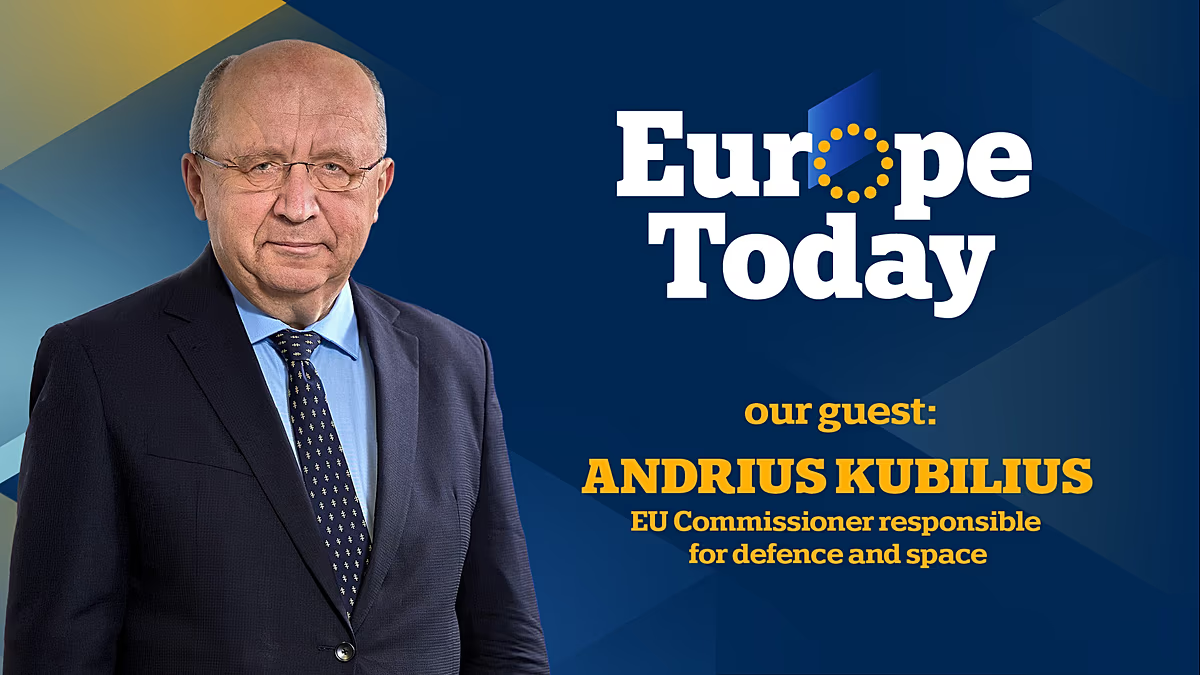
The situation is particularly complex as the United States reportedly urges Kyiv to demonstrate greater willingness to negotiate. This comes amid ongoing debates within the European Union regarding long-term strategy and defense capabilities, as highlighted by a visit from EU Commissioner for Defence and Space Andrius Kubilius to Euronews. Kubilius, a veteran Lithuanian politician, is currently focused on bolstering Europe’s defense industries.
The Push for Ukraine Peace Talks
The core issue revolves around finding a diplomatic solution while maintaining Ukraine’s sovereignty and territorial integrity. Ukraine has consistently stated its commitment to reclaiming all territory occupied by Russia since the 2014 annexation of Crimea, a position that Moscow deems unacceptable. According to recent statements from EU officials, the current stalemate necessitates a reevaluation of tactics, without abandoning the fundamental principles of supporting Ukraine.
However, some analysts suggest that a complete military victory for Ukraine is increasingly improbable, given Russia’s continued military presence and willingness to sustain losses. This view contributes to the pressure for negotiations, even if those talks involve difficult compromises. The US stance, reportedly focusing on demonstrating flexibility, reflects concerns about the potential for a protracted and costly conflict with uncertain outcomes.
International Support and Concerns
While the United States is advocating for a more negotiated settlement, key European allies remain largely committed to providing Ukraine with the military and financial assistance necessary to defend itself. France, under President Macron, has positioned itself as a central player in mediation efforts, seeking to maintain a dialogue with both Kyiv and Moscow. The financial cost of supporting Ukraine remains a major point of contention, particularly given competing priorities such as domestic economic challenges and other global crises.
Meanwhile, the ongoing debate within France about potentially cutting healthcare benefits for foreign pensioners illustrates the broader domestic pressures facing European leaders. Such policies could impact public sentiment towards continued aid packages, further complicating the geopolitical situation.
Beyond the direct conflict, the potential implications for European security architecture are significant. The war has prompted a renewed focus on strengthening NATO’s eastern flank and accelerating the development of a more robust European defense policy. Commissioner Kubilius’s role is crucial in this context, as the EU aims to reduce its dependence on external suppliers for critical defense technologies. This increased focus on European defence, known as the European Defence Fund, aims to incentivize collaborative research and development.
Another point of discussion is the impact of the conflict on global energy markets and food security. Disruptions to agricultural production in Ukraine, often referred to as the “breadbasket of Europe,” have contributed to rising food prices worldwide, exacerbating existing vulnerabilities in many developing nations. The search for alternative energy sources has further complicated the economic equation, driving up energy costs and increasing the urgency of the green transition.
In Brussels, the focus has temporarily shifted from the war to a local controversy: the installation of an unconventional nativity scene in the Grand Place. This alternative representation of the Christmas story has sparked debate among religious communities and highlighted the challenges of navigating cultural sensitivities in a diverse urban environment.
The daily program “Europe Today” on Euronews, anchored by Méabh Mc Mahon and featuring EU editor Maria Tadeo, will continue to provide updates on these unfolding events. The program airs at 8:00 CET each morning, offering a comprehensive overview of the major news stories shaping the continent.
As the situation in Ukraine remains highly fluid, observers will be closely watching for any signs of a breakthrough in negotiations and the long-term consequences of the conflict for European security and global stability. Stay tuned to Euronews for continued coverage and analysis as events develop.