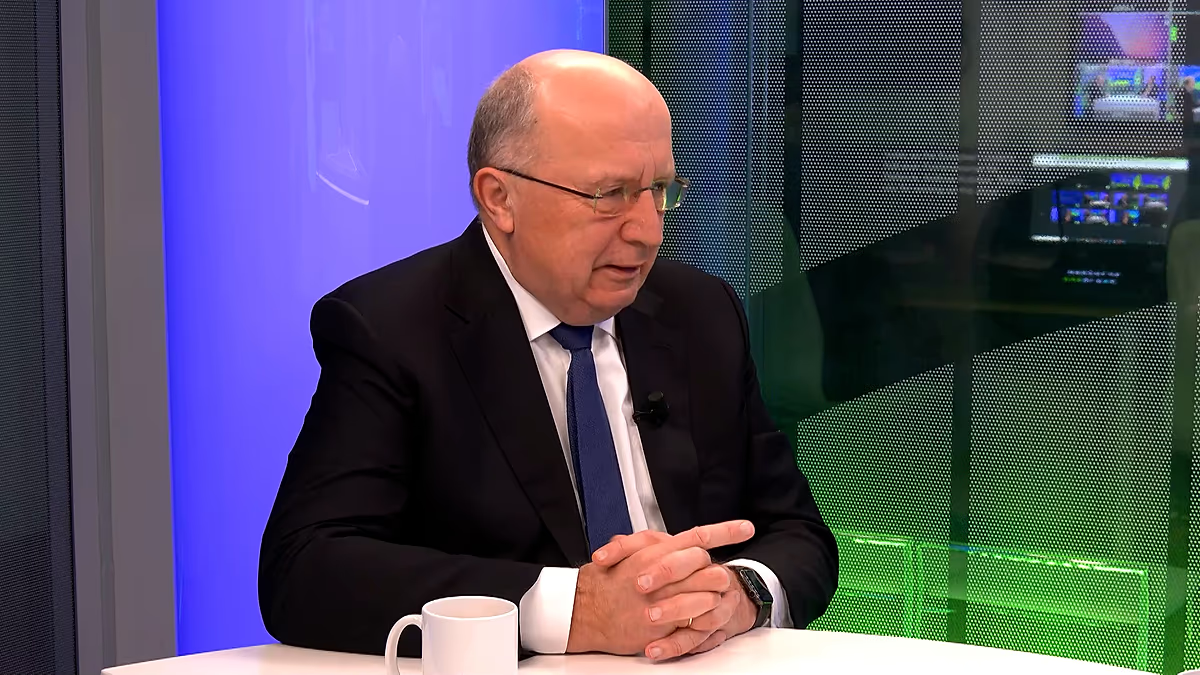

Recent provocations attributed to Russia, including reported drone incursions and damage to infrastructure in Poland, are forcing a reassessment of European defense strategies. European Commissioner for Defence, Andrius Kubilius, stated that current capabilities are insufficient to counter these evolving tactics, particularly the economic imbalance of using expensive missile defense systems against low-cost drones. This shift is prompting the European Commission to accelerate its Defence Industry Transformation roadmap, focused on bolstering production and readiness.
Kubilius highlighted a critical disparity in cost-effectiveness, noting that shooting down a drone valued at approximately €10,000 with a €1 million missile is unsustainable. This exposes vulnerabilities within existing defense frameworks and underscores the need for revised warfare doctrines. The commissioner emphasized the urgency of adapting to this new reality, warning that Russia is likely to increase these types of probing attacks if a robust response isn’t established.
The Rising Threat of Drone Warfare and European Response
The incidents point to a clear escalation in Russia’s drone activity, extending beyond Ukraine and directly challenging the security of EU and NATO member states. Consequently, discussions are underway regarding enhanced defensive measures, including the “drone defence initiative” initially referred to as a “drone wall”, and a strengthened “Eastern Flank Watch” along the EU’s eastern borders.
Finland is taking a leading role in coordinating a summit of Eastern Flank countries – spanning from the Baltic Sea to the Black Sea – to address these evolving threats and explore collaborative solutions. A key component of the Eastern Flank Watch program will specifically center on improving drone defense capabilities and coordinated responses to incursions.
Lessons from Ukraine’s Defense
Kubilius stressed the importance of learning from Ukraine’s experience in countering Russian drone attacks. Ukraine has demonstrated effectiveness in defending against frequent drone incursions, essentially creating a practical “drone wall” through a combination of technology and tactics.
A crucial element of Ukraine’s success lies in its streamlined procurement process and a dynamic “drone ecosystem.” This system facilitates rapid information sharing between frontline operators and manufacturers, allowing for quick adaptation to changing battlefield conditions and identifying when existing technologies become obsolete due to Russian jamming or counter-drone measures. The EU aims to replicate this agility.
However, replicating Ukraine’s success requires significant changes to European procurement procedures, which are often slow and bureaucratic. The Commission’s Defence Industry Transformation roadmap includes plans to upskill the European workforce to meet the demands of increased arms production and establish a “Talent Platform” to facilitate traineeships within the defense industry.
These initiatives acknowledge the need for a more resilient and technologically advanced defense posture. Kubilius, a long-time critic of Russian policy – previously advocating for compensation for damages incurred during Soviet occupation as Lithuania’s Prime Minister in 2000 – remains skeptical of any near-term shift in Russia’s behavior. He expressed hope for a more constructive Russia in the distant future, but currently views the nation under Vladimir Putin as a substantial threat to European security, a threat tragically highlighted by the ongoing war in Ukraine.
Looking ahead, the EU’s ability to rapidly develop and deploy effective counter-drone technologies, coupled with a unified political response to provocations, will be critical. The success of the Defence Industry Transformation roadmap and the insights gained from Ukraine will be closely watched as Europe prepares for a new era of hybrid warfare. Staying informed about these developments is crucial for understanding the evolving security landscape.