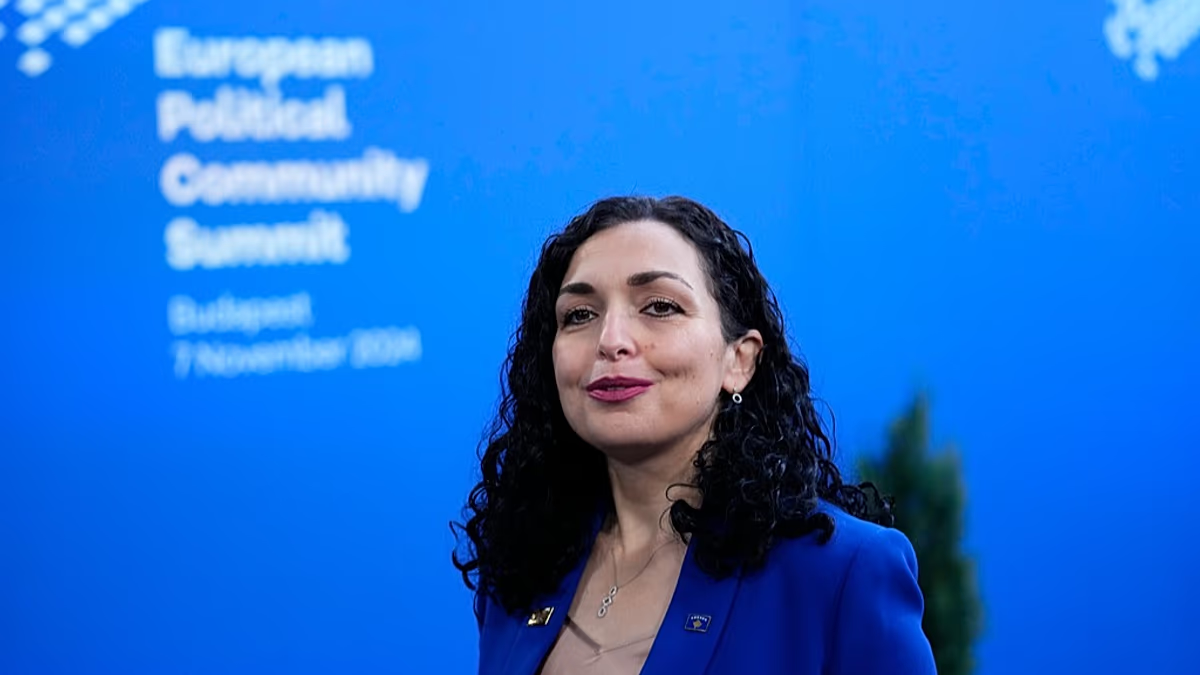

Kosovo’s path to EU membership remains complex despite the country’s strong alignment with European values and reforms. President Vjosa Osmani reiterated Kosovo’s commitment to joining the European Union in a recent interview with Euronews, framing it as a national “destiny.” While Kosovo applied for membership in December 2022, it currently holds only potential candidate status, facing hurdles related to recognition and ongoing dialogue with Serbia.
According to President Osmani, Kosovo has consistently demonstrated its dedication to the EU, aligning with its security and foreign policy, including sanctions against Russia. She argues that, based on merit, Kosovo should be further along in the accession process, citing strong performance in economic and administrative reforms. However, political complications, unrelated to reform progress, continue to impede its advancement.
The Challenges Facing Kosovo’s EU Membership Bid
The primary obstacle to Kosovo’s EU accession is the lack of recognition from five EU member states – Cyprus, Greece, Romania, Slovakia, and Spain. This stems from differing views on Kosovo’s 2008 declaration of independence from Serbia. Additionally, a comprehensive political agreement with Serbia is a prerequisite for Kosovo’s progress, a dialogue facilitated by Brussels for over a decade.
The European Commission’s recent assessment acknowledged Kosovo’s commitment but also highlighted delays in reforms due to political instability and recent elections. Normalizing relations with Serbia remains a key demand from Brussels. The ongoing political deadlock, culminating in snap parliamentary elections scheduled for December 28th, underscores these internal challenges.
Geopolitical Considerations and Regional Influence
The situation in the Western Balkans is attracting increased attention from global powers. Russia and China are actively seeking to expand their influence in the region, with Beijing investing heavily in infrastructure projects and Moscow maintaining strategic interests. Osmani warned that if the EU fails to maintain its influence, other actors will step in, potentially with less benign intentions.
This broader geopolitical context influences Kosovo’s perspective on other EU accession candidates. Osmani expressed support for Ukraine’s EU candidacy, viewing it as a crucial security imperative. However, she also emphasized the importance of Ukraine meeting the same rigorous reform standards expected of other aspiring members, ensuring a level playing field for all candidate countries.
The potential expansion of the EU to include countries in the Western Balkans carries significant implications for the bloc’s stability and future. Successfully integrating these nations requires navigating complex political landscapes, addressing historical grievances, and ensuring adherence to EU values and standards. The European Council on Foreign Relations provides analysis on the evolving dynamics in the region. https://ecfr.eu/
Despite the hurdles, Kosovo remains steadfast in its commitment to European integration. The country’s alignment with EU policies and its ongoing reform efforts demonstrate a clear desire to join the bloc. The outcome of the December 28th elections will be a critical factor in determining Kosovo’s near-term progress towards EU integration.
Looking ahead, observers will be closely watching the formation of a new government in Kosovo and its ability to resume and accelerate the necessary reforms. The continued dialogue with Serbia, and the potential for breakthroughs in normalization, will also be key. For more information on the EU accession process, visit the European Commission’s website. https://ec.europa.eu/neighbourhood-enlargement/index_en
The future of Kosovo within the European Union remains uncertain, but the country’s dedication to the process suggests it will continue to pursue its goal of full membership.