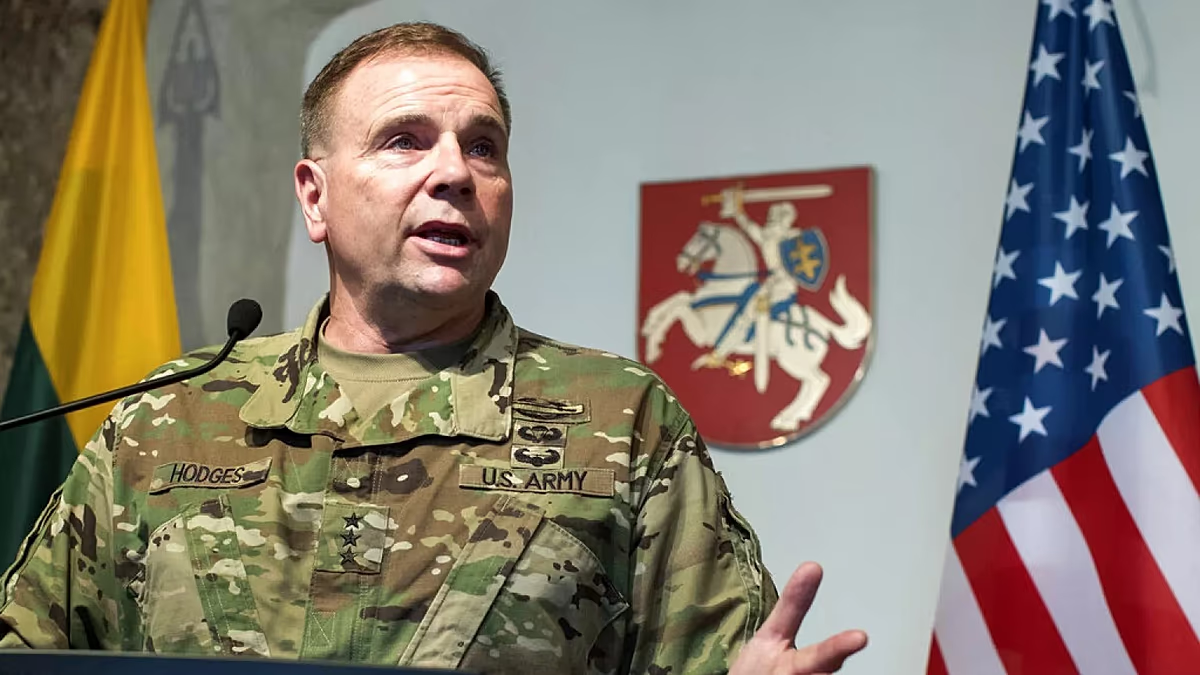

Growing concerns over the reliability of U.S. support are prompting a reassessment of security strategies across Europe. Retired U.S. Army General Ben Hodges has publicly stated that European nations are increasingly recognizing a potential shift in Washington’s priorities, raising questions about the future of transatlantic security cooperation. This developing situation comes amid ongoing debate about aid packages to Ukraine and a perceived distancing from key NATO commitments.
Hodges’ remarks, made to Euronews, suggest a growing disillusionment with the United States’ approach to the conflict in Ukraine and its broader relationship with Europe. He argues that the U.S. has often viewed Europe through a purely transactional lens, prioritizing business interests over strategic alliances. This sentiment is amplified by recent reports regarding former Trump administration officials and their potential post-conflict dealings with Russia.
The Shifting Landscape of US-Europe Relations and Ukraine Support
According to Hodges, the U.S. administration’s handling of the Ukraine conflict has been fundamentally flawed, characterized by a focus on negotiation rather than a firm commitment to supporting Ukraine’s sovereignty. He specifically cited the involvement of Steve Witkoff and Jared Kushner, alleging their efforts indicated a desire for business opportunities with Russia following a resolution to the war. This, he warns, could lead to an unfavorable outcome for Ukraine and a surge in refugees across Europe.
The perception of diminished U.S. commitment is further fueled by recent diplomatic moves. U.S. Secretary of State Antony Blinken is scheduled to miss a key NATO meeting in Brussels, a decision Hodges described as “unusual” and indicative of a broader trend. He asserts that Europe currently ranks fourth in the U.S. administration’s priorities, behind the Western Hemisphere, the Indo-Pacific region, and the Middle East.
Concerns Over Prioritization and NATO
This apparent downgrading of Europe’s importance in U.S. foreign policy has sparked debate about the future of the North Atlantic Treaty Organization (NATO). While the U.S. remains a crucial member of the alliance, Hodges’ comments highlight a growing anxiety that European nations can no longer automatically rely on American leadership and support. NATO’s official website details its commitment to collective defense, but the practical application of that commitment is now under scrutiny.
However, Hodges maintains a cautiously optimistic outlook regarding Ukraine’s ability to withstand Russian aggression. He rejects the narrative of Ukrainian defeat, pointing out that despite over a decade of conflict, Russia controls only approximately 20% of Ukrainian territory. Additionally, he notes that the Russian economy is facing significant challenges.
European Capacity and Political Will
Hodges believes that Ukraine, in conjunction with the rest of Europe, possesses the industrial capacity, economic resources, and population necessary to effectively counter Russia. He argues that the primary obstacle is not a lack of capability, but rather a deficit in “self-confidence and the political will” among European leaders. This suggests a need for greater European unity and a more assertive stance in safeguarding its own security interests.
The discussion surrounding European security is also influenced by the ongoing debate over military spending and defense capabilities within the European Union. While many EU member states have pledged to increase their defense budgets, the pace of implementation and the level of coordination remain key concerns. The need for increased investment in defense technology and infrastructure is becoming increasingly apparent.
The situation is further complicated by internal political divisions within Europe, particularly regarding the approach to Russia and the level of support for Ukraine. Some nations advocate for a more conciliatory stance, while others favor a more confrontational approach. Finding a common ground and forging a unified strategy will be crucial for Europe to effectively navigate the evolving geopolitical landscape.
Looking ahead, the coming months will be critical in determining the future of U.S.-Europe relations and the trajectory of the conflict in Ukraine. European leaders will need to carefully assess the level of U.S. commitment and develop a strategy that ensures their own security, regardless of Washington’s priorities. Continued monitoring of diplomatic signals, military aid packages, and economic developments will be essential for understanding the evolving dynamics of this complex situation.
Stay informed about developments in international security and the ongoing conflict in Ukraine by following reputable news sources and analysis.