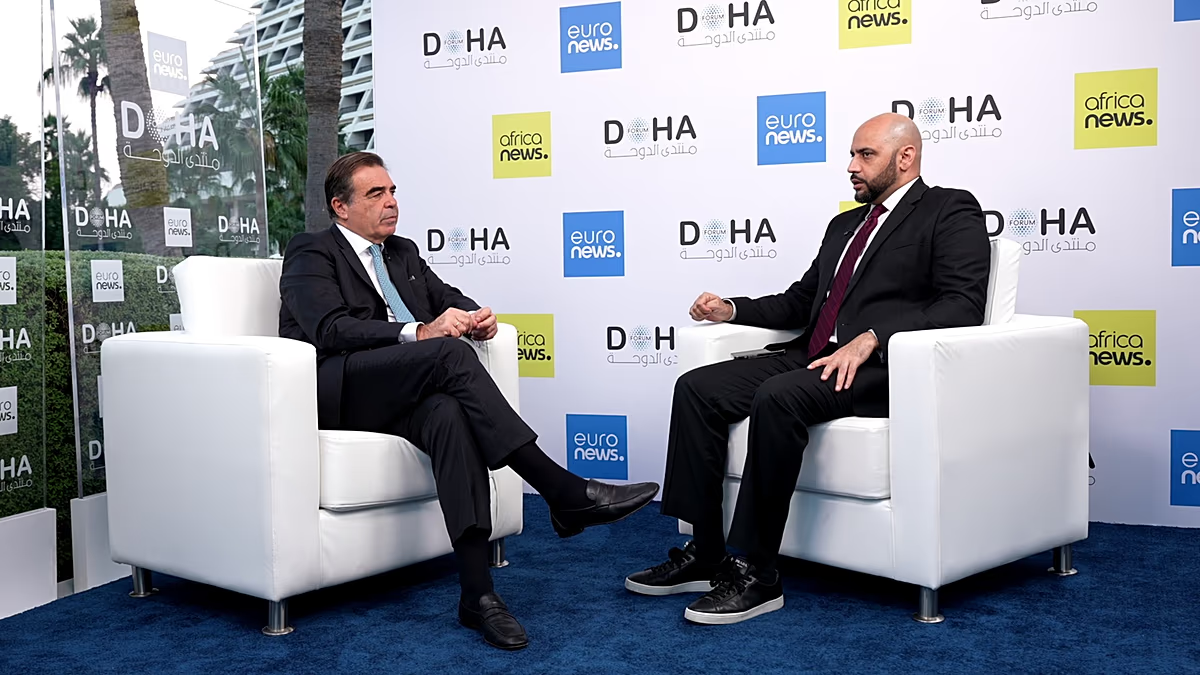

European Union officials are navigating a complex geopolitical landscape, balancing continued support for Ukraine amidst potential shifts in US policy and forging new economic partnerships, particularly with Gulf Cooperation Council (GCC) states. Discussions at the recent Doha Forum highlighted both the ongoing financial commitment to Ukraine and the EU’s strategy for maintaining economic competitiveness. The forum also addressed the ongoing conflict in Gaza and concerns about global stability.
The Future of Ukraine Support and Transatlantic Relations
Former European Commission Vice President Margaritis Schinas emphasized the substantial financial burden the EU has shouldered in supporting Ukraine, stating that the bloc has provided approximately €2 billion per month. This funding has been crucial in sustaining Ukraine’s defense capabilities and diplomatic efforts. However, the potential for increased US involvement, particularly with a possible return of Donald Trump to the presidency, offers a glimmer of hope for a negotiated resolution.
Schinas expressed optimism that ongoing talks, coupled with greater US engagement, could lead to a peace agreement. He cautioned, however, that any agreement would represent only the beginning of a new, challenging phase. Meanwhile, concerns have been raised regarding criticisms leveled by the Trump administration against the European project.
Addressing US Criticism of European Policies
A recent US National Security Strategy report alleged that Europe is facing “civilisational erasure” due to immigration and perceived censorship. The report also indicated potential US support for “like-minded patriotic parties” in Europe. Schinas dismissed these claims as inaccurate and warned against underestimating the value of the European Union. He stressed the importance of maintaining a strong transatlantic relationship, stating it is “too precious to be put at risk.”
Forging New Economic Partnerships with the Gulf States
Beyond the immediate crisis in Ukraine, EU officials are actively seeking to diversify economic partnerships. Luigi Di Maio, the current EU Special Representative for the Gulf Region, highlighted the significant economic potential of a closer relationship with the GCC. Together, the EU and GCC markets represent nearly 20% of the global economy and 18% of global trade, presenting substantial opportunities for growth.
Di Maio pointed to a recent agreement with Qatar as a significant step towards deeper ties, describing it as more than a memorandum of understanding and a framework for expanded cooperation across multiple sectors. Schinas echoed this sentiment, emphasizing the need for stable and reliable partners in an increasingly turbulent world. He acknowledged the GCC countries’ contributions to regional security and stability.
Hydrogen as a Key Area of Collaboration
A particularly promising area for future collaboration is the hydrogen sector. Several GCC countries are investing heavily in hydrogen technology and infrastructure, creating opportunities for partnerships with European companies and ports. Di Maio cited examples of collaborations with Oman and Saudi Arabia, noting growing business-to-business and government-to-government engagement. This focus on hydrogen energy represents a strategic move towards sustainable energy solutions and economic diversification.
The Doha Forum underscored the EU’s commitment to supporting Ukraine while simultaneously pursuing new avenues for economic growth and stability. As geopolitical tensions continue to evolve, the EU’s ability to balance these priorities will be crucial. Observers will be watching closely to see how these partnerships develop and how the EU adapts to potential shifts in US foreign policy in the coming months, particularly regarding global conflict and international alliances.