
The European Union has reached a landmark agreement to bolster the screening of foreign investment within the bloc, responding to growing concerns about economic security and geopolitical tensions. Member states and the European Parliament finalized the deal on December 11, 2025, aiming to strengthen the EU’s ability to protect critical infrastructure and technologies from potentially harmful acquisitions. This move comes amid heightened scrutiny of investments originating from countries like China.
The agreement builds upon an existing EU framework established in 2020, but significantly expands its scope and enforcement mechanisms. While individual EU member states retain the final authority on investment reviews, the new regulations mandate screenings for a wider range of sectors and enhance cooperation among nations. The deal was updated at 18:14 GMT+1.
Strengthening EU Foreign Investment Screening
Under the new rules, mandatory screenings will now encompass investments in key areas such as military equipment, artificial intelligence, quantum technologies, semiconductors, critical raw materials, transport infrastructure, and even election systems. This broadened scope reflects a growing awareness of the potential risks associated with foreign control over strategically important assets. According to MEP Bernd Lange, chair of Parliament’s trade committee, the regulation closes loopholes for high-risk investments.
Parliament negotiators successfully advocated for this wider minimum scope, ensuring that all member states screen investments in these critical sectors. Previously, screening was largely voluntary, leading to inconsistencies across the EU and potential vulnerabilities. The agreement aims to create a more unified and robust approach to protecting the EU’s economic interests.
Geopolitical Shift and Economic Defense
The impetus for the revamped framework stems from a broader European Commission initiative to fortify the EU’s economic defenses in a changing geopolitical landscape. An EU diplomat stated that trade can no longer be viewed as a neutral transaction, given the increasing use of economic tools for geopolitical leverage.
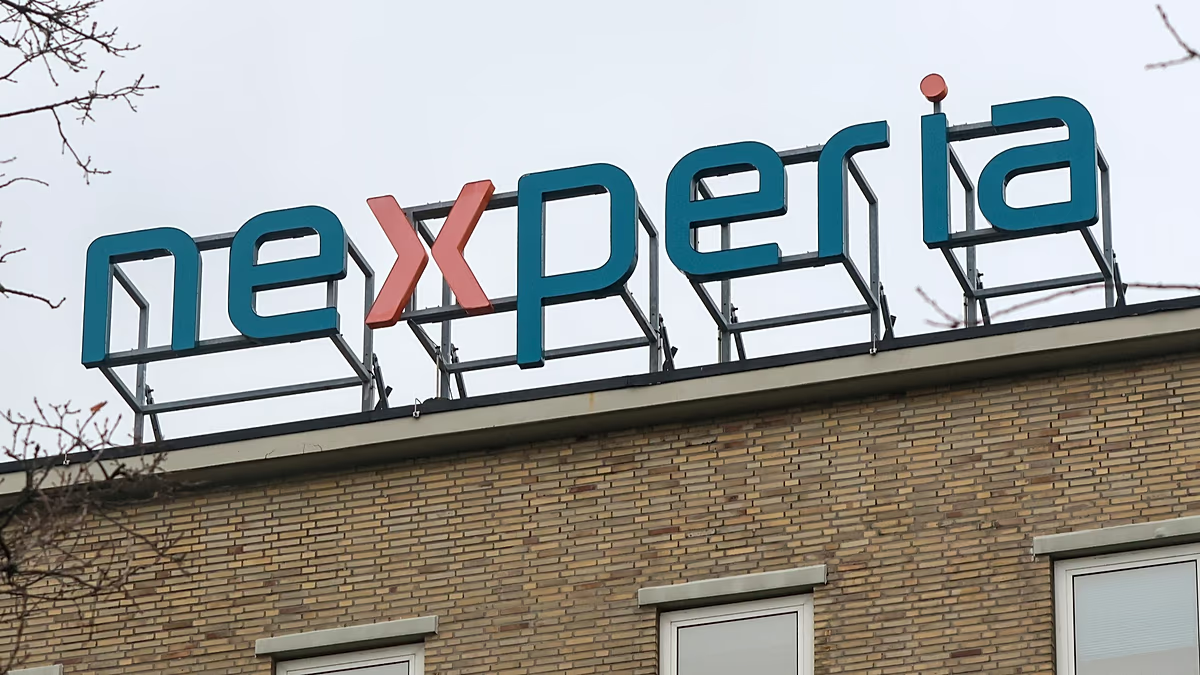
Recent incidents have highlighted these concerns. In September, the Netherlands placed Chinese-owned Nexperia under state supervision due to fears of technology transfer, prompting a retaliatory restriction on chip exports from Beijing. This disruption threatened the EU’s automotive industry, which relies heavily on semiconductor components. While a US-China deal eventually restored exports, the episode underscored the vulnerability of European supply chains.
Addressing Past Reluctance
The EU has had a cooperation mechanism for foreign direct investment screening since October 2020, but initial adoption was uneven. A parliamentary source noted that some economic actors were initially reluctant to implement such screenings, prioritizing investment flows over perceived risks. However, the recent geopolitical events have shifted the consensus, demonstrating the need for a more proactive approach to economic security.
The Commission can request information and issue opinions on proposed investments, but it lacks the power to directly block them. This remains a key point of contention, as some advocate for greater centralized authority. Additionally, a 2023 regulation introduced a new screening regime for non-EU subsidies, further focusing attention on investments from China and other state-backed entities.
Implications for International Trade
This strengthened screening process is likely to have significant implications for international trade and investment flows into the EU. Companies from countries identified as posing a risk may face increased scrutiny and longer approval times for acquisitions and investments. The move could also lead to a re-evaluation of existing investments, potentially triggering divestments in sensitive sectors. The broader impact on international relations remains to be seen.
The agreement also addresses concerns about supply chain security, a critical issue highlighted by recent global disruptions. By protecting key infrastructure and technologies, the EU aims to reduce its dependence on potentially unreliable suppliers and ensure the resilience of its economy.
Looking ahead, the focus will be on the swift implementation of the new regulations by all EU member states. Monitoring the effectiveness of the enhanced screening mechanism and adapting it to evolving geopolitical challenges will be crucial. Businesses operating in the EU should prepare for a more rigorous investment review process and proactively assess the potential implications for their operations. Stay informed about the latest developments in EU investment policy to navigate this changing landscape.