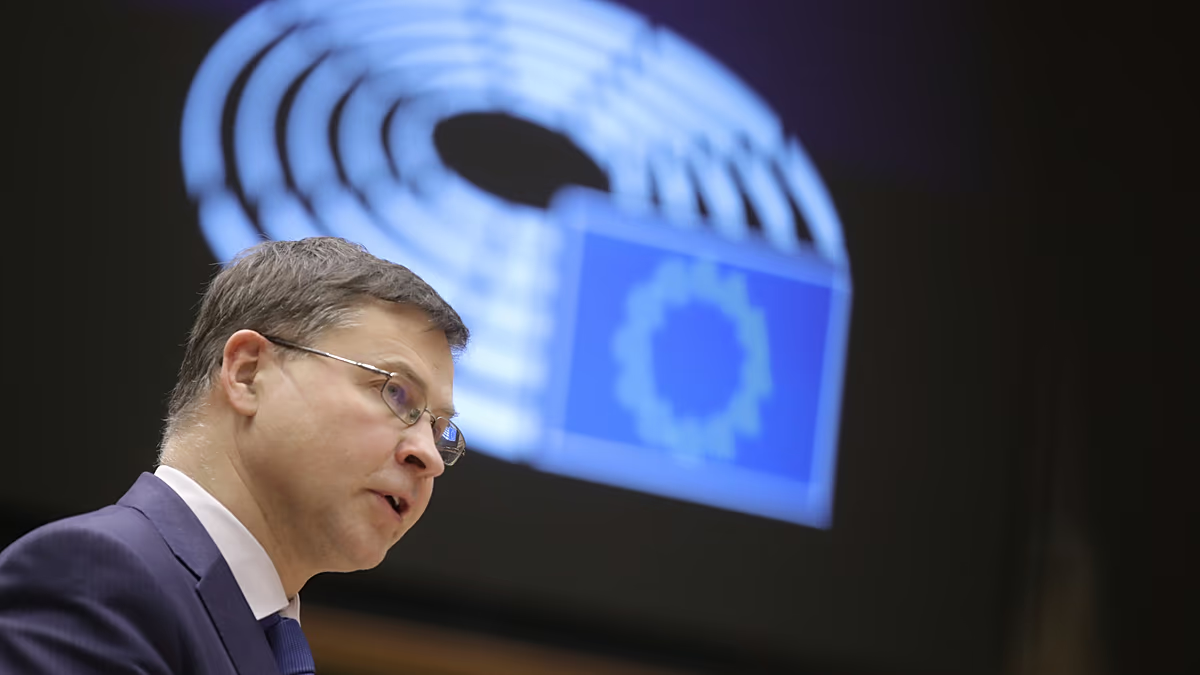

The European Union is intensifying discussions on financing Ukraine’s substantial €135 billion budget shortfall, with a key focus on utilizing frozen Russian assets held within Europe. European Commissioner for Economy and Productivity Valdis Dombrovskis urged swift action, stating it’s time to move beyond debate and implement a solution. The debate centers on whether to leverage these assets, immobilized due to sanctions related to the ongoing war, to provide substantial financial support to Ukraine without further burdening EU member states.
Dombrovskis spoke to Euronews on Wednesday, emphasizing the urgency of the situation as Ukraine faces a critical juncture in its defense against Russian aggression, now nearing its fourth year. The European Commission recently presented options for funding, including voluntary contributions, joint EU debt issuance, and a reparations loan backed by Russian assets. The Commissioner believes the latter offers the most viable path forward.
Leveraging Russian Assets for Ukraine’s Financial Stability
According to Dombrovskis, alternative funding options would place a significant financial strain on EU member states and potentially exacerbate Ukraine’s existing debt sustainability concerns. He argued that continually providing loans to Ukraine is not a sustainable long-term solution. The proposal to utilize frozen Russian assets has faced resistance, particularly from Belgium, which holds the largest share of these assets and fears potential legal challenges from Moscow.
However, Dombrovskis cautioned against yielding to such pressure. “If you give in to bullying, you will face more bullying,” he stated, acknowledging the difficulty of the discussions among member states. The Commissioner stressed the importance of a firm stance against perceived intimidation.
EU’s Position on Peace Negotiations and Security
The debate over asset utilization is closely linked to the EU’s approach to potential peace negotiations. A recent peace plan drafted by the United States and Russia, perceived by many Europeans as overly favorable to Moscow, sparked concern. While some EU countries proposed a counterproposal focused on maintaining Ukraine’s territorial integrity and security guarantees, it was dismissed by the Kremlin.
Meanwhile, European Commission President Ursula von der Leyen is addressing the European Parliament on the matter, and EU foreign policy chief Kaja Kallas is convening an emergency meeting of foreign ministers. Dombrovskis outlined key EU parameters for any settlement: respect for Ukraine’s territorial integrity, preservation of its military capabilities, and its eventual integration into the European Union.
Dombrovskis also addressed concerns about potential Russian expansion beyond Ukraine. He warned that appeasement would only embolden Russia, citing reports of Moscow openly discussing potential aggression towards other European nations, including those within the NATO alliance. “We know from history that appeasement of the aggressor only creates more aggression,” he said. He believes a successful outcome for Russia in Ukraine could lead to further conflict and instability.
The discussion around Ukraine’s financial needs is also complicated by broader economic considerations within the EU. Member states are balancing support for Ukraine with their own budgetary constraints and economic priorities.
Looking ahead, the coming weeks will be crucial as EU leaders attempt to reach a consensus on financing Ukraine. The outcome will not only determine Ukraine’s ability to continue its defense but also signal the EU’s resolve in confronting Russian aggression and upholding international law. Stakeholders should closely monitor developments in Strasbourg and Brussels as the debate intensifies and potential compromises are explored.