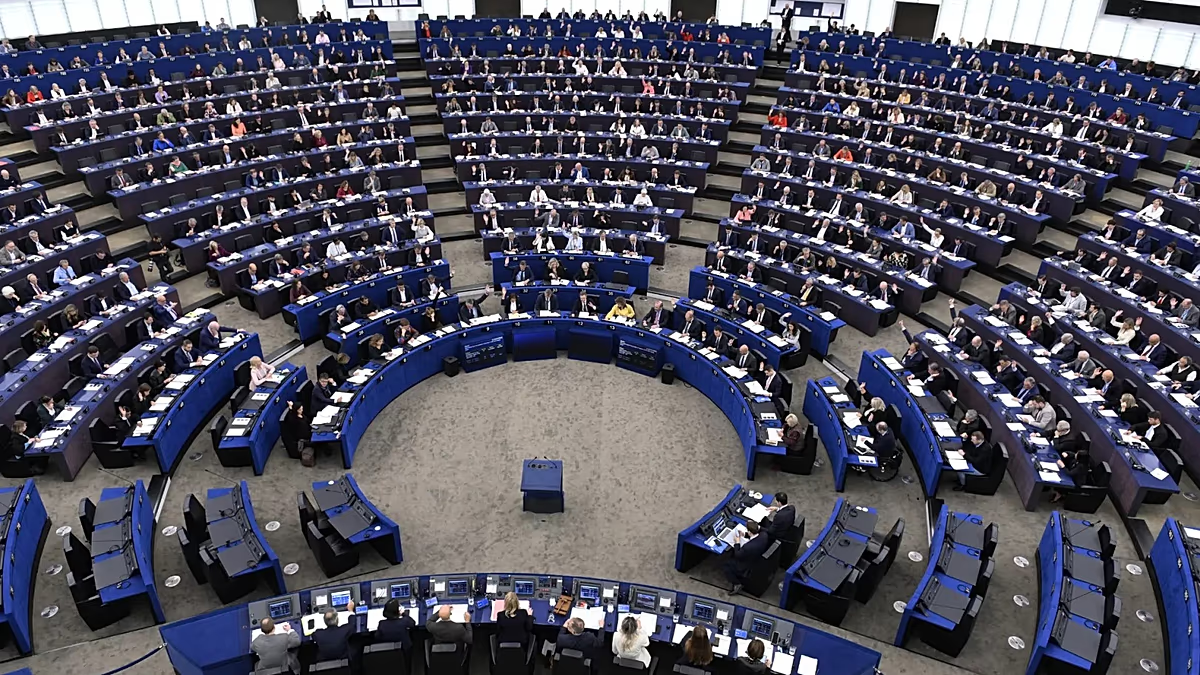

The European Parliament is preparing to debate the proposed allocation of substantial EU defence funds to Hungary, totaling €17.4 billion from the Security Action for Europe (SAFE) programme. The discussion, scheduled for next Tuesday, stems from concerns that the funds could be misused by Prime Minister Viktor Orbán ahead of the April parliamentary elections. This debate highlights growing scrutiny over how the EU supports member states’ defence capabilities while upholding democratic principles.
The SAFE programme, a €150 billion loan scheme, aims to bolster European defence capabilities in response to increased geopolitical instability, particularly stemming from Russia’s actions and uncertainties surrounding US support. Hungary’s request represents the third-largest allocation within the programme, raising eyebrows given existing concerns about rule of law and corruption within the country. Currently, a significant portion of regular EU payments to Hungary are already suspended pending improvements in these areas.
Concerns Over Hungary’s EU Defence Funds Request
MEPs critical of Orbán’s government are pushing for stringent safeguards before any funds are transferred. They argue that releasing such a large sum without conditions could provide a political advantage to the ruling party during the upcoming elections. According to Tineke Strik, a Greens-EFA MEP, the European Commission’s decision to designate Hungary as a major beneficiary is “frustrating” due to the lack of accompanying rule of law requirements.
The timing of potential payments is also a key point of contention. The first tranche of defence funding could be disbursed during the first quarter of 2026, just weeks before Hungarians head to the polls on April 12. This proximity has fueled accusations that the funds are effectively a pre-election gift to Orbán.
Existing EU Financial Restrictions
The EU has already frozen approximately €17 billion of a previously allocated €27 billion to Hungary, linking the release of these funds to demonstrable progress on judicial independence, anti-corruption measures, and other rule of law benchmarks. EU budget Commissioner Piotr Serafin indicated in December that similar conditions could be applied to the SAFE funds, although a 15% initial payment might be made without preconditions.
However, the European Commission recently postponed many decisions related to Hungary to avoid any appearance of influencing the election campaign. Boosting defence spending is a strategic priority for the current Commission, led by Ursula von der Leyen, making SAFE an exception to this broader pause. This prioritization has drawn criticism from those who believe all EU funding should be contingent on adherence to democratic standards.
Critics fear Orbán could leverage the funds for domestic political gain, portraying them as validation of his regime and using them to bolster his campaign messaging. Strik described the potential allocation as a “toxic present for democracy in Hungary,” suggesting it could undermine public trust and further erode democratic institutions. The debate also touches on broader questions about European security and the balance between strategic investment and upholding core values.
The situation is further complicated by Hungary’s ongoing reluctance to fully align with EU foreign policy on issues such as Ukraine. This has led to increased tensions between Budapest and Brussels, and raised questions about the extent to which the EU can trust Hungary to use the defence spending responsibly. Some analysts suggest the Commission is attempting a delicate balancing act, seeking to strengthen European defence while avoiding a complete rupture with Hungary.
The upcoming parliamentary debate will not result in a binding resolution, but it will serve as a crucial platform for MEPs to voice their concerns and pressure the European Commission and the EU Council to implement robust safeguards. The outcome of the debate and the subsequent decisions made by the EU Council will be closely watched by observers of EU foreign policy and the state of democracy in Hungary.
As the debate unfolds, stakeholders will be looking for clarity on the specific conditions, if any, that will be attached to the SAFE funds. The allocation of these funds represents a significant test of the EU’s commitment to both its security objectives and its fundamental values. Further developments are expected in the coming weeks as the EU Council considers the proposal and Hungary prepares for its pivotal election.