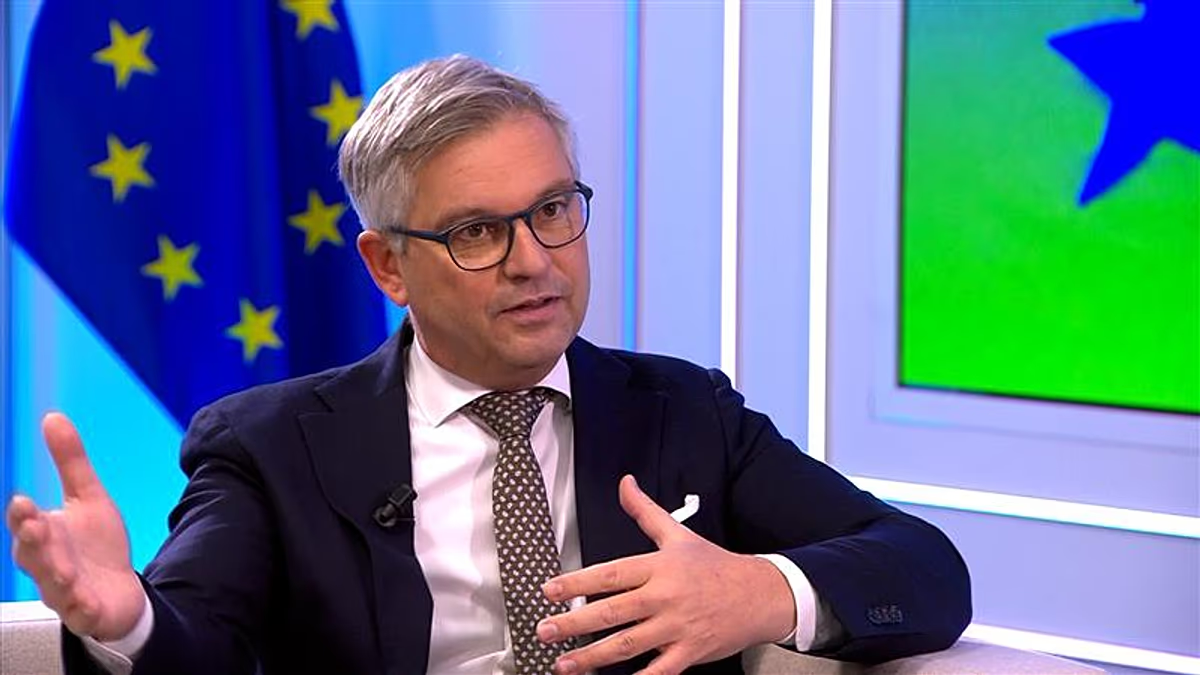

The European Union’s new Migration Pact is poised to reshape how the bloc handles asylum seekers and border security, with implementation expected in June 2024. Migration Commissioner Magnus Brunner recently stated the pact, while imperfect, represents a crucial step towards regaining public trust and establishing a more controlled and equitable system. The agreement aims to address long-standing divisions among member states regarding responsibility for migrants and the security of the EU’s external borders.
Brunner, speaking on Euronews’ The Europe Conversation, emphasized the need for a functional system, stating that “70% is better than 0%.” The pact follows years of debate and differing national approaches to migration, often leading to strained relations and ad-hoc solutions. Its adoption marks the first time EU members have collectively agreed on a framework to manage these complex issues.
Understanding the EU Migration Pact
The Migration Pact is built on four core principles. These include strengthened external border security with expedited screening processes, efficient and streamlined asylum procedures, a new system of solidarity and responsibility-sharing among member states, and enhanced international partnerships to address the root causes of migration. The goal is to create a more predictable and manageable flow of migrants while upholding international protection obligations.
Currently, the rules are in effect following adoption by the European Parliament and Council, but the full application of the new measures is scheduled for June 2024. According to Brunner, the EU is “on track” despite ongoing work to finalize key elements like return regulations and agreements on safe third countries.
The Difficulties of Returns
A particularly challenging aspect of the pact involves the return of individuals whose asylum claims have been rejected. Brunner acknowledged the necessity of engaging with countries like Afghanistan, even those governed by regimes with questionable human rights records, to facilitate these returns. He stated that such engagement, while “not fun or easy,” is unavoidable.
This stance has drawn criticism, particularly regarding ongoing negotiations between Germany and the Taliban. Critics argue that maintaining dialogue with the Taliban lends legitimacy to the regime, which has been widely condemned for its treatment of women and its overall human rights record since taking power in August 2021. Human Rights Watch provides extensive documentation of the situation in Afghanistan.
However, Brunner clarified that engaging in technical discussions about migration does not equate to recognizing or respecting the Taliban government. He emphasized the importance of differentiating between dialogue and endorsement.
Exploring ‘Return Hubs’ as a Solution
The concept of ‘return hubs’ – facilities in third countries where rejected asylum seekers would be processed for return – has also sparked debate. Brunner expressed support for member states exploring such “innovative solutions,” emphasizing that the EU Commission’s role is to create a framework for these possibilities, not to negotiate on behalf of all members.
The implementation of return hubs raises complex legal and ethical questions, including concerns about the safety and rights of individuals held in these facilities. Further discussion and careful consideration of these issues will be crucial as member states assess the feasibility of this approach.
Brunner also highlighted a recent meeting with Pope Francis, noting a shared commitment to both respecting human rights and combating human trafficking. He stated that the Pope “totally agrees” with the need to disrupt the criminal networks that exploit vulnerable migrants.
The successful implementation of the EU Migration Pact will require continued cooperation and compromise among member states. The coming months will be critical as the EU works to finalize remaining regulations and establish the necessary infrastructure to support the new system. Stakeholders should monitor developments closely as the pact’s impact on migration patterns and asylum policies unfolds. For more information on EU migration policy, visit the European Commission’s website.