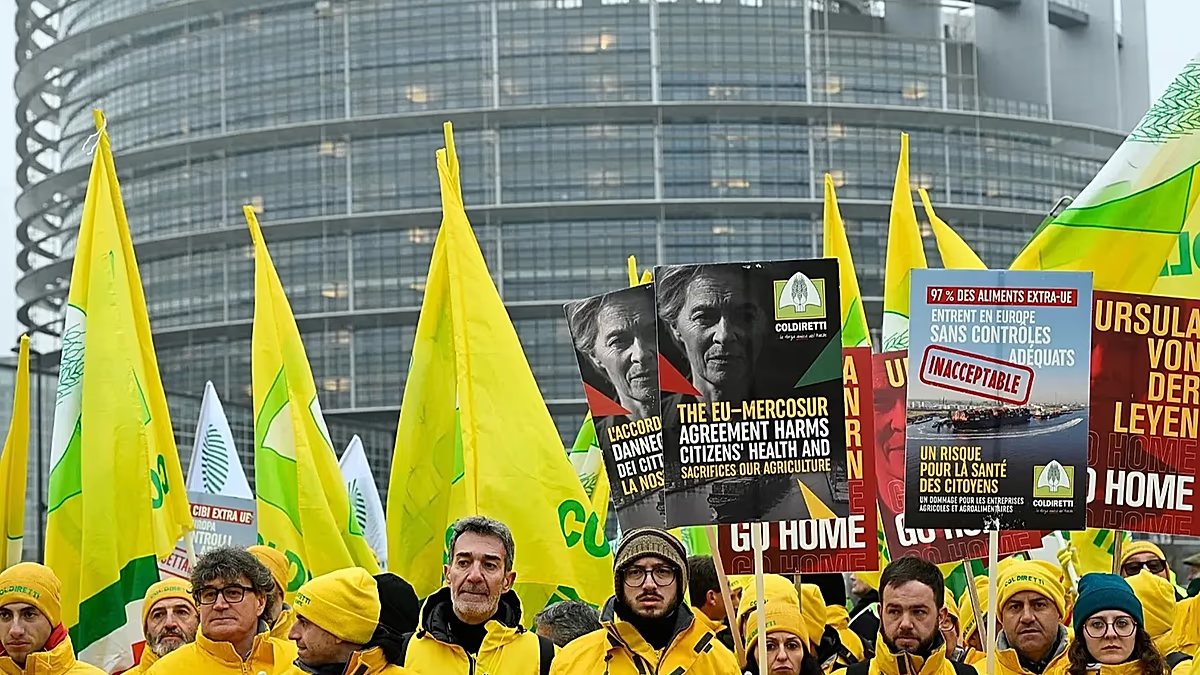

The future of the European Union-Mercosur trade agreement is in doubt after the European Parliament voted Wednesday to refer the deal to the EU Court of Justice. This move significantly delays the ratification process for the EU-Mercosur trade agreement, potentially jeopardizing its final approval. The vote was narrowly decided with 334 votes in favor, 324 against, and 11 abstentions.
The agreement, initially signed on January 17th, aims to create a vast free trade area encompassing over 700 million people. However, it has faced substantial opposition from various sectors across Europe, particularly from farmers concerned about increased competition from South American agricultural products. Protests, including a large demonstration by farmers with tractors in Strasbourg the day before the vote, highlighted these concerns.
What the EU-Mercosur Trade Agreement Referral Means
The referral to the Court of Justice centers on questions of legality regarding the agreement’s structure and provisions. MEPs who initiated the referral argue that the European Commission’s decision to separate the trade portion of the deal for parliamentary approval was a tactic to circumvent national parliamentary scrutiny. They believe this action could be unlawful.
Additionally, the resolution challenges the validity of the “rebalancing mechanism” within the agreement. This mechanism would allow Mercosur countries to implement compensatory measures if future EU legislation negatively impacts their exports to Europe. Critics argue this could undermine the EU’s regulatory autonomy.
Impact on the Approval Process
The referral effectively suspends the approval process within the European Parliament, which was scheduled to hold a final vote in the coming months. A ruling from the EU Court of Justice is expected to take over a year, freezing the deal’s progress during that time. According to a European Commission spokesperson, the Commission “regretted the decision” but will attempt to demonstrate the deal’s geostrategic importance to lawmakers.
Despite committing to refrain from doing so in previous communications to MEPs, the European Commission retains the option to provisionally apply the agreement while the court review is underway. This possibility, while technically permissible, could strain relationships between EU institutions. The matter will be discussed at an extraordinary summit of EU leaders on Thursday.
A Divided Parliament Reflects Broader Concerns
The close vote underscores the deep divisions within the European Parliament regarding the EU-Mercosur trade agreement. Political groups exhibited varying stances, and even within major groups, dissenting voices emerged.
Renew Europe, the Greens/EFA, and the Left generally opposed the deal and supported the referral. Surprisingly, the far-right Patriots for Europe group also voted in favor, despite aligning with the leftist side of the Parliament on this issue. In contrast, the European People’s Party and the Socialists and Democrats, the Parliament’s largest groups, largely defended the agreement and voted against the referral, though some members within those groups dissented.
The European Conservatives and Reformists allowed a free vote, resulting in a split along national lines. MEPs from Poland and France favored the referral, while those from Italy, the Czech Republic, Belgium, and the Baltic states opposed it. This highlights the diverse national interests at play in the debate over trade relations with Mercosur.
The future of the EU-Mercosur agreement now rests with the EU Court of Justice. Stakeholders on both sides of the Atlantic will be closely watching the court’s deliberations, as the ruling will have significant implications for trade, agriculture, and geopolitical relations. For ongoing updates on this developing story, continue to follow trusted news sources and official EU communications.