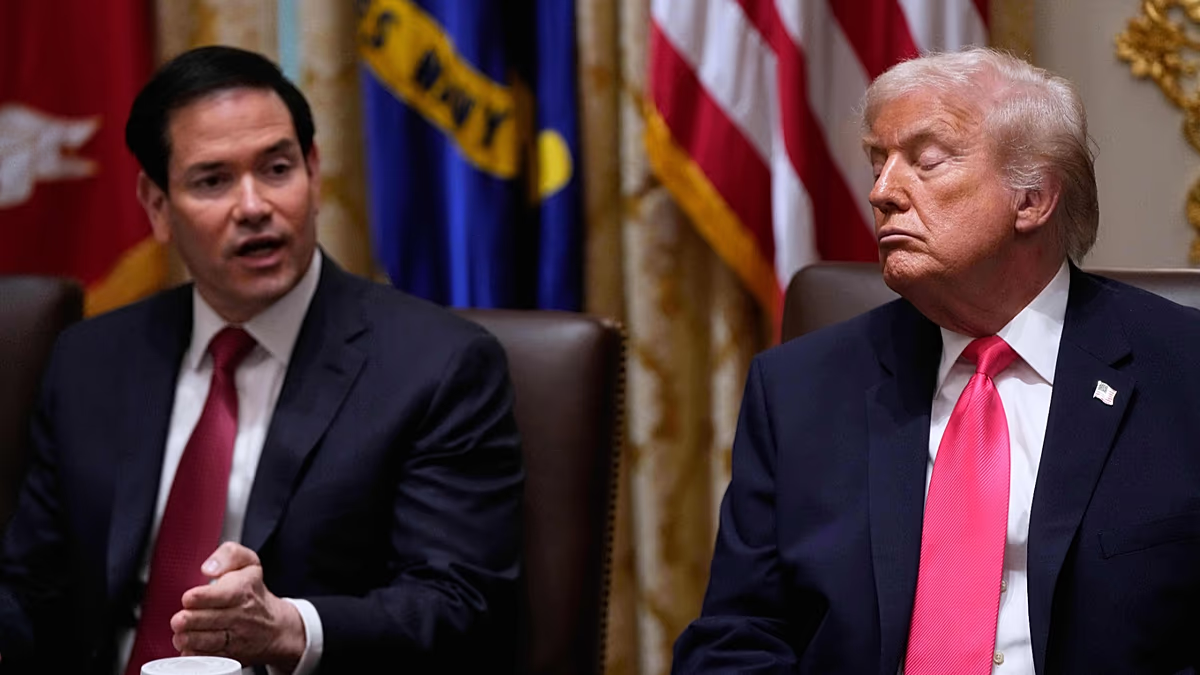

The United States has withdrawn from the United Nations Framework Convention on Climate Change (UNFCCC) and over 60 other international environmental organizations, a move swiftly condemned by world leaders. The decision, announced by US Secretary of State Marco Rubio, signals a significant shift away from international climate cooperation and prioritizes national interests over global environmental governance. This action follows a pattern of reduced US engagement in climate action, raising concerns about the future of global efforts to combat climate change.
The withdrawal, formalized on Wednesday, builds on previous actions taken during the Trump administration, including exiting the Paris Agreement in 2020. While President Biden rejoined the Paris Agreement upon taking office, this latest move demonstrates a renewed commitment to disengagement from broader international climate frameworks. According to Secretary Rubio, these organizations have “morphed into a sprawling architecture of global governance” detached from US national interests.
US Withdrawal from Climate Treaties: A Growing Trend
The UNFCCC, established in 1992, provided the foundation for the 2015 Paris Agreement, a landmark accord aimed at limiting global warming. The US withdrawal isn’t the first instance of the nation stepping back from international climate commitments; the country also skipped the COP30 climate summit in Brazil last year. President Trump previously dismissed climate change as a “con” and renewable energy as ineffective.
Experts are divided on the ease with which a future US administration could rejoin the UNFCCC. While the Paris Agreement has established re-entry mechanisms, the withdrawal from the broader UNFCCC and numerous related organizations presents a more complex scenario. This move is largely symbolic, but it underscores a broader trend of the world’s largest economy moving to the sidelines of global climate efforts.
European Reaction and Concerns
The decision has drawn strong criticism from European leaders. European Commission Executive Vice President for a Clean, Just, and Competitive Transition, Teresa Ribera, stated the White House “doesn’t care about the environment, health, or the suffering of people.” European Commissioner for Climate Action Wopke Hoekstra called the withdrawal “regrettable” and “unfortunate,” reaffirming the European Union’s commitment to international climate research and cooperation.
However, not all European voices echoed the condemnation. Roman Haider, an Austrian lawmaker, argued that international climate agreements do not serve European interests, citing the intrusive nature of EU climate legislation and its potential economic impact. He suggested Europe should follow the American example and reduce its climate commitments.
Meanwhile, China appears poised to fill the void left by the US, consolidating its corporate climate reporting architecture. In December, the Ministry of Finance announced a new standard for companies to report climate-related risks and opportunities, aiming to prevent greenwashing and encourage investment in sustainable practices.
The US has also withdrawn from the International Panel on Climate Change (IPCC), a UN body that provides crucial scientific assessments informing climate policies like the European Green Deal, which aims for climate neutrality by 2050. This withdrawal further isolates the US from the international scientific community and collaborative climate research.
The implications of the US withdrawal extend beyond symbolic gestures. Reduced US participation could hinder funding for climate initiatives and weaken international pressure on other nations to increase their climate ambitions. The move also raises questions about the future of climate policy within the United States itself.
Looking ahead, the world will be watching to see how this decision impacts global climate negotiations and whether other nations will step up to fill the leadership gap. The future of international climate cooperation hinges on the willingness of countries to work together, even in the face of political shifts and diverging national interests. Staying informed about these developments and advocating for climate action remains crucial.