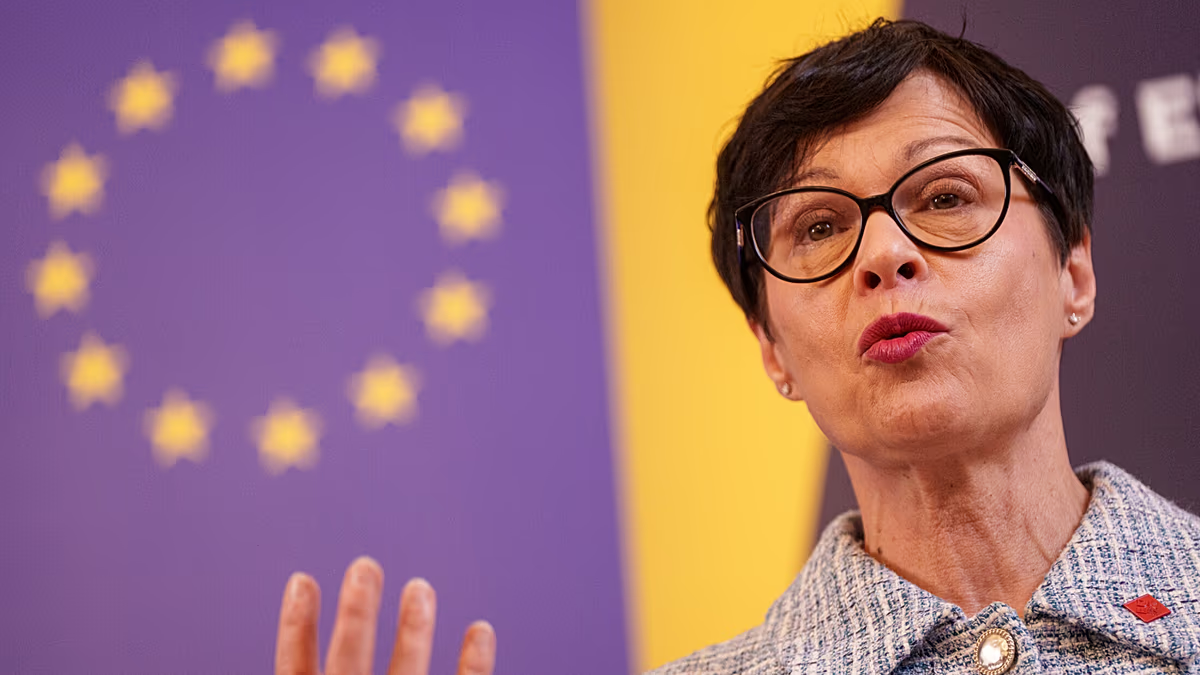

The European Union is collaborating with the United States and Ukraine on a comprehensive framework for Ukraine’s recovery following the ongoing conflict, aiming to attract significant private investment for its future prosperity. EU Enlargement Commissioner Marta Kos announced the agreement on a “prosperity paper” at the World Economic Forum in Davos on Wednesday, outlining a plan for Ukraine’s post-war development. This initiative underscores the EU’s commitment to supporting Ukraine’s long-term stability and economic growth.
Kos emphasized the necessity of fostering a secure investment climate to draw in private capital, stating that public funds alone will be insufficient for the scale of reconstruction needed. The discussions in Davos, which included meetings with Ukrainian President Volodymyr Zelenskyy and representatives from firms like BlackRock, focused on building investor confidence and establishing favorable business conditions. The framework is intended to lay the groundwork for a sustainable and resilient Ukrainian economy.
The Framework for Ukraine’s Recovery
The “prosperity paper” represents a significant step towards coordinating international efforts to rebuild Ukraine. According to Kos, the agreement defines a pathway for Ukraine’s development after a peace settlement is reached. This plan acknowledges the immense challenges facing the nation and the need for a multi-faceted approach involving both public and private sector involvement.
However, securing private investment remains a key hurdle. Kos stressed that investors require assurances of safety and stability before committing substantial capital. This includes establishing a robust legal framework, tackling corruption, and ensuring the protection of property rights. The EU is working to address these concerns and create an environment conducive to foreign direct investment.
Attracting Private Capital
The EU recognizes that substantial financial resources will be required to rebuild Ukraine’s infrastructure, economy, and social systems. Estimates of the total cost of reconstruction vary widely, but are generally in the hundreds of billions of dollars. The World Bank estimates the cost of reconstruction and recovery to be $411 billion as of March 2023.
Additionally, the EU is exploring innovative approaches to accelerate Ukraine’s economic integration. When questioned about the possibility of a tiered EU membership – sometimes referred to as an “EU membership lite” – Kos indicated a willingness to consider unconventional solutions. This comes amid discussions about potential security guarantees for Ukraine, which could include a faster track to EU accession as part of a US-brokered peace agreement.
EU Accession and Security Guarantees
The prospect of EU membership is a powerful incentive for Ukraine to pursue reforms and strengthen its democratic institutions. The EU granted Ukraine candidate status in June 2022, a symbolic but important step towards full membership. However, the path to full accession is likely to be lengthy and complex, requiring Ukraine to meet stringent criteria in areas such as rule of law, economic governance, and environmental standards.
Meanwhile, discussions surrounding security guarantees for Ukraine are ongoing. A comprehensive security framework could involve commitments from the US, EU, and other international partners to provide military assistance, economic support, and political backing. The details of such a framework are still being negotiated, but the goal is to deter future aggression and ensure Ukraine’s long-term security. The ongoing conflict has highlighted the importance of bolstering Ukraine’s defense capabilities and strengthening its ties with the West.
The success of Ukraine’s recovery hinges on continued international cooperation and a sustained commitment to supporting its economic and political development. The framework agreed upon in Davos provides a roadmap for rebuilding Ukraine, but its implementation will require significant effort and resources. Investors will be closely watching developments in Ukraine and assessing the risks and opportunities associated with investing in the country’s future. Further updates on the implementation of the “prosperity paper” and the progress of EU accession talks are expected in the coming months.