
The European Commission has dismissed a lawsuit filed by the Russian Central Bank against Euroclear, the Brussels-based central securities depository, as unfounded. The legal action challenges the immobilization of approximately €185 billion in Russian assets held by Euroclear, a key component of ongoing discussions surrounding Russia’s sovereign assets and potential reparations for Ukraine. The lawsuit, submitted to the Arbitration Court in Moscow on Friday, alleges Euroclear is preventing the release of funds subject to EU law.
This development occurs as the EU prepares to finalize a plan to utilize Russia’s frozen funds in a €210 billion scheme to provide a reparations loan to Ukraine. A final decision is expected at the upcoming EU leaders’ meeting on December 18th, with Euroclear playing a central role in the process. The timing of the Russian lawsuit suggests an attempt to disrupt or delay this plan.
EU Defends Plan for Russia’s Sovereign Assets
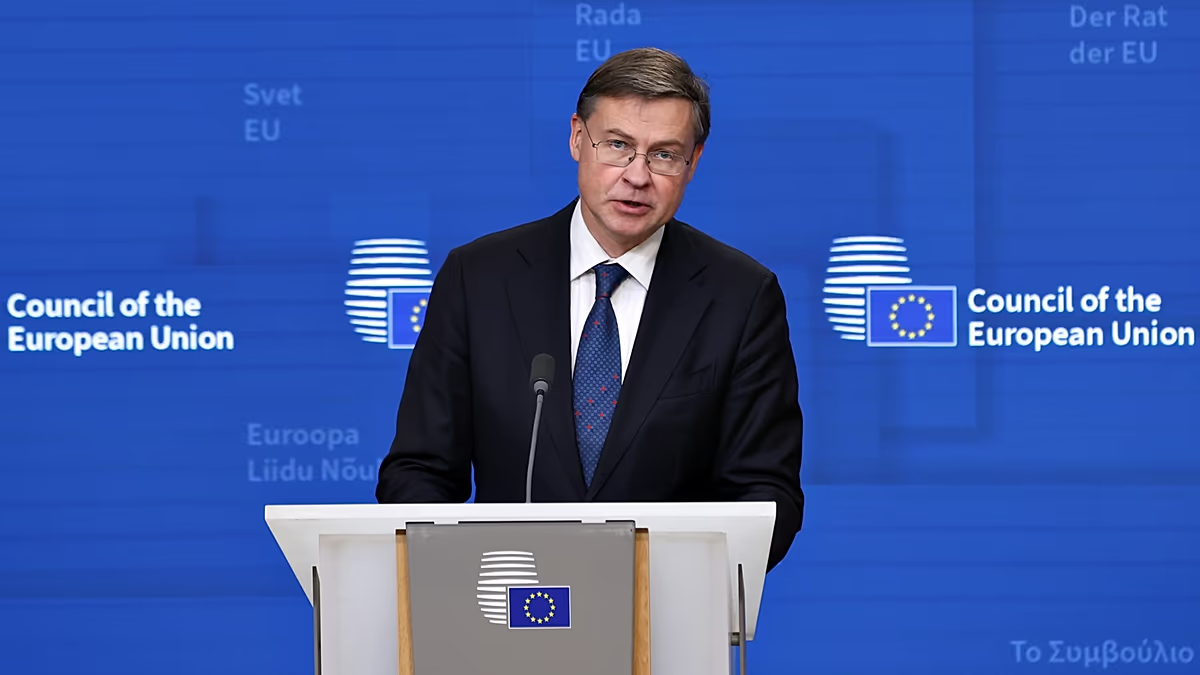
European Commissioner for the Economy, Valdis Dombrovskis, stated the EU’s proposal is “legally robust and fully in line with EU and international law.” He emphasized that the assets are not being seized and that Russia’s sovereign immunity is being respected. According to Dombrovskis, the EU anticipates further legal challenges from Russia aimed at preventing the bloc from enforcing international law and securing compensation for Ukraine.
The Commission has assured all European institutions holding Russian assets, including private banks, that they will be “fully protected” against any retaliatory measures from Moscow. Existing sanctions regulations already allow Euroclear to offset potential losses, providing a layer of financial security.
For instance, should a Russian court order the seizure of Euroclear’s €17 billion holdings within Russia, the depository would be permitted to offset this loss against the €30 billion held by Russia’s National Settlement Depository within the EU. This mechanism is designed to minimize the financial impact of potential Russian retaliation.
Additionally, the proposed reparations loan introduces a new framework for resolving state-to-state disputes. If Russia were to seize Belgian sovereign assets in response, Belgium could offset this loss against the broader €210 billion in immobilized Russian funds, without Russia being able to reclaim the seized amount when the assets are eventually released.
Belgium’s Concerns and the Indefinite Immobilization
The legal safeguards are largely intended to address the concerns of Belgium, which has been the most vocal opponent of the reparations loan. Belgian Prime Minister Bart De Wever has repeatedly cautioned about the risks associated with a potentially successful legal challenge. The Commission maintains confidence in the legality and resilience of its proposal.
Euroclear itself has previously expressed reservations, describing the reparations loan as “very fragile,” legally risky, and an experimental approach. The company declined to provide further comment on the current lawsuit.
Meanwhile, EU countries have agreed to activate an emergency clause to indefinitely immobilize the Russian Central Bank’s assets. This new legislation stipulates that the €210 billion will only be released when Russia’s actions “have objectively ceased to pose substantial risks” to the European economy and when Moscow has fully compensated Ukraine, without creating adverse economic or financial consequences for the EU – a condition considered highly unlikely in the near future.
Escalating Tensions and Potential Retaliation
The indefinite immobilization is a further attempt to reassure Belgium and Euroclear, thereby increasing the likelihood of the reparations loan being approved next week. The Russian Central Bank has issued a statement reserving the right to pursue “all available remedies and protections” should the EU’s initiatives be upheld or implemented.
The situation highlights the growing tensions between Russia and the West over the ongoing conflict in Ukraine and the question of financial accountability. The debate over frozen Russian assets and their potential use for reconstruction is likely to continue, with legal challenges and potential retaliation remaining key risks. The broader implications of utilizing sovereign assets for reparations are also being closely watched by international financial institutions and legal experts.
As the December 18th EU leaders’ meeting approaches, the outcome remains uncertain. Observers will be closely monitoring Belgium’s position and any further legal maneuvers by Russia. The future of these sanctioned funds and their role in Ukraine’s recovery will have significant geopolitical and economic consequences.