
The European Union is asserting its role in any potential peace negotiations for Ukraine, pushing back against a reported US-Russia plan drafted without its direct involvement. News of the 28-point proposal, which allegedly includes significant concessions from Kyiv, has sparked concern among European leaders who insist any lasting resolution must be negotiated with and supported by both Ukraine and the EU. The development comes as the EU considers a substantial financial aid package for Ukraine’s ongoing defense.
The plan, first reported by Axios, reportedly outlines terms that would be unfavorable to Ukraine, including the relinquishment of control over the Donbas region and limitations on its armed forces. While details remain scarce and unconfirmed, the revelation has prompted a strong response from European officials, emphasizing the need for inclusivity in any diplomatic efforts.
EU Demands a Seat at the Table for Ukraine Peace Talks
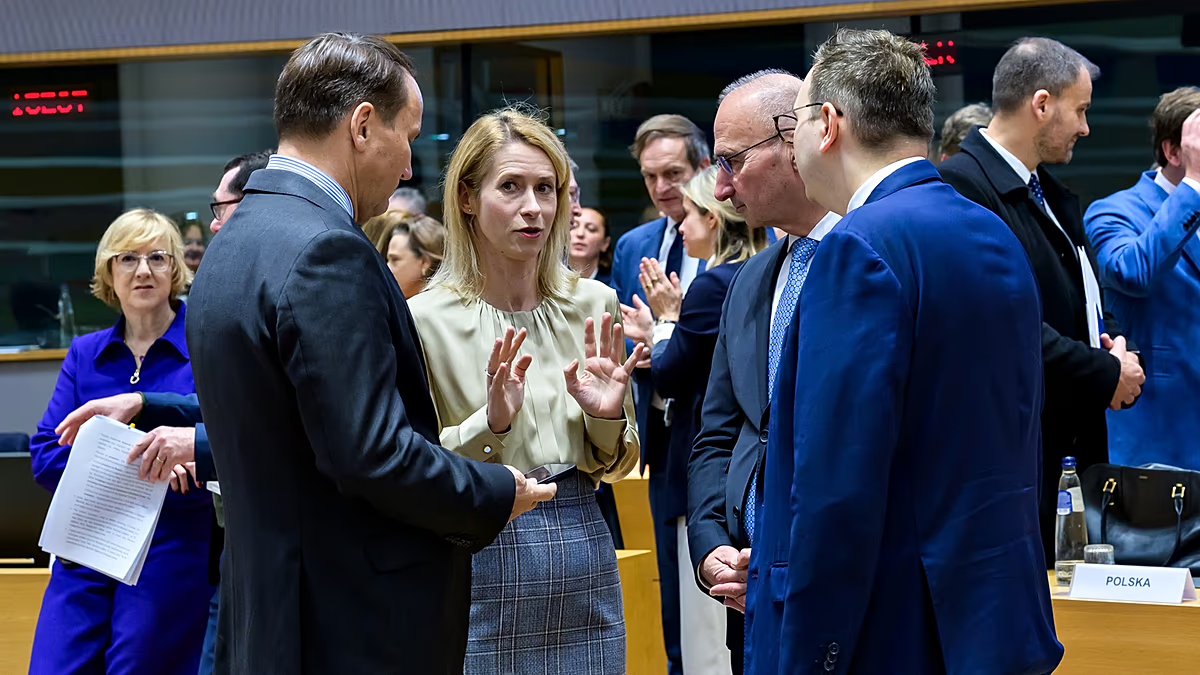
High Representative for Foreign Affairs Kaja Kallas stated firmly on Thursday that a “long-lasting and just peace” requires both Ukrainian and European participation. She acknowledged welcoming efforts to achieve peace but underscored that any plan lacking buy-in from these key stakeholders is unlikely to succeed. Kallas also reiterated the fundamental issue: Russia could end the conflict immediately by ceasing attacks on civilians.
Dutch Foreign Minister David van Weel echoed this sentiment, confirming that the Netherlands was not involved in drafting the reported plan. He stressed that European support for any peace agreement is contingent on Ukraine’s endorsement, stating, “Without the buy-in of Ukraine, you won’t get the support of the Europeans.”
France and Denmark have continued to advocate for an immediate and unconditional ceasefire as a crucial first step toward negotiations. This position is currently supported by both Kyiv and Washington, but has been consistently rejected by Moscow. French Minister Jean-Noël Barrot pointed to Vladimir Putin as the sole obstacle to initiating such discussions.
Some European officials have expressed concern about the influence of Steve Witkoff, US President Donald Trump’s special envoy for the Middle East, in the reported plan, citing his perceived tendency to align with Kremlin narratives. Danish Foreign Minister Lars Løkke Rasmussen questioned whether Trump himself supports the initiative, emphasizing the importance of understanding the full scope of US intentions.
Concerns Over EU’s Role and Potential Sidelines
The emergence of this US-Russia plan has reignited debate about the European Union’s potential marginalization in the peace process, despite being Ukraine’s largest supporter. Reports suggest that since Trump’s re-election, the EU has experienced fluctuating levels of involvement in discussions surrounding the conflict.
However, Lithuania’s Kęstutis Budrys downplayed the risk of being sidelined, asserting that Europe will actively defend its principles of sovereignty and territorial integrity in any new phase of negotiations. He emphasized the need for Europe to define its own interests and security concerns.
US Secretary of State Marco Rubio attempted to address Western concerns, stating that developing potential ideas for ending the war requires a “serious and realistic exchange” and will necessitate concessions from both sides. He affirmed the US commitment to continuing this process with input from all parties involved.
Meanwhile, EU foreign ministers convened on Thursday to discuss the European Commission’s “options paper” regarding future support for Ukraine. This paper outlines potential funding mechanisms for Ukraine’s military and financial needs in 2026 and 2027, totaling approximately €135 billion.
One proposed option involves utilizing immobilized assets of the Russian Central Bank to establish a zero-interest reparations loan for Ukraine – a move that would set a significant precedent. Alternative proposals include securing new loans on the financial markets, a potentially challenging route for countries already burdened with high levels of debt. Sweden’s Maria Malmer Stenergard voiced support for the reparations loan, framing it as a step towards achieving justice for Ukraine.
Stenergard also advocated for a two-pronged strategy: increased assistance to Ukraine and intensified pressure on Russia. She believes this approach will compel the Kremlin to engage in serious peace negotiations. She reiterated that “There can be no peace without Ukraine, and Europe has to be at the table.”
The situation remains fluid, and the details of the reported US-Russia plan are still emerging. European leaders are closely monitoring developments and preparing to actively shape the future of negotiations. As the EU debates its financial commitment to Ukraine, observers will be watching to see how effectively it can assert its influence and ensure a just and lasting peace that reflects the interests of all stakeholders. The Council on Foreign Relations provides ongoing analysis of the conflict in Ukraine.
For further updates on the EU’s response and the evolving dynamics of the Ukraine conflict, stay tuned to reputable news sources and official statements from European institutions.