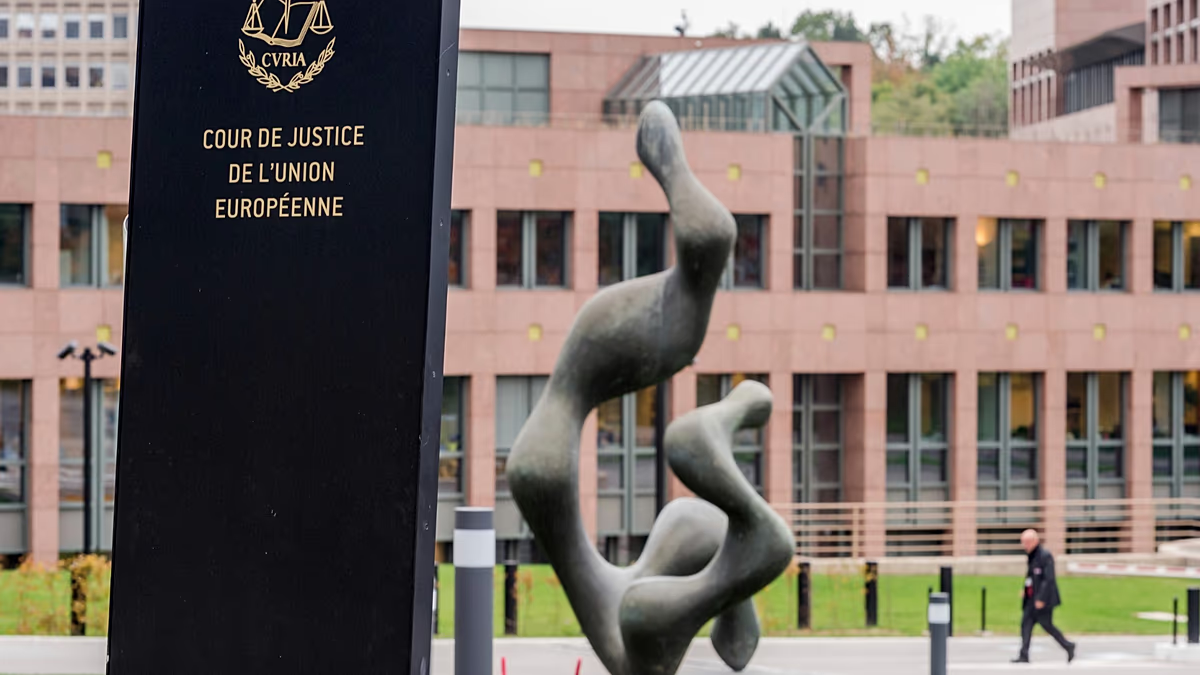

The European Union took a significant step toward equal rights on Tuesday, as the European Court of Justice (ECJ) ruled that EU member states must recognize same-sex marriage legally performed in any other EU country, regardless of their own national laws. This landmark decision impacts citizens across the 27-member bloc and clarifies the rights of married same-sex couples when moving between EU nations. The ruling stems from a case involving Polish citizens married in Germany.
The case originated in Poland, where a couple who married in Berlin in 2018 were denied the transcription of their marriage certificate into the Polish civil register. Poland does not currently permit marriage between people of the same sex, leading to the denial and subsequent legal challenge. The Polish Supreme Administrative Court ultimately sought clarification from the ECJ on the matter.
ECJ Ruling on Same-Sex Marriage Recognition
The ECJ’s ruling asserts that denying recognition of a valid marriage infringes upon the fundamental EU rights of freedom of movement and the right to respect for private and family life. According to the court, forcing spouses to be treated as unmarried when exercising these rights creates undue administrative, professional, and personal hardship. This decision doesn’t mandate that all EU countries legalize same-sex marriage, but it does require them to acknowledge marriages validly performed elsewhere in the Union.
The judges emphasized that EU citizens should have the assurance of maintaining their family life when returning to their country of origin after establishing it in another member state. This includes the legal recognition of their marital status. The ruling specifically states that recognition must be applied “without distinction” and without imposing additional obstacles.
Implications for EU Citizens
This ruling provides increased legal certainty for same-sex couples who choose to live or travel within the EU. Previously, the legal status of their marriage could be uncertain when crossing borders into countries without equivalent marriage rights. The decision aims to eliminate this uncertainty and ensure consistent treatment across the bloc.
Currently, over half of the EU’s 27 member states allow marriage equality. The Netherlands was the first country globally to legalize same-sex marriage in 2001. Other nations offer registered partnerships or civil unions, providing some, but not necessarily all, of the same legal protections as marriage.
The situation in Poland is particularly relevant, as the country does not recognize same-sex civil unions either. However, Prime Minister Donald Tusk has publicly expressed support for strengthening LGBTQ+ rights, potentially paving the way for future legislative changes. This ruling will likely increase pressure on the Polish government to address the issue of LGBTQ+ rights.
The ECJ’s decision aligns with broader trends in European legal thought regarding non-discrimination and the protection of fundamental rights. It builds upon previous rulings that have expanded the rights of LGBTQ+ individuals within the EU. For more information on EU law and fundamental rights, you can visit the Eurojust website.
While the ruling doesn’t force member states to change their own marriage laws, it establishes a clear precedent for the recognition of cross-border marriages. This means that a same-sex couple married in Spain, for example, will have their marriage recognized in all other EU countries, even those that do not permit such unions domestically.
The long-term impact of this decision remains to be seen, but it is expected to foster greater legal equality and facilitate the free movement of same-sex couples within the European Union. Legal experts will be closely watching how member states implement the ruling and whether it prompts further discussions about harmonizing marriage laws across the EU. Individuals and families affected by this ruling should consult with legal counsel to understand their rights and options.