
The European Union and Ukraine have agreed on a new action plan to accelerate Kyiv’s path toward EU membership, despite a political deadlock caused by Hungary’s veto on formal accession talks. This move, announced on December 11, 2025, is framed as a crucial step in providing Ukraine with long-term security guarantees and bolstering its reforms. The plan aims to keep Ukraine progressing toward EU standards even without immediate official negotiations.
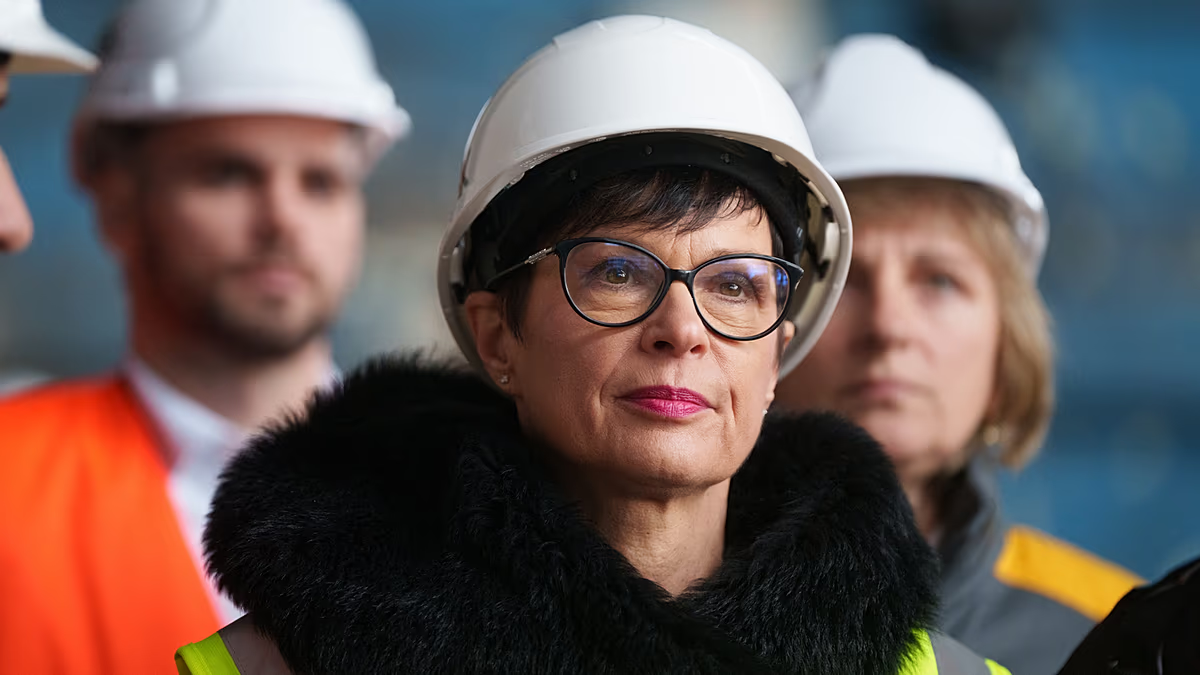
Speaking from an informal ministerial gathering in Lviv, Ukraine, the EU’s enlargement chief, Marta Kos, emphasized that Ukraine’s EU membership is viewed as a key component of its future security architecture. She added that accession is “central to make any peace settlement sustainable.” The agreement signals a commitment to Ukraine’s European integration, even amidst ongoing geopolitical challenges.
Bypassing the Veto: A 10-Point Plan for Ukraine’s EU Accession
The 10-point plan, jointly released by Kos and Ukraine’s Deputy Prime Minister Taras Kachka, allows the EU executive to move forward with technical preparations for accession, effectively circumventing Hungary’s current political obstruction. This means Ukraine can continue implementing necessary changes and engaging in discussions with the Commission, despite the lack of a formal green light from all 27 EU member states.
Denmark’s EU affairs minister, Marie Bjerre, stated that the goal is to ensure “Ukraine is still able to move on” with its preparations, even while the political impasse continues. The EU recognizes that a prolonged blockade is unsustainable and seeks to maintain momentum in the accession process.
An EU official highlighted the importance of “not losing time” and “getting Ukraine closer to the finish line,” anticipating a future resolution of the political hurdles. This proactive approach reflects a growing consensus within the EU regarding the strategic importance of Ukraine’s integration.
Russia’s invasion of Ukraine has significantly accelerated the EU’s consideration of enlargement, with Ukraine and Moldova both receiving candidate status relatively quickly after the conflict began. This demonstrates a shift in the EU’s foreign policy and a willingness to address security concerns through expansion.
However, Hungarian Prime Minister Viktor Orbán has maintained his opposition to Ukraine’s accession while the war with Russia is ongoing, creating a significant obstacle to progress. His concerns center on issues related to minority rights and the potential impact of Ukraine’s membership on the EU’s agricultural policies.
Focus on Combating Corruption
A central theme of the action plan is strengthening the rule of law and tackling corruption within Ukraine. This is a key demand from the EU, which has expressed concerns about backsliding in Ukraine’s anti-corruption efforts. The plan emphasizes the need for independent institutions and a robust legal framework.
Specifically, the plan calls for bolstering the independence of Ukraine’s National Anti-Corruption Bureau (NABU) and the Specialized Anti-Corruption Prosecutor’s Office (SAPO). Kyiv has pledged to protect their jurisdiction and expand their remit to cover more high-risk positions.
The European Commission recently warned Ukraine about the need to maintain progress in its fight against corruption. This underscores the EU’s commitment to ensuring that Ukraine meets the necessary standards before being considered for membership.
Recent investigations, including one into alleged kickback schemes involving Energoatom, Ukraine’s nuclear energy body, have further highlighted the importance of addressing corruption. These investigations have led to high-profile resignations, demonstrating the Ukrainian government’s willingness to address these issues, albeit under pressure.
The action plan arrives as Kyiv navigates complex geopolitical pressures, including calls from the United States to consider a peace deal with Russia. Reports indicate that President Zelenskyy has presented a revised peace plan to the White House, proposing EU membership for Ukraine by 2027.
Looking ahead, the success of this action plan hinges on Ukraine’s continued commitment to implementing the necessary reforms and the EU’s ability to maintain a unified front in supporting Kyiv’s European aspirations. The situation remains fluid, and the lifting of Hungary’s veto will be a critical development to watch. Stay informed about Ukraine’s journey toward EU membership and the evolving political landscape by following updates from the European Council.