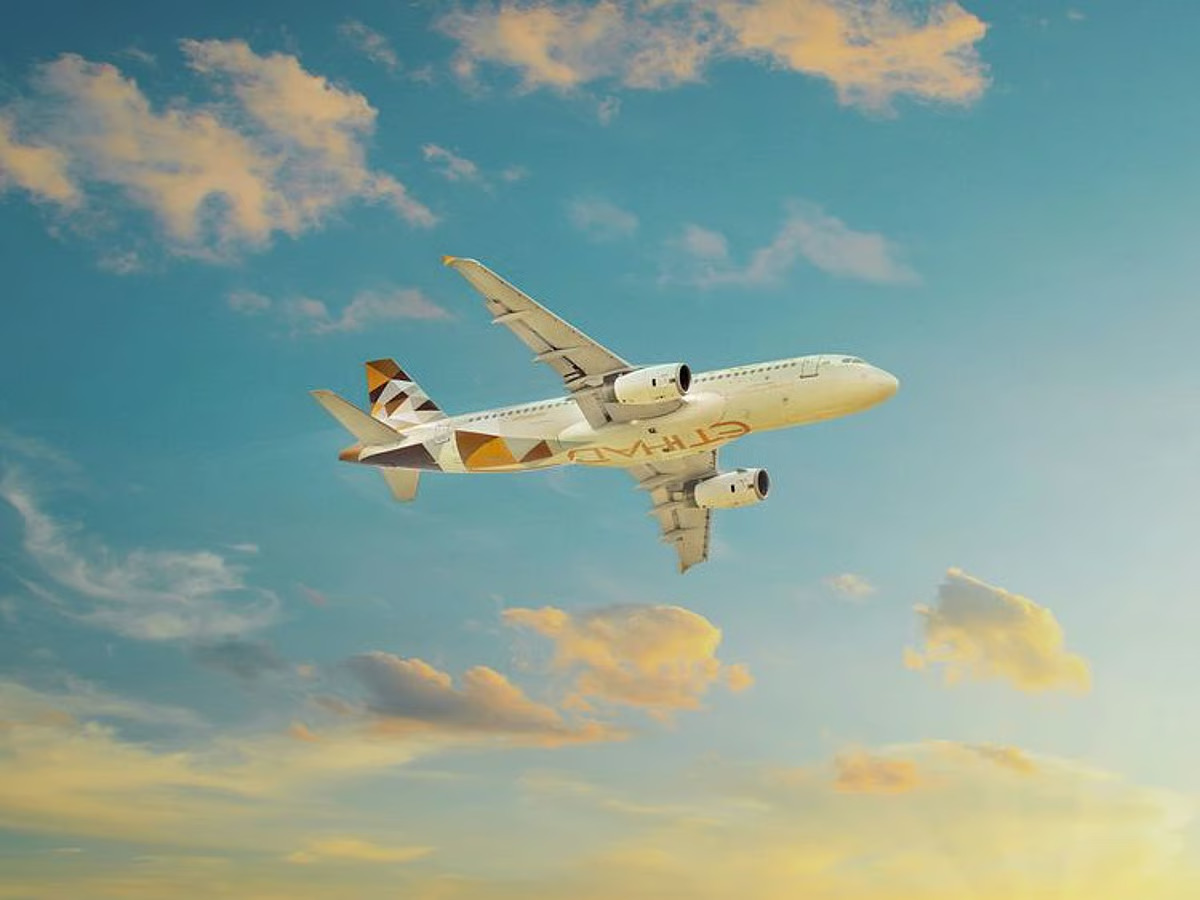

Recent reports indicate that Airbus A320 aircraft worldwide are undergoing urgent software updates due to a potential flight safety issue. Etihad Airways confirmed on Friday that its flights have returned to normal schedule following the completion of updates across its A320 fleet, with the airline citing quick work by operational and technical teams despite heavy travel volume at Zayed International Airport. The update affects a significant portion of the global A320 family, leading to disruptions for multiple airlines.
The widespread correction follows a directive from Airbus addressing a possible risk in flight-control computers triggered by intense solar radiation. Several airlines, including American Airlines, Delta, Air India, Wizz Air, and Air New Zealand, have preemptively warned passengers about potential delays and cancellations as they work to implement the necessary fixes. Passengers traveling to or from major hubs should monitor their flight status closely.
Understanding the Airbus A320 Software Update & Its Impact
Airbus issued the directive on January 19th, characterizing it as one of its largest corrective actions in its 55-year history. The issue centers around the susceptibility of certain flight control computer components to degradation from high-intensity, low-energy particle (HILP) radiation, commonly known as solar flares. Prolonged exposure could potentially lead to a temporary loss of certain flight control functions, although Airbus states there have been no recorded incidents of this happening.
The majority of the affected aircraft require a software update, a process that typically takes a few hours per plane. However, a smaller number might necessitate a hardware component replacement, which is substantially more time-consuming and contributes to the overall disruption. The timing is particularly challenging as airlines operate at significantly increased capacity during peak travel seasons.
The Role of Solar Radiation
The impact of solar radiation on aircraft systems is a recognized, though relatively infrequent, concern. According to the Space Weather Prediction Center, solar flares emit bursts of radiation that can interfere with electronic equipment. Commercial aircraft typically operate at altitudes where exposure to harmful radiation is minimal, but the identified vulnerability in the A320 flight control computers requires attention.
Which Aircraft are Affected?
The directive applies to the entire A320 family, encompassing the A320ceo (current engine option), A320neo (new engine option), A319, A321, A318 and their respective variants. This family of aircraft represents a very large share of the global fleet, recently surpassing the Boeing 737 in total deliveries. The exact number of aircraft requiring updates is estimated to be around 6,000, representing more than half of all A320-family planes currently in service.
The Federal Aviation Administration (FAA) and the European Union Aviation Safety Agency (EASA) have both acknowledged the issue and are requiring airlines to implement the corrective action. The UK Civil Aviation Authority also cautioned operators about potential disruptions. Airlines are prioritizing the updates based on operational needs and the severity of potential exposure to solar activity.
Etihad Airways’ swift completion of the update highlights the proactive approach many carriers are taking. The airline stated its teams worked “with minimal disruption” despite the busy travel period. This contrasts with the experiences of other airlines, where significant schedule adjustments have been necessary.
American Airlines, for example, has cancelled hundreds of flights in the past week to accommodate the software installation. Delta Air Lines has also reported delays and cancellations, and is working to minimize the impact on passengers. Air India and Wizz Air have similarly issued advisories regarding potential disruptions to their flight schedules.
The situation is further complicated by the varying levels of technical expertise and resources available to different airlines. Larger carriers with extensive maintenance facilities are better equipped to handle the updates quickly and efficiently. Smaller airlines, or those operating in regions with limited infrastructure, may face greater challenges. This could lead to a prolonged period of travel disruption for some passengers.
The A320 family is known for its reliability and widespread use in short and medium-haul routes. This incident, while concerning, does not suggest a fundamental flaw in the aircraft’s design. Instead, it represents a proactive response to a newly identified potential vulnerability. The focus remains on ensuring the continued air safety of passengers and crew.
Looking ahead, airlines are expected to continue implementing the software and hardware updates over the coming weeks. The FAA has requested airlines to complete the updates by February 13th, 2024. The actual timeline for full compliance will depend on the availability of parts, maintenance slots, and the operational capacity of each carrier. Monitoring the progress of the updates and any further advisories from Airbus and aviation regulators will be crucial in the coming days and weeks.