


The European People’s Party (EPP) Group in the European Parliament has sanctioned all seven Members of the European Parliament (MEPs) from Hungary’s Tisza party for abstaining from a vote of censure against European Commission President Ursula von der Leyen on Thursday. This action, taken after the EPP adopted stricter voting rules earlier this week, significantly impacts Tisza’s influence within the Parliament as it campaigns to unseat Viktor Orbán’s government in Hungary’s upcoming April 12th elections. The sanctions highlight growing tensions within the EPP regarding national interests and party discipline.
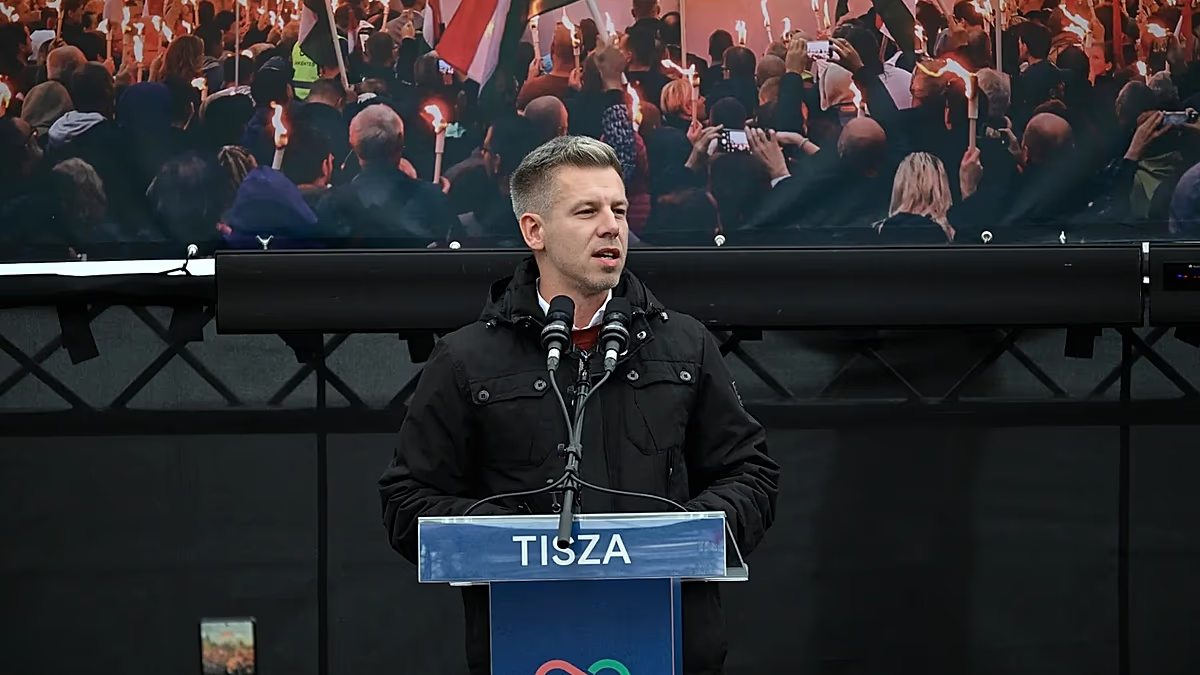
The sanctions, which went into effect immediately, prevent Tisza MEPs from speaking during plenary sessions for the next six months and bar them from leading new legislative files as rapporteurs. According to Péter Magyar, leader of the Tisza party, the move confirms that his politicians are not controlled by external forces, despite accusations to the contrary. The censure motion itself, initiated by the far-right Patriots for Europe group, ultimately failed to remove von der Leyen, with a substantial majority of the Parliament backing her leadership.
EPP Tightens Control Amidst Hungarian Election Cycle
This disciplinary action follows a recent trend within the EPP to enforce greater voting alignment among its members. The new rules were designed to prevent similar instances of dissent and maintain a unified front on key issues. However, the decision to penalize Tisza, a rising political force in Hungary, has raised eyebrows and sparked debate about the balance between party unity and individual political stances.
Tisza joined the EPP Group in 2024, following a strong showing in the European elections where they secured 30% of the vote. The party has since gained momentum in Hungary, consistently polling ahead of Orbán’s Fidesz party. This surge in popularity has made Tisza a key player in the upcoming parliamentary elections, and a potential challenger to Orbán’s long-held power.
The censure motion concerned the EU-Mercosur free trade agreement, a deal that has faced criticism from various groups over environmental and labor standards. While the motion failed, the fact that Tisza abstained provided ammunition for Orbán’s campaign, which frequently portrays opposition parties as being overly influenced by Brussels.
Orbán’s Rhetoric and the “Brussels Puppet” Narrative
Prime Minister Orbán has consistently attacked Tisza, accusing Péter Magyar of being a “Brussels puppet” and claiming that a Tisza victory would jeopardize Hungary’s sovereignty. Government-sponsored billboards have visually reinforced this message, depicting Magyar as controlled by von der Leyen. This narrative aims to appeal to nationalist sentiments within the Hungarian electorate.
In September, Orbán explicitly framed the election as a choice between his nationalist policies and what he described as the “catastrophic” consequences of embracing a more Europeanist approach, as advocated by Tisza. He has also warned that a Tisza government would likely support Ukraine’s accession to the European Union, a position that is unpopular with a segment of the Hungarian population. The European Parliament plays a crucial role in shaping EU policy and holding the Commission accountable.
It’s important to note that Tisza was not the only party within the EPP to express reservations about the vote. Four MEPs abstained, and one, Jessika van Leeuwen from the Dutch Farmer–Citizen Movement, voted against von der Leyen. This suggests a degree of internal disagreement within the group, even if the majority ultimately supported the Commission President.
The sanctions against Tisza are likely to further intensify the political battleground in Hungary as the April elections draw closer. The situation highlights the complex dynamics within the EPP, as it attempts to balance its commitment to European integration with the diverse national interests of its member parties. The outcome of the Hungarian elections could have significant implications for the future of the country’s relationship with the EU and the broader political landscape of Central Europe.
Looking ahead, observers will be watching to see how Tisza responds to the sanctions and whether this impacts their campaign strategy. Additionally, the incident raises questions about the long-term effectiveness of the EPP’s new voting discipline rules and their potential to stifle internal debate. Stay informed about the latest developments in the Hungarian elections and the evolving dynamics within the European Parliament.