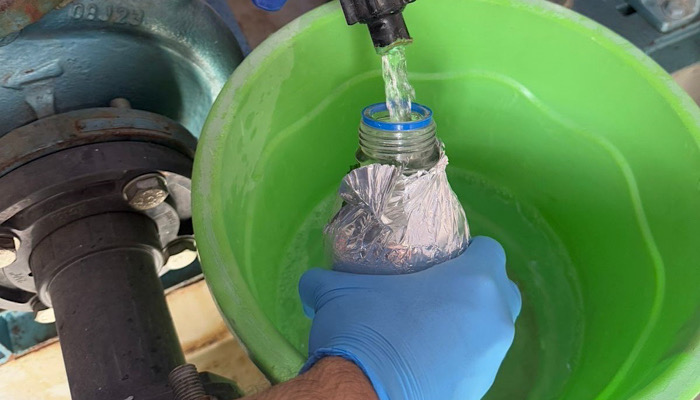

The Environment Authority in Oman has conducted a comprehensive national study to assess the quality of water produced from sewage and industrial wastewater treatment plants. The primary objective of this extensive research is to enhance sustainable water resource management by evaluating the efficiency of treatment plants and exploring the potential for reusing treated water for environmentally suitable purposes.
## Background on Oman’s Water Challenges
Oman faces significant challenges due to its limited natural water resources. The country heavily relies on desalinated seawater and groundwater to meet its growing water demands. However, these sources are not sustainable in the long term due to the high cost of desalination and the depletion of groundwater reserves. As a result, there is a pressing need to explore alternative water sources, such as treated wastewater, to alleviate the pressure on these limited resources.
## Objectives of the National Study
The study, conducted over two years from 2024 to 2025, aimed to develop a comprehensive national database on treated water quality in Oman. Dr. Amran bin Mohammed Al-Kumzari, Director of the Environmental Quality Department at the Environment Authority, stated that the study responds to the challenges facing Oman due to water scarcity. He emphasized that wastewater treatment plants play a crucial role in water management, enabling water reuse and reducing pressure on natural resources. By analyzing the quality of treated water, the study seeks to promote sustainability efforts and achieve a balance between development requirements and natural resource conservation.
## Methodology and Scope of the Study
The national survey covered 217 sewage and industrial wastewater treatment plants across all governorates of Oman. The study involved site visits and the collection of treated water samples according to precise scientific protocols. The research team conducted laboratory tests for various physical, chemical, and biological indicators to assess the quality of the treated water. This comprehensive approach ensured that the data collected was accurate and reliable, providing a robust foundation for the study’s findings.
### Data Collection and Analysis
The data collection process was meticulous, with the research team visiting each treatment plant to gather field data and collect water samples. The samples were then analyzed in laboratories to determine their quality. The study focused on several key parameters, including pH levels, turbidity, and the presence of contaminants. By analyzing these parameters, the researchers were able to assess the effectiveness of the treatment processes and identify areas for improvement.
## Findings and Implications
The study’s findings will be instrumental in enhancing environmental and water management plans in Oman. By developing a comprehensive national database on treated water quality, the Environment Authority aims to promote the reuse of treated water for environmentally suitable purposes, such as irrigation and industrial processes. This will not only reduce the pressure on natural water resources but also contribute to a more sustainable water management framework.
## Enhancing Sustainable Water Management
The study’s outcomes are expected to have a significant impact on Oman’s water management strategies. By identifying the potential for reusing treated water, the Environment Authority can develop guidelines and regulations to support the safe reuse of treated wastewater. This will enable Oman to move towards a more circular economy, where water is reused and recycled, reducing the demand on natural resources.
## Conclusion
In conclusion, the Environment Authority’s comprehensive national study on the quality of water produced from sewage and industrial wastewater treatment plants is a significant step towards enhancing sustainable water resource management in Oman. By evaluating treatment efficiency and assessing the potential for reusing treated water, the study aims to promote sustainability efforts and achieve a balance between development requirements and natural resource conservation. As Oman continues to face water scarcity challenges, initiatives like this study are crucial in ensuring a more sustainable future for the country’s water resources. The findings of this study will likely have far-reaching implications, not only for Oman but also for other countries facing similar water management challenges. By adopting a proactive approach to water management, Oman can set an example for other nations to follow, ultimately contributing to a more sustainable global water future.