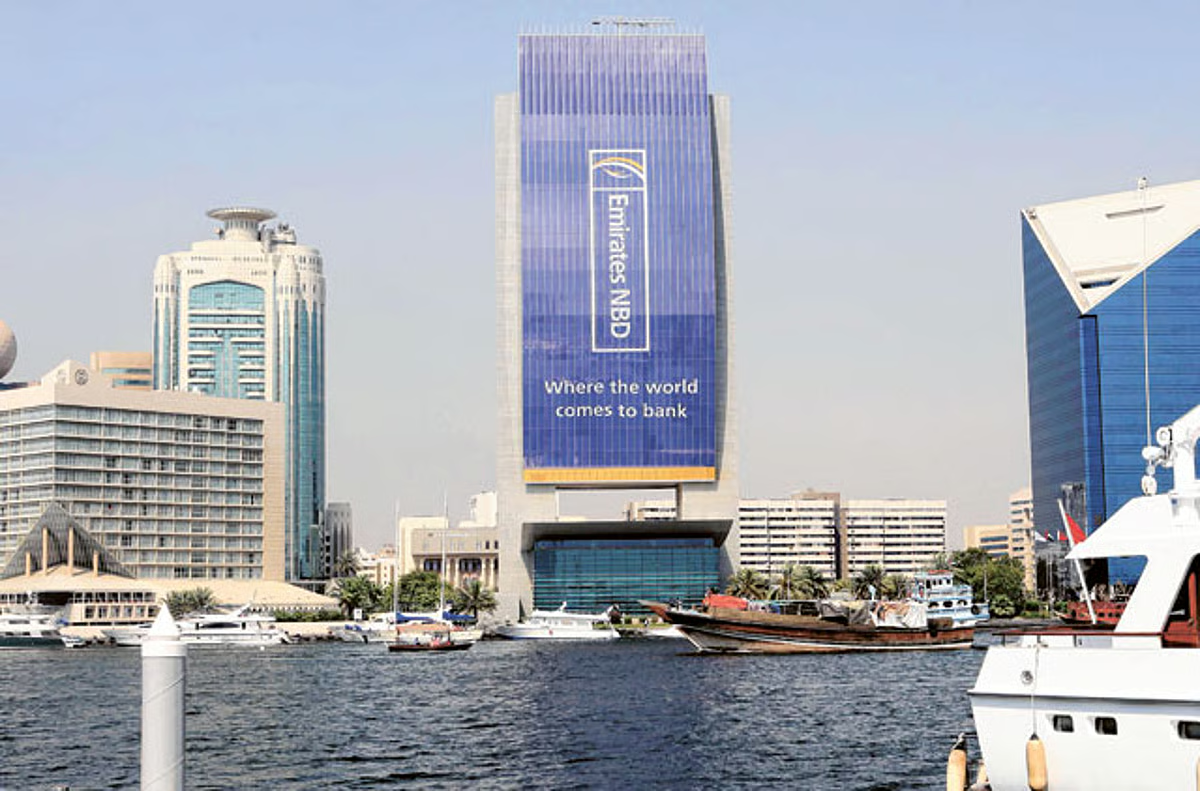

Emirates NBD has successfully issued a Dh1 billion digital bond, marking a significant milestone for debt capital markets in the Middle East and North Africa (MENA) region. The bond, issued under the bank’s Euro Medium Term Note (EMTN) Programme, leverages distributed ledger technology (DLT) via Euroclear’s Digital Financial Market Infrastructure (D-FMI) platform. This innovative issuance aims to enhance transparency, efficiency, and investor confidence in the regional financial landscape.
The transaction, which closed recently, saw strong demand from a diverse investor base and was listed on Nasdaq Dubai. This listing provides transparent price discovery and access to secondary markets, all within a regulated international framework. The move underscores the UAE’s commitment to becoming a global hub for fintech and digital finance.
The Rise of Digital Bonds and DLT in Finance
The issuance of this digital bond builds upon Euroclear’s growing experience in digital capital markets. The company previously facilitated the first digital issuance in 2023 with the World Bank, followed by subsequent issuances totaling EUR 1.2 billion. The D-FMI platform streamlines the entire bond lifecycle, from issuance and distribution to settlement, while maintaining connectivity to traditional liquidity channels.
Traditionally, bond issuance and trading involve complex manual processes and intermediaries. DLT offers the potential to automate these processes, reduce costs, and improve settlement times. This can lead to greater efficiency and reduced risk for both issuers and investors. The use of DLT also enhances transparency by providing an immutable record of transactions.
Key Participants in the Transaction
The successful completion of the bond issuance involved a consortium of leading financial institutions. Joint Lead Managers included Emirates NBD Capital, First Abu Dhabi Bank, Mashreq, and Standard Chartered. Emirates NBD Capital and Standard Chartered also served as Joint DNN Structurers, while Citi acted as the Issuing and Paying Agent.
This collaboration highlights the growing industry support for digital asset innovation and the willingness of major players to embrace new technologies. The participation of these institutions lends credibility to the digital bond market and encourages further adoption.
Investor Confidence and Market Implications
According to Emirates NBD, the bond attracted significant interest from a broad range of investors, demonstrating confidence in the bank’s creditworthiness and its capabilities in the digital space. The listing on Nasdaq Dubai is particularly noteworthy, as it represents the first digitally native bond to be admitted to the exchange.
Hamed Ali, CEO of Nasdaq Dubai and Dubai Financial Market (DFM), stated that the admission of the AED-denominated digital bond reflects the increasing maturity of digital debt markets. He emphasized that the transaction demonstrates the ability of new issuance models to operate within a regulated environment while maintaining transparency and liquidity.
Additionally, executives from Euroclear and Standard Chartered highlighted the potential of digital issuance to modernize capital markets at scale without compromising reliability. Bernard Ferran, Chief Commercial Officer at Euroclear Group, noted that the transaction accelerates execution while preserving investor access and alignment with market standards. Salman Ansari, Global Head of Capital Markets at Standard Chartered, added that the issuance showcases how DLT can transform debt markets.
Growth in MENA Debt Markets
The launch of this digital bond comes at a time of strong growth in the MENA region’s debt capital markets. Rising investor demand has encouraged both government entities and corporations to issue new debt to finance various projects and initiatives. This trend is expected to continue as the region seeks to diversify its economies and attract foreign investment.
The increasing adoption of digital technologies, including DLT, is poised to play a crucial role in shaping the future of finance in the MENA region. The success of Emirates NBD’s issuance could pave the way for further innovation and the development of a more efficient and transparent capital markets ecosystem. Blockchain technology is increasingly seen as a key enabler of this transformation.
Looking ahead, market participants will be closely watching for further issuances of digital bonds in the region. The development of standardized frameworks and regulatory clarity will be essential to fostering continued growth and attracting broader investor participation. The next steps will likely involve exploring the potential for tokenizing other asset classes and expanding the use of DLT across the financial industry. The long-term impact of these developments on the regional and global financial landscape remains to be seen, but the initial signs are promising.
Further regulatory developments regarding digital assets and their treatment under existing financial laws will be critical to watch in the coming months.