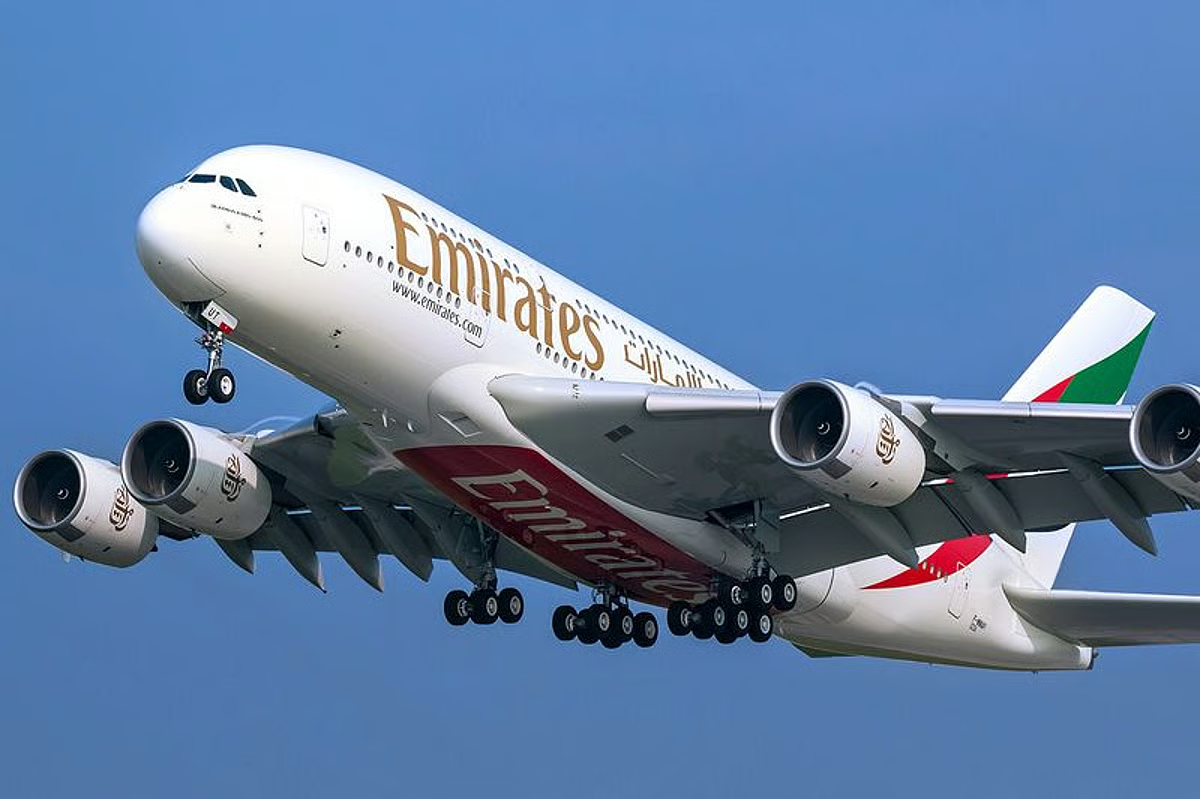

Emirates airline commenced service between Dubai and Montréal with its modern Airbus A350-900 aircraft on October 30, 2023. The new deployment aims to meet rising passenger demand on the route and offer an enhanced travel experience. This marks the first time the Emirates A350 has operated to Canada, signalling a strategic investment in the North American market.
The inaugural A350 flight, EK205, departed Dubai International Airport (DXB) for Montréal-Pierre Elliott Trudeau International Airport (YUL). The airline will operate daily A350 service on the Montréal route, replacing the previously used Boeing 777-300ER. This adjustment to fleet deployment comes as international travel continues its rebound following pandemic-related disruptions.
Emirates A350: A New Standard for Montréal Passengers
The introduction of the A350 represents an upgrade in cabin comfort and technological sophistication for passengers traveling between Dubai and Montréal. Emirates first received its A350 aircraft in late 2022 and has been gradually rolling out the aircraft on select routes from its Dubai hub. The airline has invested heavily in its cabin products across all aircraft types.
Passenger Experience Improvements
The A350 features Emirates’ latest Premium Economy class, offering wider seats and increased legroom compared to standard Economy. The aircraft’s cabins are also equipped with advanced air filtration systems and noise reduction technology, enhancing the overall flight experience. Passengers can also expect a fully immersive entertainment experience with upgraded ICE (Information, Communication, Entertainment) systems.
Additionally, the A350 includes a refreshed Business Class cabin with fully enclosed suites, providing greater privacy and comfort. These suites feature zero gravity seats and extensive personal storage space, catering to the needs of business and luxury travellers. Emirates Business Class is consistently ranked among the world’s best by industry publications.
Operational Advantages of the A350
Beyond passenger comfort, the A350 offers operational benefits for Emirates. The aircraft is more fuel-efficient than the older generation Boeing 777s previously used on the route, potentially reducing operating costs and the airline’s carbon footprint. According to Airbus, the A350 incorporates advanced materials and aerodynamic design.
Furthermore, the A350’s quieter engines contribute to a more peaceful cabin environment. This characteristic is particularly valuable on long-haul routes like the Dubai–Montréal connection. The decision to deploy the A350 aligns with Emirates’ broader fleet modernization strategy.
The launch comes at a time of increasing trade and tourism ties between the United Arab Emirates and Canada. Emirates already serves Toronto and has been a key connector for passengers and cargo traffic. The addition of Montréal strengthens the airline’s commitment to the Canadian market.
Prior to the A350 debut, Emirates reported strong demand for flights to Canada, fuelled by both visiting friends and relatives (VFR) traffic and business travel. The airline has seen a consistent rise in passenger numbers throughout 2023, reflecting the overall recovery in international air travel. However, economic headwinds in some regions and geopolitical instability create uncertainties.
The airline’s cargo division, Emirates SkyCargo, also benefits from the A350’s increased belly hold capacity. This enhanced capability allows for greater transport of goods, supporting trade between Canada and the UAE, as well as broader international markets. The increased capacity is expected to boost trade in sectors like aerospace and pharmaceuticals.
In contrast to some airlines facing aircraft delivery delays, Emirates has maintained a relatively steady pace of A350 inductions. Their ongoing investment underscores confidence in long-term travel demand. This contrasts with ongoing supply chain challenges impacting other aspects of the aviation industry.
The Civil Aviation Authority of Canada (CAA) has welcomed the arrival of the A350 to Montréal, noting its contribution to passenger experience and environmental sustainability. The CAA continuously monitors airline operations to ensure safety and compliance with regulations. The route’s success will likely be a key indicator for future fleet allocation decisions.
Looking ahead, Emirates will continue to monitor performance on the Montréal route and may consider adjustments to frequency or capacity based on demand. The airline’s next step involves evaluating the passenger response to the A350 service, with data collection scheduled through the first quarter of 2024. The long-term impact on the route’s profitability and market share remains to be seen, contingent on global economic conditions and travel trends.
Further expansion of Emirates’ North American network will depend on airport infrastructure and regulatory approvals. The airline is consistently exploring opportunities to add new destinations and increase service to existing cities. The ongoing development of airport capacity and air traffic management systems will be critical for future growth.