


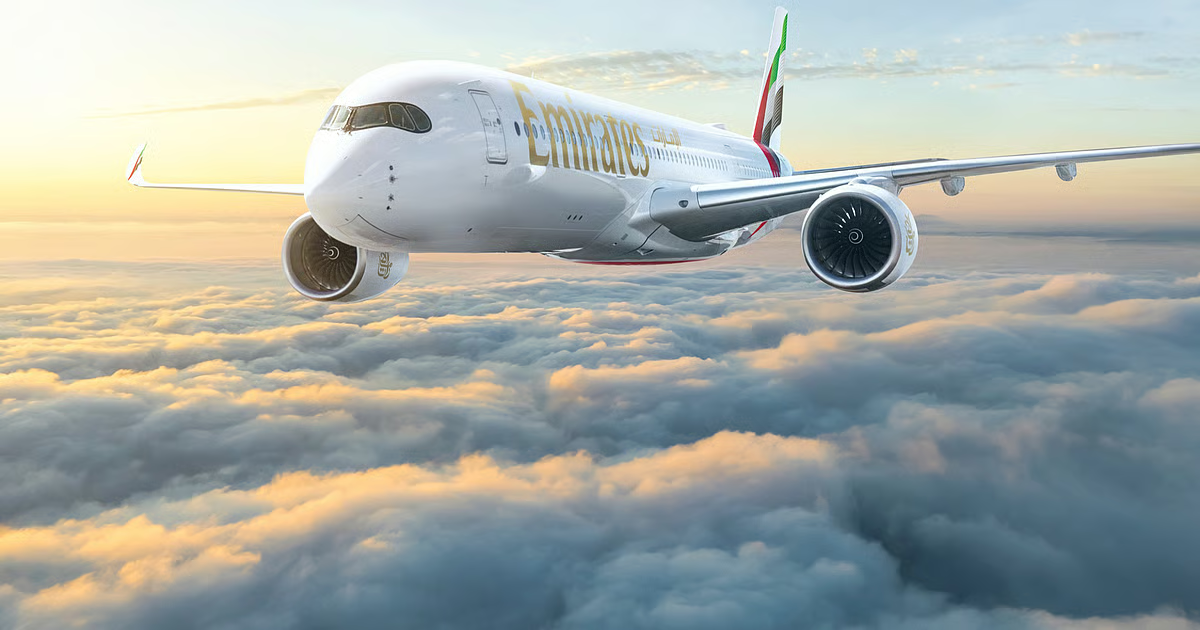

Emirates airline has significantly expanded its Airbus A350 order, adding 15 additional aircraft to its existing commitment. The deal, announced at the Dubai Airshow, brings Emirates’ total firm order for the A350-900 to 85 aircraft, significantly bolstering Airbus’s backlog and reinforcing its partnership with the Dubai-based carrier. This substantial investment highlights ongoing demand for modern, fuel-efficient widebody aircraft.
The announcement, valued at approximately $6 billion at list prices, followed Emirates’ earlier order for 65 Boeing 777-9s announced at the same show. This brings the airline’s total aircraft purchase commitment to $41.4 billion. The new Airbus A350 orders are expected to support thousands of jobs across European aerospace supply chains over the coming years, reflecting the broad economic impact of major aircraft purchases.
Emirates’ A350 Commitment Fuels Aerospace Growth
The expanded order signals continued confidence in the A350 program and its operational efficiency. Emirates first ordered the A350 in 2019, and this new commitment indicates satisfaction with the aircraft’s performance and suitability for its long-haul network. The A350 family is known for its advanced aerodynamics, lightweight materials, and fuel-efficient engines.
Strengthening Partnerships with Key Suppliers
Rolls-Royce, the exclusive engine provider for the A350-900, expressed its satisfaction with the renewed commitment. Omar Ali Adib, Senior Vice President, Customer – Middle East, Africa and Central Asia at Rolls-Royce, stated the order reaffirms faith in the Trent XWB-84 engine, citing its durability and low fuel consumption. The engine manufacturer sees this agreement as a continuation of its longstanding relationship with Emirates.
Airbus also highlighted the importance of the partnership. Benoît de Saint-Exupéry, EVP Sales of the Commercial Aircraft business, stated that the A350 remains central to long-haul fleet modernization. He emphasized the aircraft’s role as a benchmark for long-haul travel and expressed Airbus’s eagerness to support Emirates’ operational expansion.
The increase in Emirates’ orderbook has a significant effect on the wider aerospace manufacturing sector. Supply chain activity extends beyond Airbus’s primary hubs in France, Germany, the UK, and Spain, encompassing a network of suppliers and subcontractors. This sustained demand supports employment in skilled manufacturing roles throughout Europe.
However, aircraft deliveries are subject to various factors, including production rates and supply chain constraints. The global aerospace industry is still navigating challenges related to component shortages and workforce availability, impacting the timelines for aircraft completion and handover. These factors are being closely monitored by both airlines and manufacturers.
Emirates currently operates a fleet of 269 aircraft. With the newly confirmed orders, the airline anticipates receiving a total of 375 future aircraft deliveries from both Airbus and Boeing. This substantial fleet renewal and expansion are intended to meet growing passenger demand and maintain Emirates’ position as a leading global airline.
The decision comes amidst growing demand for air travel, particularly on long-haul routes. According to industry reports, passenger numbers are steadily increasing as travel restrictions ease and economic activity recovers. A key consideration for airlines is the need to modernize their fleets with more fuel-efficient aircraft to reduce operating costs and minimize environmental impact. Sustainability within the aviation industry is a key concern.
In contrast to some airlines facing financial pressures, Emirates has maintained a strong financial position, allowing it to make substantial investments in its fleet. The airline’s profitability is bolstered by its strategic location as a major international hub and its focus on premium travel services. This financial stability has enabled Emirates to aggressively pursue fleet renewal and expansion plans, solidifying its long-term competitiveness.
These new aircraft purchases are also about enhancing passenger experience. The Airbus A350 is often fitted with the latest cabin technology, including enhanced in-flight entertainment systems and improved seating configurations. Emirates intends to offer premium amenities on the new aircraft to maintain its reputation for delivering exceptional service. Fleet modernization allows the airline to constantly upgrade the experience for its passengers.
Looking forward, the next step will involve finalizing the specific configurations and delivery schedules for the additional Airbus A350 aircraft. Regular updates on the production and delivery timelines are expected in the coming months. The overall impact on the global aircraft market and the aerospace supply chain will continue to be assessed as these large-scale orders progress. Uncertainties surrounding geopolitical events and economic conditions remain factors to watch.