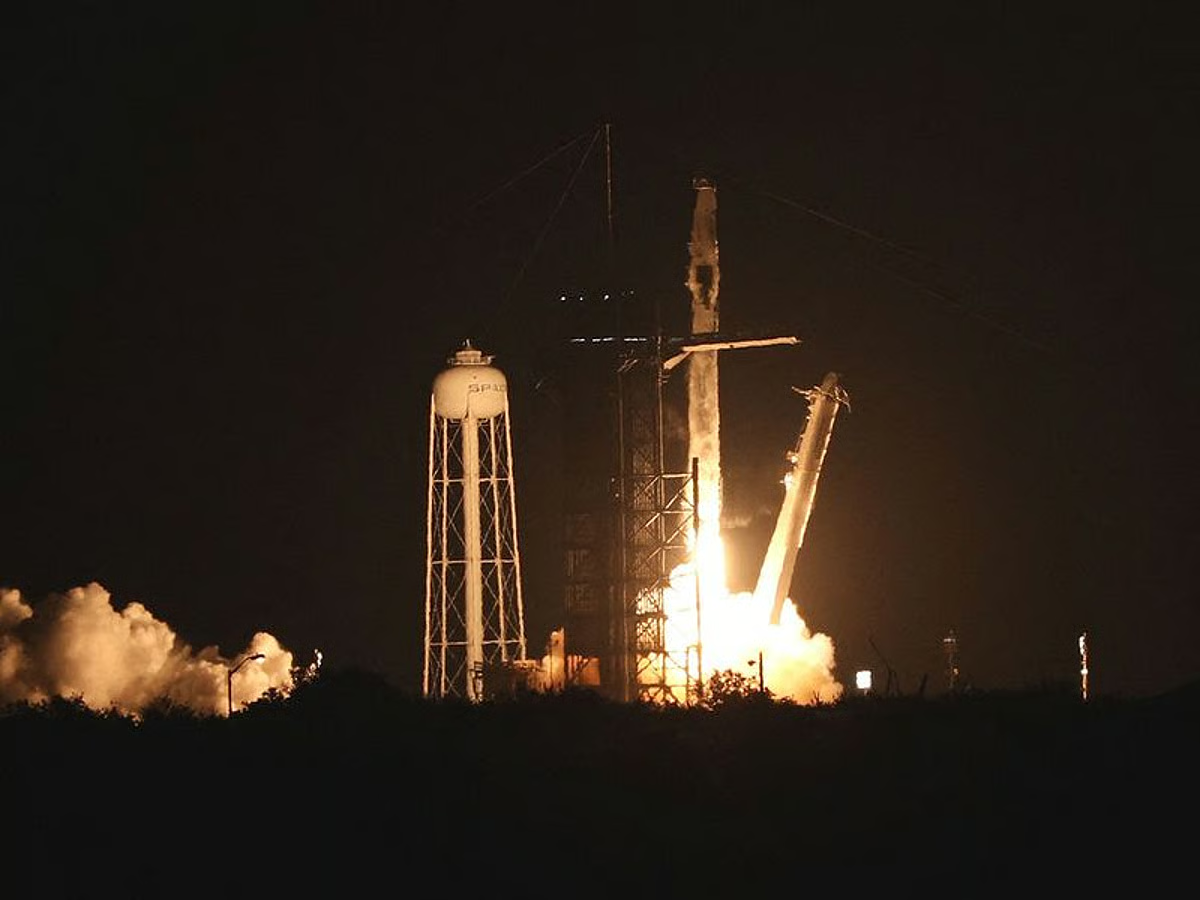

SpaceX, the aerospace manufacturer and space transportation services company founded by Elon Musk, is reportedly preparing for a potential initial public offering (IPO) as early as 2026. This move would allow public investors to purchase shares in the privately held company for the first time, marking a significant shift for the industry leader. Executives have informed shareholders of the preparations, though the timeline remains subject to market conditions and technical progress.
What a SpaceX IPO Could Mean for Investors
A successful IPO could value SpaceX at approximately $1.5 trillion, potentially rivaling the record-breaking IPO of Saudi Aramco in 2019. The company intends to utilize the capital raised to accelerate its ambitious projects, including expanding its launch cadence, developing advanced satellite networks, and furthering its long-term goals of establishing a sustained human presence beyond Earth. However, the timing and ultimate success of the IPO are far from guaranteed.
The Rise of Starlink
Currently, the primary driver of investor interest in SpaceX is its Starlink satellite internet business. Starlink utilizes a constellation of low-Earth orbit satellites to deliver broadband internet access globally, particularly to underserved and remote areas. Projections indicate Starlink could generate between $22 billion and $24 billion in revenue by 2026, making it SpaceX’s dominant revenue stream, surpassing its traditional rocket launch services.
SpaceX is actively broadening Starlink’s capabilities beyond residential internet. A key initiative involves direct satellite connectivity for mobile phones, aiming to provide coverage in areas lacking cellular infrastructure. This expansion could position Starlink as a foundational element of global communications networks.
A High Valuation in a Changing Market
The proposed $1.5 trillion valuation has sparked debate among financial analysts. This figure represents a multiple of over 60 times the company’s projected future sales, a ratio rarely observed in public markets. Investors would essentially be paying a premium for SpaceX’s future potential rather than its current earnings.
Proponents of the valuation argue that SpaceX operates in largely uncontested markets, particularly in space launch and satellite internet. They highlight the company’s innovative capabilities and first-mover advantage. Conversely, critics contend that such high expectations leave little margin for error and could expose investors to significant risk. The current private valuation of SpaceX already exceeds the combined market capitalization of major U.S. defense contractors.
Beyond Launch Services: Long-Term Vision
SpaceX’s ambitions extend far beyond simply launching satellites and rockets. Elon Musk has consistently articulated a vision of a multi-planetary future, encompassing space-based manufacturing, orbital data centers, and ultimately, the establishment of self-sustaining human settlements on the Moon and Mars. This long-term strategy is heavily reliant on the development and successful deployment of Starship.
Starship, a fully reusable super-heavy lift launch vehicle, is designed to dramatically reduce the cost of space travel and enable large-scale missions beyond Earth orbit. NASA has already awarded SpaceX contracts totaling around $4 billion for lunar missions that depend on Starship’s capabilities. This early investment provides a significant boost to SpaceX’s long-term prospects in the emerging space economy.
Competitive Landscape and Market Risks
While SpaceX currently enjoys a dominant position, competition is intensifying. Numerous companies, backed by both government funding and private investment, are actively developing competing rocket and satellite technologies. This increased competition could erode SpaceX’s market share and pricing power over time.
The timing of the IPO also presents a risk. Investor sentiment towards high-growth, futuristic companies can be volatile, particularly in response to broader economic shifts. A downturn in the market or a change in investor preferences could negatively impact the valuation and demand for SpaceX shares. Delaying the IPO too long, however, could also be detrimental as competitors gain ground.
The Elon Musk Factor
Ultimately, SpaceX’s story is inextricably linked to its founder, Elon Musk. His track record of innovation and successful ventures, such as Tesla, inspires confidence among supporters. However, critics express concern about the concentration of decision-making power in a single individual.
This duality of perception contributes to what analysts refer to as the “Musk premium,” where investors may be willing to pay a higher price for SpaceX shares simply due to their belief in Musk’s vision. Whether investors are acquiring a stake in a profitable satellite business or a long-term bet on the future of space exploration remains a central question.
Looking ahead, SpaceX’s progress with Starship and the continued growth of Starlink will be crucial factors to monitor. The company’s ability to navigate the evolving competitive landscape and maintain investor confidence will determine the feasibility and success of its planned IPO in 2026. Market conditions and any unforeseen technical challenges will also play a significant role in the final decision.