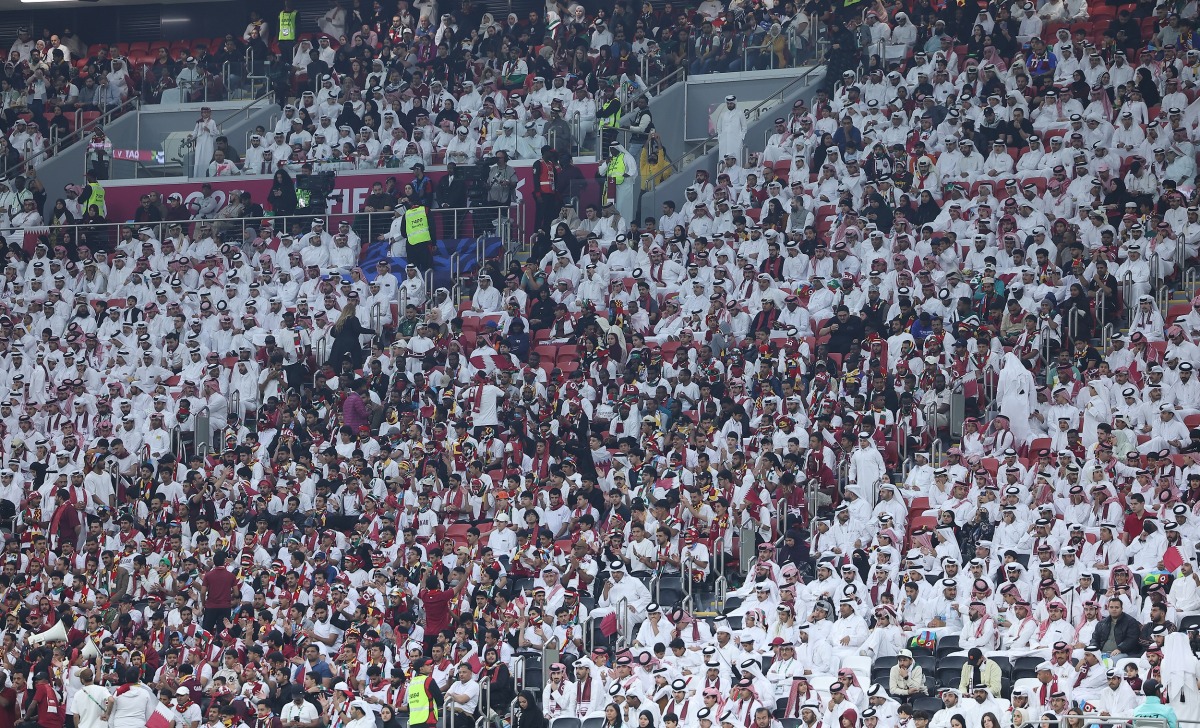

Doha, Qatar – The 2025 FIFA Arab Cup has reached a significant milestone, surpassing one million in total attendance after the thrilling quarter-final stage concluded on Friday. The tournament, showcasing talent from across the Arab world, continues to grow in prestige and popularity, drawing large crowds and intense competition. This achievement underscores Qatar’s continued success in hosting major international football events and solidifies the FIFA Arab Cup as a key fixture on the global calendar.
The quarter-final matches, held across several of Qatar’s World Cup-standard stadiums, were closely contested, with Morocco, UAE, Jordan, and Saudi Arabia emerging as the semi-finalists. The high level of play and competitive balance throughout the tournament has been a defining characteristic of this year’s edition, rivaling established continental competitions. The atmosphere closely mirrored the excitement generated during the 2022 FIFA World Cup held in the same nation.
Record-Breaking Attendance for the FIFA Arab Cup
The surge in attendance is a key indicator of the FIFA Arab Cup’s increasing appeal. Total turnout now stands at 1,067,217 spectators across 28 matches, significantly exceeding the 571,605 recorded for the entire 2021 tournament. This represents a substantial increase in fan engagement and demonstrates the success of Qatar’s efforts to promote the event.
The Morocco versus Saudi Arabia group stage match proved to be the most popular, attracting 78,131 fans – a new all-time high for the tournament. The Saudi Arabia and Palestine quarter-final also drew a massive crowd of 77,197 to Lusail Stadium. Group A, featuring the host nation Qatar, led group stage attendance with 263,178 fans, followed by Groups B, C, and D.
Quarter-Final Results and Standout Performances
Morocco secured their semi-final berth with a narrow 1-0 victory over Syria, a team that had previously upset Qatar and Tunisia. UAE advanced after a dramatic penalty shootout win (7-6) against defending champions Algeria following a 1-1 draw. The match was a tactical battle, ultimately decided by the composure of the UAE players in the shootout.
Jordan continued their impressive run with a 1-0 win against Iraq, largely thanks to the outstanding performance of goalkeeper Yazid Abu Layla. Saudi Arabia overcame Palestine 2-1 in extra time, ending the Palestinians’ surprising and inspiring journey through the tournament. Mohamed Kanno scored the decisive goal for Saudi Arabia.
Beyond attendance, the tournament has seen a high level of action on the pitch. A total of 68 goals have been scored in 28 matches, averaging 2.43 goals per game. Twelve penalties were awarded, with nine successfully converted. The competition has also been physical, resulting in 72 yellow cards and 10 red cards.
Jordan’s Ali Alwan currently leads the scoring charts with 4 goals. Adel Boulbina of Algeria and Mohamed Kanno of Saudi Arabia are close behind with 3 goals each. Salem Al-Dawsari of Saudi Arabia is the leading assist provider with six assists, showcasing his playmaking ability. These statistics highlight the offensive talent on display throughout the Arab Cup.
The success of the 2025 edition builds on the momentum generated by the 2021 tournament, which served as a crucial test event for Qatar ahead of the FIFA World Cup. Qatar’s investment in world-class infrastructure, including its stadiums and fan zones, has been instrumental in attracting both local and international supporters. The tournament has also provided a platform for showcasing Arab culture and hospitality, enhancing the overall experience for visitors. Related events in cultural hubs like Katara, Msheireb, Souq Waqif, Lusail, and The Pearl have added to the festive atmosphere.
Looking ahead, the semi-final matches will determine which two teams will compete for the FIFA Arab Cup title. The matches are expected to draw significant crowds and further elevate the tournament’s profile. Organizers will be closely monitoring fan behavior and security measures to ensure a safe and enjoyable experience for all attendees. The final match date and location are yet to be officially announced, but are anticipated to be confirmed in the coming days.
The continued growth of the Arab Cup suggests it is becoming a significant event in the international football landscape. Whether this trend continues and the tournament evolves further remains to be seen, but its current success is undeniable.