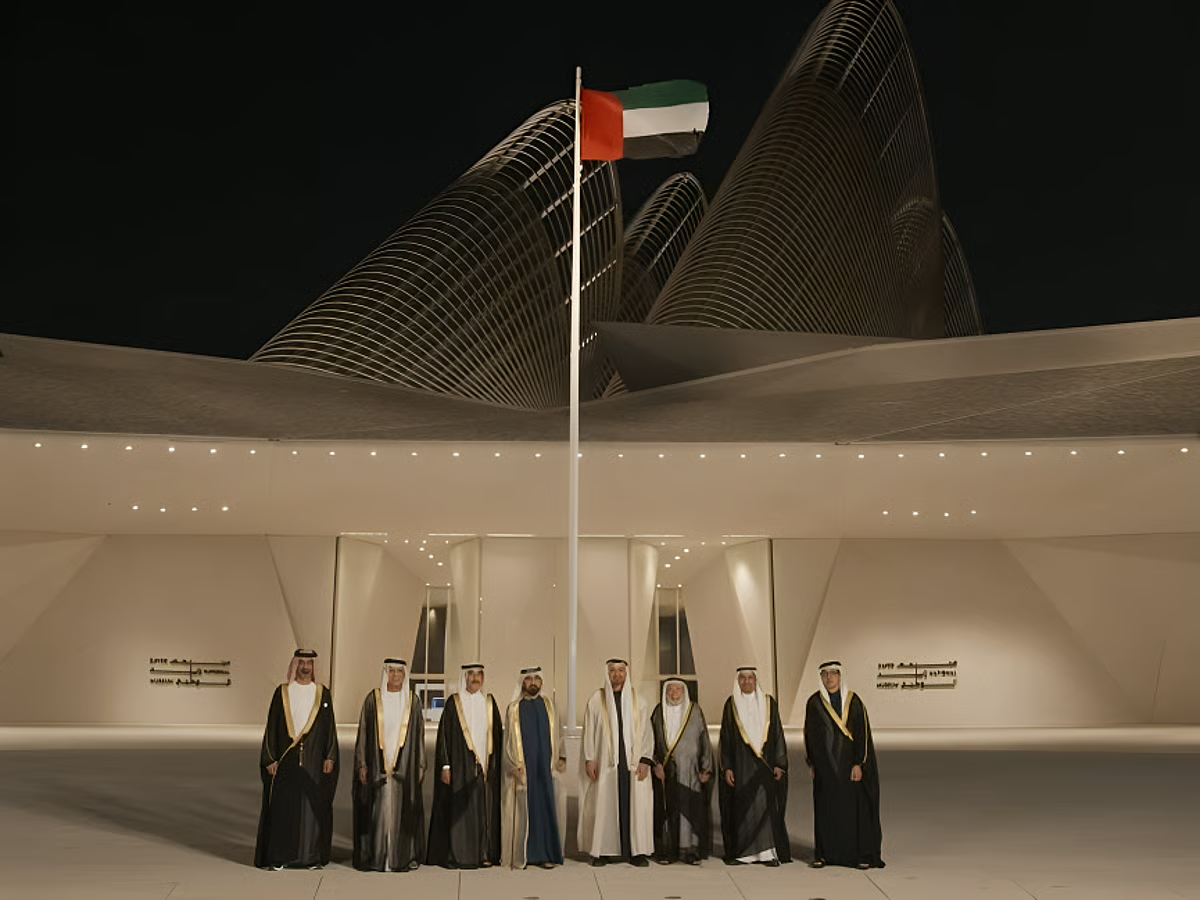

UAE leaders attended a ceremony at the Sheikh Zayed Grand Mosque in Abu Dhabi on Monday marking Eid Al Etihad, a commemoration of the nation’s founding. The event, held on December 2nd, coincided with the UAE’s 52nd National Day celebrations and honored the legacy of the late Sheikh Zayed bin Sultan Al Nahyan, the country’s founding father. The ceremony underscored the importance of national unity and the principles upon which the UAE was established.
President Sheikh Mohamed bin Zayed Al Nahyan, along with Sheikh Rashid bin Hamdan Al Nahyan, Sheikh Nahyan bin Mubarak Al Nahyan, and a number of other Sheikhs and officials, participated in the solemn occasion. The event featured recitations from the Holy Quran and reflections on Sheikh Zayed’s vision for a prosperous and unified Emirates. The Ministry of Presidential Court organized the event, which was broadcast nationally.
The Significance of Eid Al Etihad and National Day
Eid Al Etihad, meaning “Union Eid,” is a relatively recent addition to the UAE’s national calendar, formally established in 2013. It specifically commemorates the historic meeting on December 2, 1971, when the six emirates – Abu Dhabi, Dubai, Sharjah, Ajman, Umm Al Quwain, and Fujairah – declared their union, forming the United Arab Emirates. Ras Al Khaimah joined the federation in 1972, completing the seven-emirate structure.
Historical Context of the Union
The formation of the UAE followed the withdrawal of British forces from the region. Recognizing the need for collective security and economic cooperation, the rulers of the Trucial States engaged in negotiations that ultimately led to the historic agreement. Sheikh Zayed bin Sultan Al Nahyan, then the Ruler of Abu Dhabi, played a pivotal role in advocating for and solidifying the union.
The National Day celebrations, coinciding with Eid Al Etihad, extend beyond a simple commemoration of the past. They serve as a platform to showcase the UAE’s rapid development and its growing influence on the global stage. This year’s celebrations are particularly notable given the UAE’s hosting of COP28, the United Nations Climate Change Conference.
However, the celebrations also acknowledge the challenges faced during the early years of the nation. The initial years required significant investment in infrastructure, education, and healthcare to build a modern and sustainable society. According to government reports, substantial oil revenues were strategically allocated to these areas.
Leaders Reflect on Zayed’s Legacy
During the ceremony, speakers emphasized Sheikh Zayed’s commitment to social justice, environmental sustainability, and international cooperation. His vision for a tolerant and inclusive society continues to guide the UAE’s policies both domestically and abroad. The focus on these principles is increasingly important as the UAE navigates a complex geopolitical landscape.
Sheikh Mohamed bin Zayed Al Nahyan, in a statement released by the Ministry of Presidential Court, highlighted Sheikh Zayed’s foresight in establishing a strong and unified nation. He stressed the importance of preserving the founding principles for future generations. The President also acknowledged the contributions of the UAE’s citizens and residents to the country’s success.
Meanwhile, the event also served as an opportunity to recognize the sacrifices made by previous generations in building the UAE. The ceremony included displays showcasing the nation’s history and cultural heritage, reinforcing a sense of national identity. This emphasis on cultural preservation is a key component of the UAE’s long-term strategy.
In contrast to some regional conflicts, the UAE has consistently promoted dialogue and peaceful resolution of disputes. This commitment to diplomacy is seen as a direct reflection of Sheikh Zayed’s principles. The country’s role as a mediator in regional conflicts has been increasingly recognized internationally.
Economic and Social Development
The UAE’s economic transformation since 1971 has been remarkable. From a largely desert-based economy reliant on pearl diving and fishing, the country has diversified into a global hub for trade, finance, and tourism. This diversification is a key element of the UAE’s “Vision 2071” plan, a long-term strategy for sustainable development.
Additionally, the UAE has made significant strides in social development, particularly in education and healthcare. The country boasts a high literacy rate and a modern healthcare system accessible to all citizens and residents. Investment in these sectors remains a priority for the government. The UAE’s commitment to human capital development is attracting talent from around the world.
The nation’s focus on innovation and technology is also driving economic growth. The UAE is investing heavily in artificial intelligence, renewable energy, and space exploration. These initiatives are aimed at positioning the country as a leader in the Fourth Industrial Revolution. The Mohammed bin Rashid Space Centre is a prime example of this commitment.
The celebrations surrounding Eid Al Etihad and National Day also provide a boost to the tourism sector. Special events and promotions attract visitors from across the globe, contributing to the country’s economic diversification. The UAE’s tourism industry is expected to continue growing in the coming years.
Looking ahead, the UAE is expected to continue focusing on strengthening its national unity and pursuing its ambitious development goals. The success of COP28 and the implementation of Vision 2071 will be key indicators of the country’s progress. Further details regarding specific initiatives related to the national agenda are anticipated in the coming months, with a particular focus on sustainable development and economic resilience. The long-term impact of these policies remains to be seen, but the UAE’s track record suggests a continued commitment to progress and innovation.