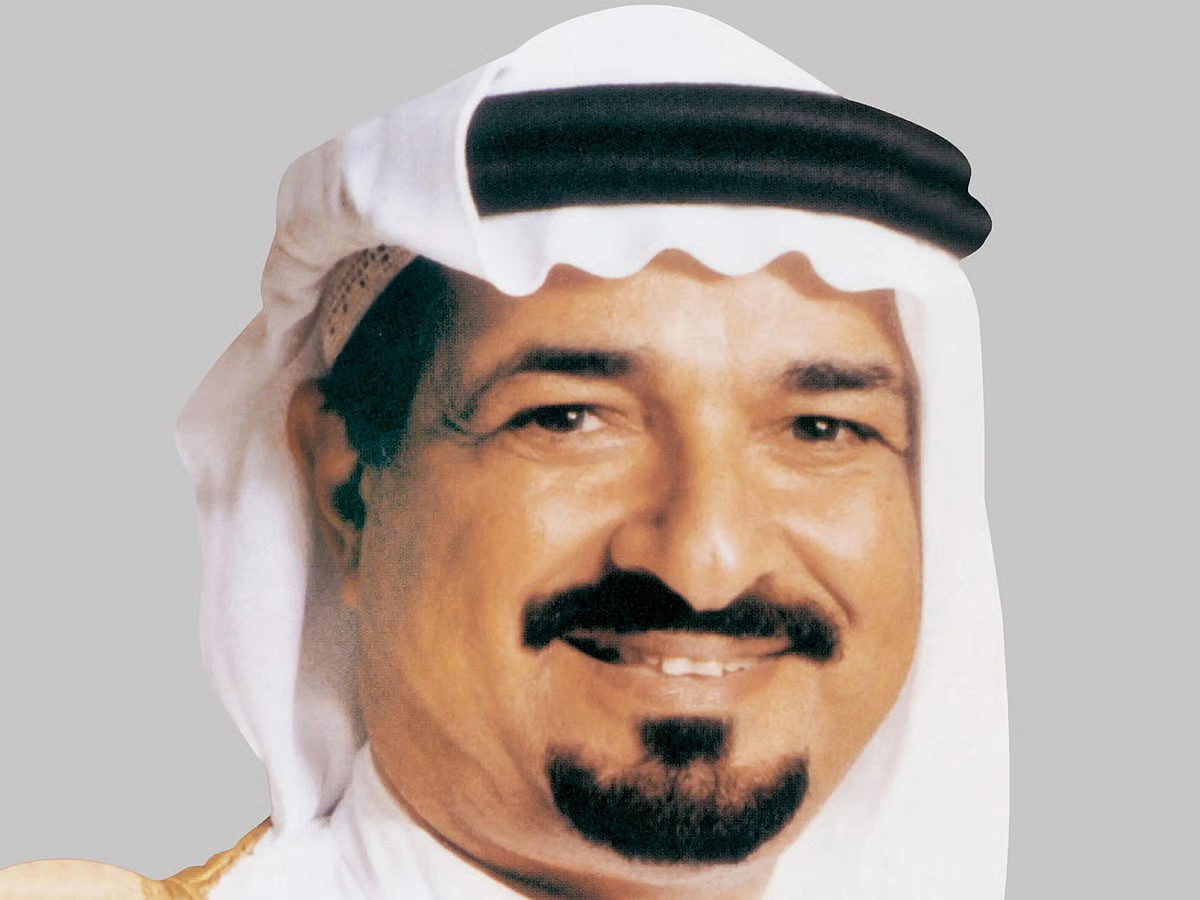

Ajman marked the celebration of Eid Al Etihad on Saturday, December 2, 2023, commemorating the day the nation’s founding father, Sheikh Zayed bin Sultan Al Nahyan, assumed leadership in 1971. The event, observed with reflections on national unity and progress, was led by His Highness Sheikh Humaid bin Rashid Al Nuaimi, Supreme Council Member and Ruler of Ajman. This year’s observance underscored the significance of the day in cementing the UAE’s path towards development and stability under Sheikh Zayed’s vision.
The commemoration took place throughout the emirate, featuring official ceremonies and community gatherings. The focus was on recognizing the historical milestone and reaffirming commitment to the principles established during the formation of the United Arab Emirates. Celebrations also emphasized continued efforts in bolstering the nation’s security and prosperity as it approaches its golden jubilee.
The Significance of Eid Al Etihad in the UAE
Eid Al Etihad, meaning “Union Eid” in Arabic, isn’t a religious holiday in the traditional sense. Instead, it’s a national occasion dedicated to remembering the unification of the seven emirates under the leadership of Sheikh Zayed, a pivotal moment in the region’s modern history. This day serves as a reminder of the collaborative spirit and shared destiny that define the UAE.
The UAE was formally established on December 2, 1971, following the withdrawal of British forces and the agreement between the rulers of Abu Dhabi, Dubai, Sharjah, Ajman, Umm Al Quwain, and Fujairah. Ras Al Khaimah joined the federation in 1972, completing the seven emirates that comprise the nation today. This period of transition and formation laid the groundwork for the UAE’s subsequent economic and social advancements.
Sheikh Zayed’s Leadership and Vision
Sheikh Zayed bin Sultan Al Nahyan’s leadership was crucial in achieving and sustaining the union. He advocated for a unified nation that would prioritize the well-being of its citizens and contribute to regional stability. His focus on education, healthcare, and infrastructure development became cornerstones of UAE policy.
The ruler of Ajman’s participation in the commemoration highlighted the ongoing acknowledgement of Sheikh Zayed’s role in the Emirates’ evolution. His policies dramatically shifted the landscape, transforming a collection of desert states into a significant global player within five decades.
Beyond the historical importance, the day fosters a sense of national identity and pride among Emirati citizens and residents alike. Educational institutions across the UAE often incorporate lessons about the unification process and Sheikh Zayed’s legacy into their curriculum to instill these values in younger generations. Furthermore, the event frequently overlaps with national day preparations, reinforcing the collaborative spirit.
This year’s Eid Al Etihad fell during a period of continued economic diversification within the UAE. The nation is actively reducing its reliance on oil and investing heavily in sectors such as tourism, technology, and renewable energy, according to the Ministry of Economy. These efforts build on Sheikh Zayed’s initial vision for a sustainable and prosperous future.
The celebrations in Ajman, and throughout the UAE, included flag hoisting ceremonies, cultural performances, and expressions of gratitude towards the nation’s leadership. Social media platforms also saw a surge in activity, with residents sharing patriotic messages and historical images using designated hashtags. The widespread participation underscores the enduring resonance of the unification story.
However, the observance also prompts reflection on the challenges facing the UAE in a rapidly changing geopolitical climate. Maintaining regional stability, addressing climate change, and ensuring continued economic growth remain critical priorities. The spirit of unity embodied by Eid Al Etihad is seen as essential to navigating these complex issues.
Meanwhile, the UAE continues to strengthen its international partnerships and play an increasing role in global affairs. Recent diplomatic initiatives, including efforts to mediate conflicts and promote sustainable development, demonstrate the nation’s commitment to international cooperation. These endeavors are largely attributable to the principles instilled during the nation’s founding.
In contrast to some national holidays centered around specific religious events, Eid Al Etihad focuses on a distinctly political and social achievement – the formation of a unified nation. This inclusivity has been a deliberate strategy to create a strong national identity that transcends individual emirate loyalties and adheres to the values of tolerance and respect.
The commemoration also provides an opportunity to reiterate the government’s commitment to citizen welfare and social justice. Recent enhancements to social security programs and initiatives aimed at empowering youth reflect this ongoing dedication. The concept of inclusive growth, ensuring benefits are widely shared, aligns with Sheikh Zayed’s original vision for a just and equitable society.
Looking ahead, the UAE is poised to host several major international events in the coming years, including the COP28 climate conference and various trade shows and exhibitions. These events will further elevate the nation’s profile on the global stage and provide opportunities to showcase its achievements and aspirations. The success of these endeavors will likely depend on maintaining the strong foundation of unity recognized during Eid Al Etihad.
The next significant date related to the UAE’s national narrative will be the observation of National Day on December 2nd, reinforcing the themes of unity and progress. Further economic development reports, expected from the Central Bank of the UAE in early 2024, will offer insight into the success of diversification efforts spurred by the founding vision. Observers will be watching for indicators of sustained growth and resilience in the face of global economic uncertainties.
UAE Government Portal provides additional information about the nation’s history and governance.