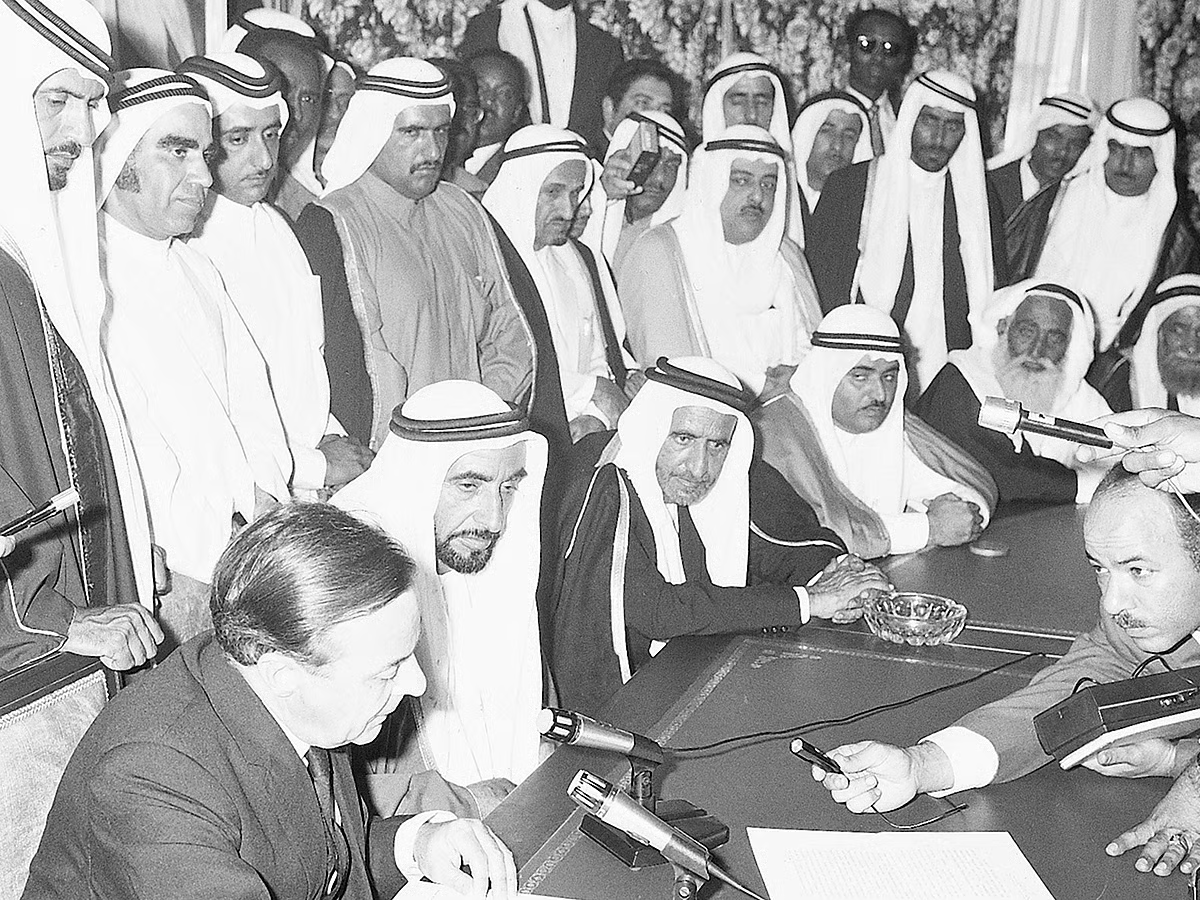

The United Arab Emirates (UAE) celebrates its National Day on December 2nd, commemorating the historic UAE formation of 1971. This annual observance marks the union of six emirates – Abu Dhabi, Dubai, Sharjah, Ajman, Umm Al Quwain, and Fujairah – initially, followed by Ras Al Khaimah in 1972. The date signifies the culmination of negotiations and a shared vision for independence from British treaty obligations.
The UAE’s establishment reshaped the political landscape of the Arabian Peninsula and transformed the economies of its constituent emirates. The federation aimed to create a stable and prosperous nation based on mutual cooperation and shared destiny. Today, the country is a significant global hub for trade, tourism, and finance, a far cry from its pre-union state.
Understanding the Path to UAE Formation
The seeds of the UAE formation were sown in the 1960s as the British government announced its intention to withdraw from its commitments east of Suez, effectively ending its protectorate status over the Trucial States. This decision prompted urgent discussions amongst the rulers of the seven emirates regarding their future political and economic arrangements. Concerns about vulnerability and economic viability fueled the desire for unified action.
The Role of Sheikh Zayed and Sheikh Rashid
The late Sheikh Zayed bin Sultan Al Nahyan of Abu Dhabi and the late Sheikh Rashid bin Saeed Al Maktoum of Dubai are widely regarded as the principal architects of the UAE. Both leaders recognized the benefits of federation, including enhanced security, economic interdependence, and increased international standing. Their shared vision proved crucial in overcoming initial disagreements and forging a consensus.
Sheikh Zayed, particularly, advocated for a broad-based union, offering Abu Dhabi’s oil wealth to support the development of the other emirates. This generous offer was instrumental in securing their participation. Sheikh Rashid, known for his entrepreneurial spirit, focused on Dubai’s potential as a regional trade and tourism center.
Initial Negotiations and Challenges
Formal negotiations began in earnest in 1971, with representatives from the emirates meeting to discuss the framework for a new nation. Key issues included the division of powers, the allocation of resources, and the establishment of a unified foreign policy. Reaching agreement wasn’t straightforward, as each emirate had its own distinct interests and priorities.
Disagreements arose, notably between Abu Dhabi and Dubai regarding the proposed constitution and the distribution of governmental roles. The initial proposal for a union of six emirates faced setbacks when Qatar and Bahrain decided to pursue independent paths. However, the momentum towards federation ultimately prevailed.
Key Facts Surrounding the Union
On December 2nd, 1971, Sheikh Zayed was proclaimed the first President of the UAE, and Sheikh Rashid became the Vice President. This leadership structure reflected the importance of both Abu Dhabi and Dubai in the new federation. The Provisional Constitution of 1971 laid the groundwork for a federal system of government.
The Six Founding Emirates
The six emirates that initially formed the UAE each brought unique strengths to the union. Abu Dhabi, with its vast oil reserves, provided the economic foundation. Dubai offered its established trading infrastructure and ambitious development plans.
Sharjah, under the leadership of Sheikh Dr. Sultan bin Muhammad Al Qasimi, focused on cultural preservation and education. Ajman and Umm Al Quwain, smaller emirates, sought the security and economic benefits of federation. Fujairah, strategically located on the Gulf of Oman, contributed to the UAE’s maritime presence.
Ras Al Khaimah’s Accession
Ras Al Khaimah initially hesitated to join the federation, citing concerns about its economic and political autonomy. However, after careful consideration and negotiations, Ras Al Khaimah acceded to the UAE on February 10, 1972, completing the seven-emirate structure which continues today. This broadened the country’s geographic reach and diversified its economic base.
British Withdrawal and Treaty of Friendship
The formation of the UAE coincided with the final stages of British withdrawal from the region. A Treaty of Friendship was signed between the UAE and the United Kingdom, ensuring continued diplomatic and economic ties. This treaty allowed the UAE to assert its sovereignty while maintaining a valuable relationship with its former protector.
The Impact of Union and Subsequent Development
The immediate aftermath of the UAE formation involved establishing federal institutions and implementing policies to promote national unity. Investment in infrastructure, education, and healthcare was prioritized, laying the foundations for rapid economic development. Oil revenue played a pivotal role in funding these initiatives.
Over the decades, the UAE has diversified its economy beyond oil, with significant growth in tourism, finance, real estate, and logistics. It has also emerged as a leading advocate for regional stability and a prominent player in international affairs. The country’s proactive foreign policy and commitment to humanitarian aid have enhanced its global reputation.
The development of modern cities like Abu Dhabi and Dubai has been particularly striking, attracting global investment and a diverse workforce. These cities have become renowned for their innovative architecture, world-class amenities, and dynamic business environments. This transformation wouldn’t have been possible without the collaborative spirit fostered by the union.
Additionally, the UAE’s commitment to national service for Emirati men has played a role in building a strong sense of national identity and civic responsibility. This program aims to instill values of patriotism and discipline.
Looking Ahead
The UAE continues to pursue ambitious development goals, with a focus on sustainable economic growth and technological innovation, as outlined in initiatives such as “We the UAE 2031”. The country is actively investing in renewable energy, artificial intelligence, and space exploration. The long-term implications of these investments remain to be seen.
Further constitutional amendments and potential shifts in leadership structures are anticipated in the coming years. The ongoing regional geopolitical landscape and global economic fluctuations represent both opportunities and challenges for the federation. Monitoring adaptations to these factors will be crucial in understanding the future trajectory of the UAE.