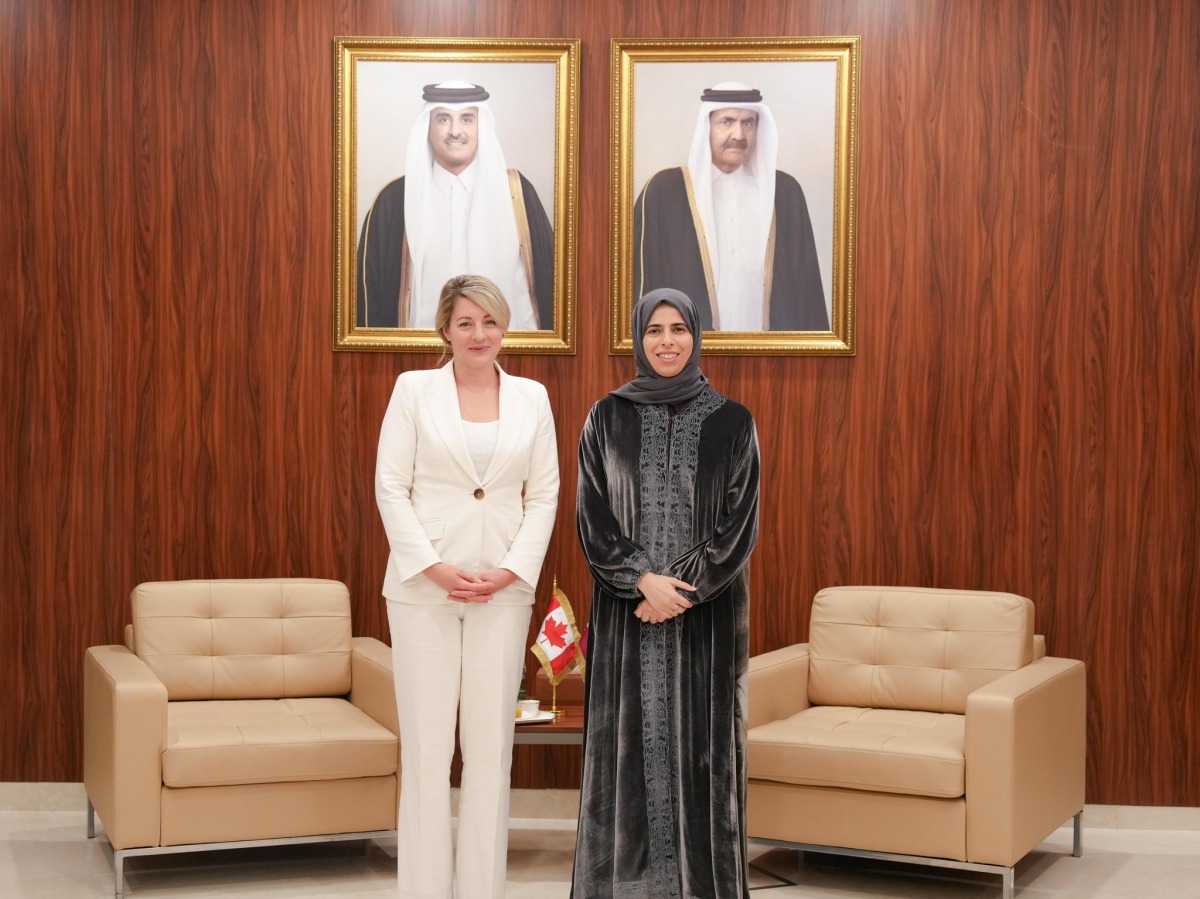

Qatar is actively seeking to bolster international collaboration in education and research, as evidenced by recent meetings held by the Minister of Education and Higher Education, H.E. Lolwah bint Rashid bin Mohammed Al Khater. Discussions with Canadian and Lebanese counterparts focused on strengthening educational partnerships and exploring opportunities in innovation and scientific advancement. These meetings, held yesterday in Doha, signal Qatar’s continued commitment to developing its educational infrastructure and fostering global academic ties.
H.E. Al Khater met separately with Canada’s Minister of Industry and Minister responsible for Economic Development for the Quebec region, H.E. Mélanie Joly, and the Minister of Education and Higher Education of the Lebanese Republic, H.E. Dr. Rima Karami. The meetings centered on practical ways to enhance cooperation, including the exchange of expertise and best practices, with the ultimate goal of improving educational systems in each nation. The Ministry of Education and Higher Education indicated that these discussions are part of a broader strategy to elevate Qatar’s position as a regional hub for knowledge and innovation.
Strengthening Qatar’s Educational Partnerships
Qatar has been steadily investing in its education sector, aiming to diversify its economy and build a knowledge-based society. This has led to increased interest in forging educational partnerships with leading institutions and nations worldwide. The country recognizes the importance of international collaboration in addressing complex educational challenges and promoting cutting-edge research.
The meeting with the Canadian Minister Joly specifically highlighted the potential for collaboration with Quebec, a province known for its strong educational system and research capabilities. Discussions likely included opportunities for student and faculty exchange programs, joint research projects, and the sharing of curriculum development strategies. This aligns with Qatar’s broader efforts to attract international talent and expertise.
Focus on Innovation and Scientific Research
A key theme throughout both meetings was the importance of innovation and scientific research in driving educational progress. Qatar is actively working to integrate these elements into its curriculum and research institutions. The discussions explored how Qatar could benefit from Canada and Lebanon’s experiences in fostering a culture of innovation within their educational systems.
According to recent reports, Qatar has significantly increased its funding for research and development in recent years. This investment is intended to support the growth of a vibrant research ecosystem and attract leading scientists and researchers. Collaboration with international partners is seen as crucial to maximizing the impact of this funding.
The meeting with the Lebanese Minister Karami also addressed the challenges facing the education sector in Lebanon, which has been significantly impacted by recent economic and political instability. While the specifics of the discussion were not detailed, it is likely that Qatar explored potential avenues for providing support and assistance to help rebuild Lebanon’s educational infrastructure. This demonstrates Qatar’s commitment to regional stability and development through higher education.
However, the implementation of any agreements reached will depend on further negotiations and the development of concrete action plans. The Ministry has not yet announced a timeline for these follow-up steps. Additionally, the success of these partnerships will rely on sustained commitment and investment from all parties involved.
Meanwhile, Qatar continues to pursue other international collaborations in education. The country has existing partnerships with universities and institutions in the United States, Europe, and Asia. These partnerships cover a wide range of areas, including curriculum development, faculty exchange, and joint research projects. The emphasis on international collaboration is a cornerstone of Qatar’s National Vision 2030.
In contrast to some regional approaches, Qatar’s strategy emphasizes long-term, sustainable partnerships based on mutual benefit. This approach is designed to ensure that the collaborations are effective and contribute to the long-term development of Qatar’s education sector. The country is also focused on attracting foreign direct investment in education, which is seen as a key driver of innovation and growth.
Looking ahead, the Ministry of Education and Higher Education is expected to continue exploring new opportunities for international collaboration. The next steps will likely involve the formation of working groups to develop detailed proposals for specific projects and initiatives. The progress of these collaborations will be a key indicator of Qatar’s success in achieving its ambitious educational goals, and the impact on educational development will be closely monitored.
The outcomes of these discussions and the subsequent implementation of any agreements will be important to watch, particularly in the context of Qatar’s ongoing efforts to diversify its economy and establish itself as a leading center for knowledge and innovation in the region.