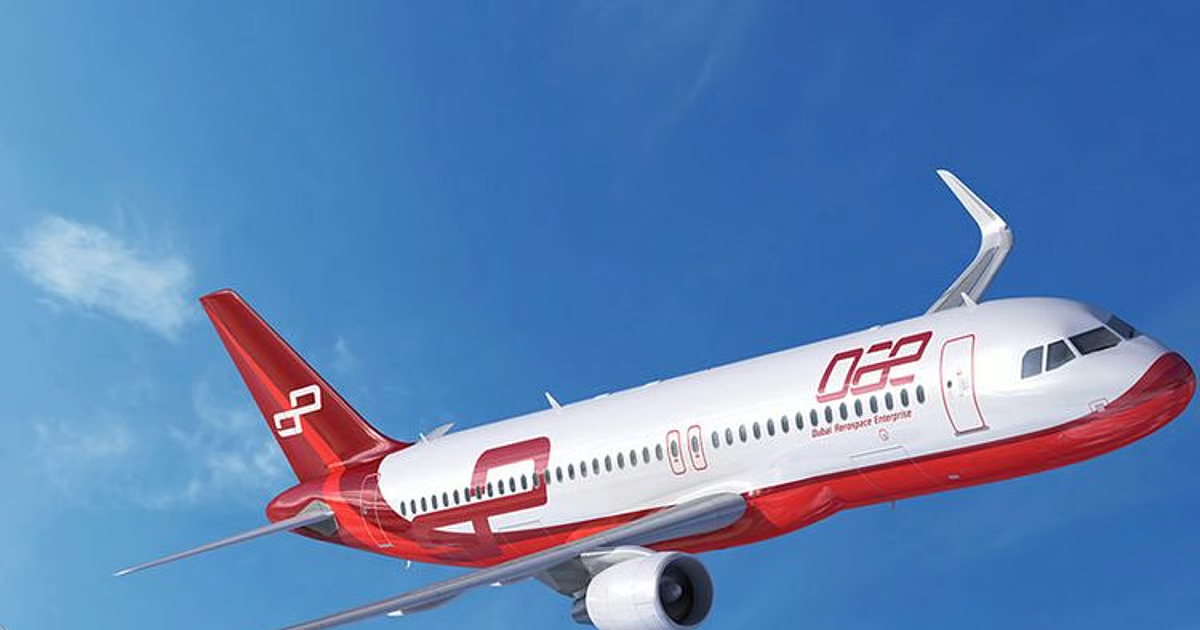

Dubai Aerospace Enterprise (DAE) has finalized a lease agreement with Turkish airline AJet for ten new Boeing 737-8 aircraft, a move that directly supports the low-cost carrier’s ambitious expansion plans. The deal, announced this week, will see DAE deliver the Boeing 737-8 jets between November 2024 and December 2025, providing crucial capacity for AJet as it scales operations. The aircraft will be sourced from DAE’s order book, fulfilling a growing demand in the Turkish aviation market.
AJet, previously known as AnadoluJet, is the low-cost subsidiary of Turkish Airlines, and underwent a rebranding in September 2023 to focus on point-to-point service. This expansion utilizing new aircraft comes as Turkey’s aviation sector continues to show robust growth, both domestically and internationally. This partnership with DAE reflects a broader trend of airlines utilizing aircraft leasing as a key component of fleet strategy.
DAE and AJet: Fueling Growth with the Boeing 737-8
The agreement with DAE is pivotal for AJet’s operational strategy, which relies on maintaining a modern and efficient fleet to compete in the price-sensitive low-cost segment. The 737-8 offers fuel efficiency and a comfortable passenger experience, aligning with AJet’s goals. According to DAE, this transaction demonstrates the company’s commitment to supporting the growth of airlines in dynamic markets like Turkey.
Expanding Route Network
AJet intends to use the new aircraft to expand its existing route network and introduce services to previously unserved destinations. The airline has been aggressively adding new routes, particularly focusing on domestic Turkish destinations and key European leisure markets. This expansion is critical for Turkish Airlines in addressing the increasing demand for affordable air travel within Turkey and the surrounding regions.
Fleet Modernization
Beyond capacity increases, the Boeing 737-8 acquisition facilitates AJet’s fleet modernization efforts. Retiring older aircraft and introducing new, more efficient models lowers operating costs and contributes to sustainability goals. This aligns with industry-wide moves towards younger, more environmentally friendly fleets.
DAE, a global aviation leasing company, owns and manages a substantial portfolio of aircraft. The company operates across multiple platforms, including leased aircraft, engine leasing, and maintenance, repair, and overhaul (MRO) services. This deal with AJet builds on DAE’s expanding presence in the Turkish airline industry, where they already have established relationships with other carriers.
The choice of the 737-8 is also significant given current global supply chain challenges affecting aircraft deliveries. The 737 MAX family, including the 737-8, has faced scrutiny following two fatal crashes in 2018 and 2019, which led to a worldwide grounding of the aircraft. However, after extensive safety modifications and recertification, the 737 MAX is back in service and experiencing strong demand, particularly from low-cost carriers.
Meanwhile, the Turkish aviation authority has been generally supportive of the 737 MAX’s return to service, lifting restrictions earlier this year. This regulatory acceptance was essential for AJet to proceed with the 737-8 as a core component of its fleet development. AJet’s parent company, Turkish Airlines, also operates several 737 MAX variants.
In contrast to outright aircraft purchases, leasing offers airlines greater financial flexibility. It avoids the large capital outlay required for acquisition, and allows airlines to adjust their fleet size to meet fluctuating demand. Aircraft leasing also can simplify accounting and tax considerations. This financial strategy is especially attractive in the current economic climate, where interest rates are rising and uncertainty remains.
Additionally, the agreement highlights a continuing trend in the aviation industry where airlines are increasingly focusing on asset-light business models. By leasing aircraft, airlines can concentrate on their core competencies: passenger service, route development, and revenue management. This trend has been amplified over the past few years as airlines recovered from the COVID-19 pandemic.
The terms of the lease agreement were not disclosed by either DAE or AJet, but industry sources indicate that such deals typically span several years, with options for renewal or purchase. Such arrangements allow AJet to benefit from the latest in aviation technology without the long-term financial commitment of ownership.
AJet has been focused on aggressively expanding operations throughout its region. The airline is investing heavily in its brand and customer experience to differentiate itself within the competitive low-cost airline market. Turkey’s strategic location – bridging Europe and Asia – positions AJet for further growth in both regions. The secondary market for both leisure and business travel in this region has increased substantially.
The delivery schedule for the Boeing 737-8 aircraft will be closely monitored by industry observers. Any delays in the supply chain, which have been commonplace in recent years, could impact AJet’s expansion plans. The airline will also need to ensure adequate training for pilots and maintenance personnel to handle the new aircraft type. Successfully integrating these planes will also rely on efficient airport handling and infrastructure capabilities.
Looking ahead, DAE and AJet are anticipated to finalize the technical documentation and logistical arrangements for the aircraft deliveries. The first Boeing 737-8 is scheduled for handover in November 2024, which will mark a significant step in AJet’s growth trajectory. The aviation industry will be watching to see how this partnership contributes to the ongoing evolution of air travel in Turkey and the broader region, as well as the impact on competition between low cost carriers.
Further developments will center on AJet’s route announcements and its financial performance as it utilizes the new capacity. The overall health of the Turkish economy also remains a factor, potentially influencing consumer demand for air travel. Continued monitoring of global fuel prices and geopolitical events is also essential, as these can impact airline profitability and expansion strategies. Boeing will aim to maintain its delivery schedule for the aircraft.